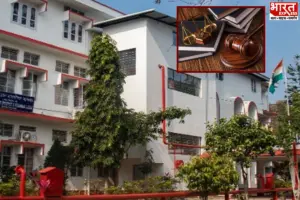


As air quality deteriorated sharply across the National Capital Region (NCR), the Delhi High Court on Monday advised lawyers and parties-in-person to opt for hybrid hearings, wherever convenient, in matters listed before the court.
The move aims to minimise physical presence and reduce health risks posed by hazardous air pollution.
In a notification issued by Registrar General Arun Bhardwaj, the High Court stated that, in view of prevailing weather and pollution conditions, advocates and litigants may avail themselves of the hybrid mode of appearance through video-conferencing facilities.
The advisory seeks to balance the smooth functioning of judicial proceedings with public health concerns.
AQI Remains in ‘Severe’ Category
The advisory came on a day when Delhi’s air quality continued to remain in the ‘severe’ category.
The overall Air Quality Index (AQI) touched 457 in the early morning hours, with several locations across the NCR recording readings close to 500.
Residents woke up to dense smog and significantly reduced visibility, disrupting daily life and raising serious health concerns.
GRAP Stage-IV Curbs Enforced
In response to the alarming pollution levels, the Commission for Air Quality Management (CAQM) enforced the strictest curbs under Stage-IV of the Graded Response Action Plan (GRAP) across the NCR.
These measures include restrictions on construction activities, vehicular movement and other pollution-generating operations to curb further deterioration in air quality.
A day earlier, the Supreme Court had also issued a similar advisory, urging lawyers and litigants to opt for virtual or hybrid hearings amid worsening air quality.
The apex court Registry stated that the advisory was issued on the directions of Chief Justice of India Surya Kant, encouraging the use of video-conferencing facilities in appropriate cases.
On Monday, the Supreme Court also agreed to urgently list a public interest litigation (PIL) related to the control of air pollution in Delhi.
Senior advocate and amicus curiae Aparajita Singh mentioned the matter before a Bench led by the Chief Justice of India, highlighting concerns over non-compliance with pollution-related directives.
Judicial Concern Over Health Risks
Judicial concern over Delhi’s pollution levels is not new. Last month, Justice PS Narasimha had strongly urged lawyers to shift to virtual hearings, describing the pollution situation as ‘very, very serious’.
He had cautioned that continued exposure could cause permanent health damage and emphasised the availability of virtual hearing facilities.
The latest advisory from the Delhi High Court reflects the judiciary’s effort to ensure uninterrupted access to justice while prioritising the health and safety of court users.
As pollution levels remain hazardous, hybrid and virtual hearings are increasingly being seen as a practical solution during periods of environmental crisis.
With winter conditions worsening and pollution showing little sign of abatement, courts and authorities may continue to rely on digital alternatives to reduce exposure and safeguard public well-being.
Also Read: AIIMS Jodhpur Hosts NBRCOM 2025; Showcases India’s Emerging Biomedical Research Talent
To read more such news, download Bharat Express news apps