

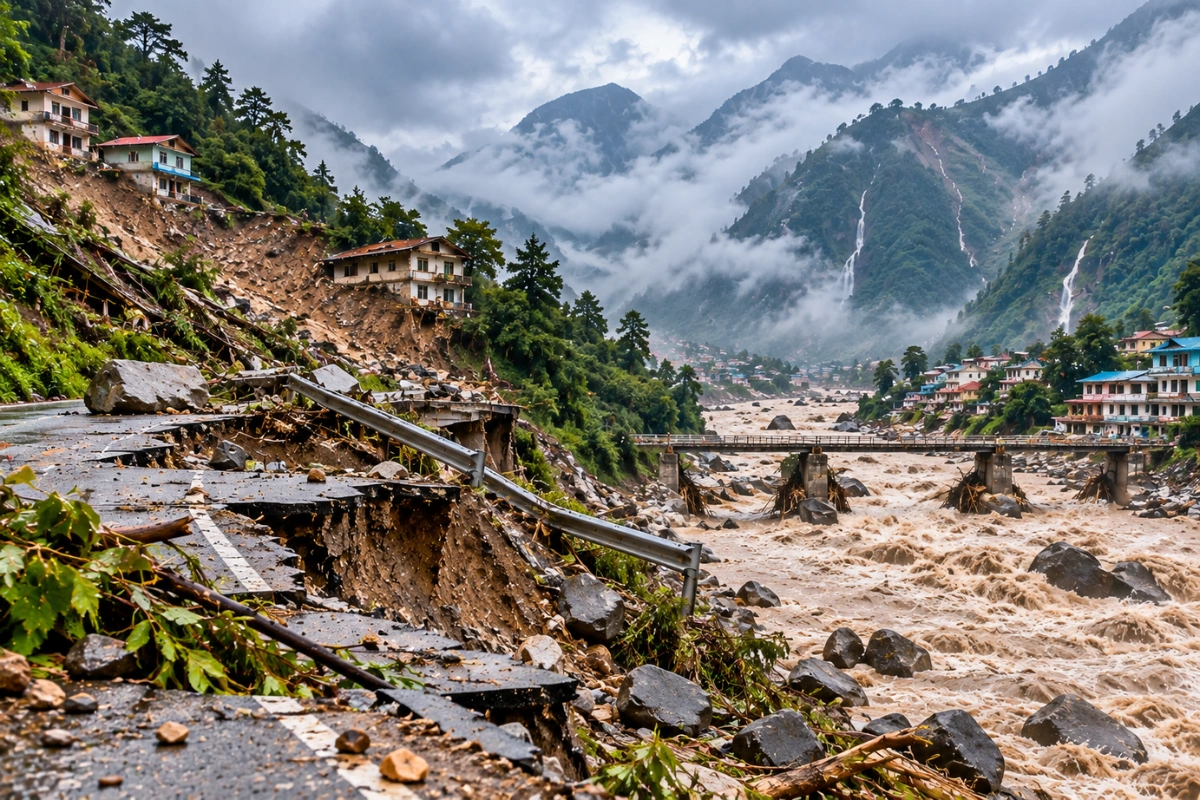
AI Generated Image
At least 27 people have died, and seven have suffered injuries in Nepal after floods, landslides, inundation, strong winds and lightning affected several areas since September 24.
The Prime Minister’s Office said four people remained missing as of Monday evening.
Government figures showed that 513 monsoon-related incidents affected 1,065 families during the period.
The disasters destroyed 225 houses, partially damaged another 137, and affected 27 cattle sheds and 114 livestock.
The government has stepped up rescue, relief and rehabilitation operations while authorities work to repair damaged infrastructure and restore normal life.
Floods and landslides damaged 147 locations along highways and major roads, with authorities repairing and reopening 125 of them.
Traffic remains disrupted along parts of the Kaligandaki Corridor in western Nepal due to landslides, road subsidence and damage to bridge approaches.
The affected stretches include Beni-Jomsom, Palpa, Baglung and Nawalparasi districts, with repairs expected to take more than three days.
Flooding has affected electricity infrastructure, disrupting 1,013.2 MW of transmission capacity through the Kaligandaki, Marsyangdi and Seti-Madi river corridors.
Around a dozen hydropower projects along the Bhotekoshi and Trishuli river corridors suffered severe damage during the August 26 floods.
The disaster killed more than 1,400 people and left around 5,000 missing, according to Nepal’s National Disaster Risk Reduction and Management Authority.
With domestic generation expected to fall during the winter as run-of-the-river projects produce less power, the Nepal Electricity Authority plans to import 1,155 MW from India.
NEA Managing Director Dirghayu Kumar Shrestha said domestic generation could remain around 1,218 MW against projected demand of 2,293 MW after January.
Also Read: S Jaishankar Says US Insensitivity To India’s Pakistan Terrorism Concerns Hurting Ties
To read more such news, download Bharat Express news apps