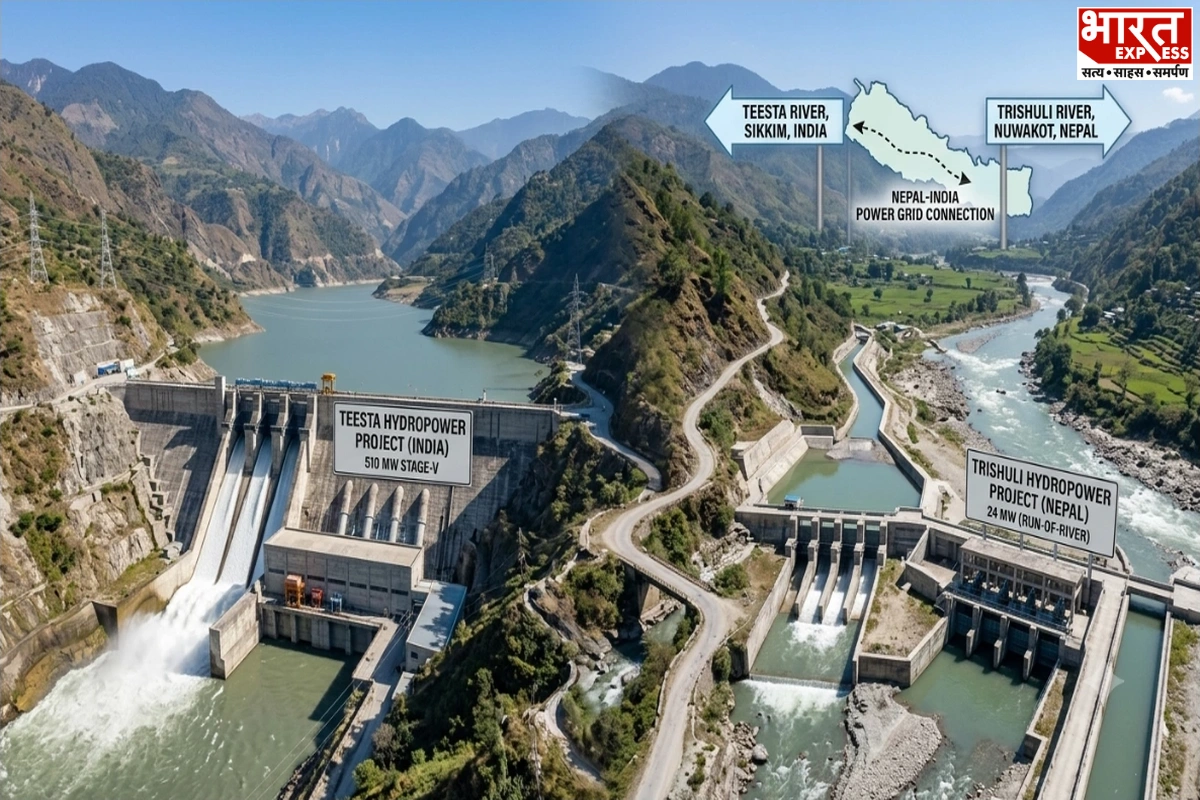
The Himalayas offer immense hydropower potential. Nepal’s rivers can drive economic growth and help India meet its rising electricity demand.
Recent disasters raise questions about whether installed capacity alone can guarantee reliable power supplies during emergencies.
On October 4, 2023, a glacial lake outburst flood from South Lhonak Lake destroyed Sikkim’s 1,200 MW Teesta-III hydropower project and damaged downstream infrastructure.
Unstable slopes, ice displacement, landslide debris and powerful floodwaters compounded the destruction.
On August 26, 2026, a reported rock-ice avalanche from Langtang Lirung triggered a destructive debris flow through Nepal’s Bhote Koshi–Trishuli river system.
The International Centre for Integrated Mountain Development cited assessments showing that 12 operating projects, representing approximately 431 MW, and 15 projects under construction, totalling 470 MW, were affected. These figures refer to impacted capacity, not permanent destruction.
Earlier disasters reinforce these concerns. The 2013 Kedarnath floods damaged Uttarakhand’s hydropower facilities. In 2021, an avalanche in Chamoli destroyed the 13.2 MW Rishiganga project and severely damaged the 520 MW Tapovan-Vishnugad project, causing fatalities. Himachal Pradesh’s 2023 monsoon floods disrupted hydropower operations.
India and Nepal’s January 2024 agreement envisages facilitating electricity exports of up to 10,000 MW from Nepal to India over ten years.
The Muzaffarpur–Dhalkebar interconnection supports this partnership. Seasonal shortages and extreme weather events threaten the continuity of electricity supplies.
Planners should consider Climate-Adjusted Dependable Capacity (CADC), a proposed framework accounting for seasonal flows, outages, transmission constraints and recovery times. The framework requires further validation.
Following Nepal’s disaster, India reportedly approved electricity exports of up to 654 MW for 18 hours daily through December 2026.
Both countries should strengthen basin-wide risk assessments, diversify infrastructure, improve early-warning systems and coordinate emergency electricity supplies.
Reservoirs, pumped storage and batteries could improve flexibility and help maintain supply during disruptions.
Also Read: Riyadh Airport Attacks Raise Travel Fears: Saudi Arabia Weighs Hybrid FII Summit
To read more such news, download Bharat Express news apps