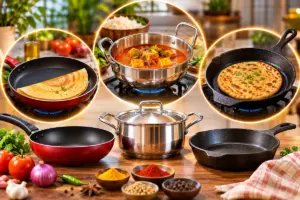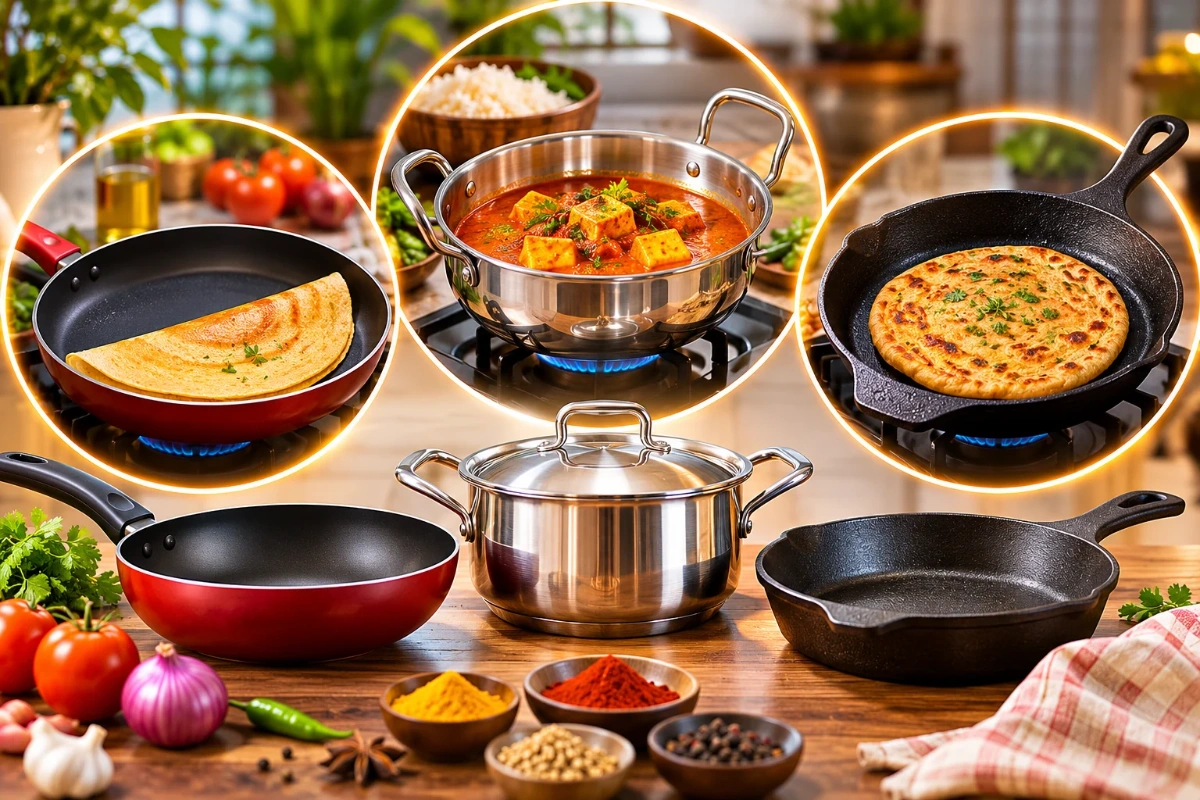
AI Generated Image
Selecting suitable cookware can improve everyday cooking, whether preparing curries, making dosas and rotis or frying food.
Nonstick, stainless steel and cast iron each have distinct advantages, with differences in cooking performance, durability, heat retention and maintenance.
Nonstick pans are convenient for low- and medium-heat cooking, particularly when making dosas, omelettes, cheelas and pancakes. Their smooth surfaces prevent food from sticking and reduce the need for oil.
Excessive heat or heating an empty pan for too long can damage the coating. Metal utensils and abrasive scrubbers may scratch the surface, while peeling or deteriorating coatings indicate that the cookware should be replaced.
Stainless steel offers versatility for Indian kitchens, making it suitable for boiling, sautéing, preparing curries and gravies, and cooking rice. It has no synthetic coating that can wear away and can withstand high temperatures.
The material supports browning and caramelisation. Preheating the pan properly and using sufficient oil can help prevent food from sticking. Multi-ply stainless steel cookware is a practical option for regular use.
Cast iron is particularly useful for recipes requiring steady heat, including dosas, rotis, parathas, shallow-fried dishes and slow-cooked meals. It retains heat effectively and develops a naturally nonstick surface when seasoned correctly. Its weight and maintenance requirements may be drawbacks.
Regular seasoning and thorough drying after washing are necessary to prevent rust.
Rather than depending on one material, households can benefit from keeping all three types.
Stainless steel suits routine cooking, nonstick pans are convenient for delicate preparations, while cast iron works well for high-heat cooking and traditional dishes.
The final choice depends on cooking habits, maintenance preferences and the food prepared most often.
Also Read: Post-Diwali Health Reset: Simple Ways To Restore Your Daily Routine
To read more such news, download Bharat Express news apps