



The Supreme Court on Thursday issued an interim order staying the operation of the University Grants Commission (Promotion of Equity in Higher Education Institutions) Regulations, 2026.
The court directed that the earlier 2012 Regulations will continue to govern higher education institutions until further instructions.
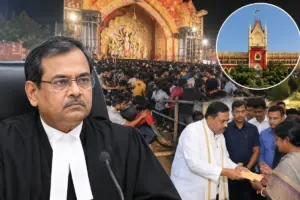
A bench led by Chief Justice of India Surya Kant passed the order. Justice Joymalya Bagchi joined the hearing of multiple writ petitions challenging the 2026 framework.
The petitions particularly questioned Clause 3(c), which defines ‘caste-based discrimination’.
The bench issued notices to the Union government and the UGC and placed the new regulations in abeyance.
The court recorded a prima facie view that several provisions in the 2026 Regulations contain ambiguities.
The court observed that it cannot rule out the possibility of misuse at this stage.
During arguments, petitioners asserted that the definition of caste-based discrimination under the 2026 Regulations is narrow and exclusionary.
They argued that the framework deprives individuals of general or non-reserved categories of remedies, even when they face caste-linked bias or institutional discrimination.
The court noted the submission that the regulations rest on an assumption that caste-based discrimination flows only in one direction.
Petitioners argued that such a presumption ignores discrimination against persons outside reserved categories.
The Supreme Court framed key legal questions for examination. It said it would assess whether Clause 3(c) shows a reasonable and rational connection with the stated objective of the regulations.
The bench also highlighted the absence of a distinct procedural mechanism to address caste-based discrimination, unlike the broader definition of discrimination under Clause 3(e).
The court raised concerns over Clause 7(d), which includes ‘segregation’ as a prohibited practice.
It cautioned that even transparent allocation of hostels, classrooms, or mentorship groups could invite ‘separate yet equal’ classifications, potentially infringing Articles 14 and 15 of the Constitution.
The bench also flagged the removal of “ragging” as a specific form of discrimination.
It noted that the 2012 Regulations explicitly covered ragging. The omission, the court said, may amount to a regressive legislative gap and could violate Articles 14 and 21.
Invoking Article 142, the Supreme Court ordered that the 2012 Regulations will remain in force. The court will hear the matter next on March 19.
Also Read: Supreme Court To Examine Challenges To UGC’s Equity Regulations Today
To read more such news, download Bharat Express news apps