



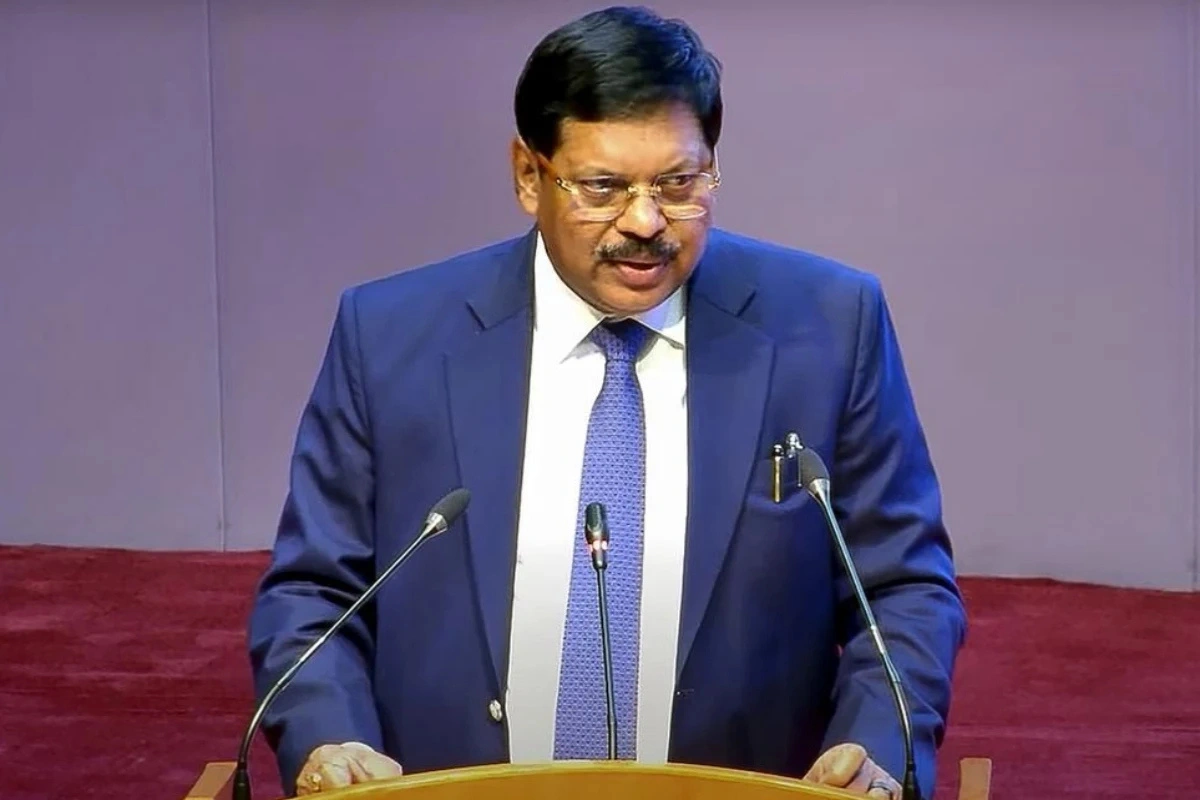
Delivering the Justice KT Desai Memorial Lecture 2025 in Mumbai, the former Chief Justice of India (CJI) BR Gavai reflected on the constitutional evolution of free speech in India and paid tribute to two towering figures of the judiciary—Justice KT Desai and Justice Sujata V Manohar.
Addressing judges of the Bombay High Court, members of the Bar and distinguished guests, the Ex CJI said it was a privilege to speak in honour of Justice Desai, ‘one of the most distinguished judges of the post-Independence era’.
Justice Desai, who served as Chief Justice of the Gujarat High Court and authored the landmark ‘Desai Bank Award’, left behind a legacy that ‘continues to shape institutional values’, he said.
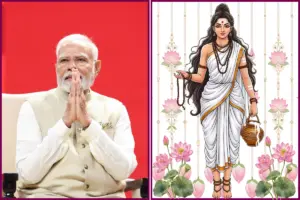
The former CJI also praised Justice Sujata Manohar—Justice Desai’s daughter—as a ‘pioneer who broke multiple glass ceilings’.
Recalling her rise from being the first woman judge of the Bombay High Court to serving on the Supreme Court, he noted her pivotal role in the Vishakha judgment and her tenure at the National Human Rights Commission.
“She is a living inspiration,” he said.
Mapping the Constitutional Journey of Free Speech
Justice BR Gavai’s lecture focused on ‘Freedom of Speech and Expression – Its Scope and Limitations Under the Constitution’, tracing its origins in the Constituent Assembly. He noted how early debates centred on the balance between liberty and public order, leading to the carefully crafted restrictions in Article 19(2).
Moreover, the Supreme Court’s first major intervention came in Romesh Thappar (1950), after which Parliament expanded Article 19(2) through the First Amendment.
Subsequent decisions — Ram Manohar Lohia and Kedar Nath Singh — established that the State may restrict speech only when it poses a ‘proximate and real’ threat to public order.
He also highlighted the judiciary’s early defence of press freedom in Bennett Coleman (1972) and Sakal Papers, which struck down policies curbing newspaper circulation.
Over time, the Court expanded Article 19(1)(a) to include the citizen’s right to know, as recognised in Raj Narain (1975), establishing transparency as a democratic necessity.
From Artistic Liberty to Digital Rights
Additionally, Justice Gavai traced how the Court broadened protection for cinema, television and artistic expression through rulings such as Rangarajan, cautioning that the State must not ‘surrender to threats’ from hostile groups.
With technological change, new challenges emerged. In Shreya Singhal (2015), the Court struck down Section 66A of the IT Act for creating a ‘chilling effect’.
The privacy landmark Puttaswamy (2017) was described as foundational in linking informational privacy and expressive freedom. He further emphasised the importance of internet access, citing Anuradha Bhasin (2020), who held that indefinite shutdowns violate constitutional principles.
When Criminal Process Becomes a Speech Burden
Referring to recent cases involving journalists—including Arnab Goswami, Vinod Dua, and Mohd Zubair- the former CJI warned that misuse of criminal law can itself curb free expression.
“When speech-related cases remain pending for years, the process becomes the punishment,” he said.
Concluding, the former CJI BR Gavai said India’s free speech jurisprudence reflects a steady effort to protect democratic participation.
“The State’s power to restrict expression must never overshadow the citizen’s right to think and speak freely,” he said.
Also Reads: Supreme Court Says Temple Wealth Must Be Used Only For Deity’s Interests
To read more such news, download Bharat Express news apps