



Prime Minister Narendra Modi on Friday said that growing imbalances in lifestyle, gut health, sleep patterns and workplace routines are emerging as major global health challenges, and traditional medicine can play a vital role in restoring balance, harmony and overall well-being.
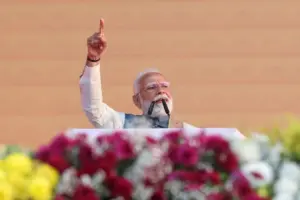
He was speaking at the concluding ceremony of the second WHO Global Summit on Traditional Medicine at Bharat Mandapam, where he highlighted India’s expanding leadership in shaping a science-based, people-centric global framework for traditional medicine.
The World Health Organisation (WHO) and the Ministry of Ayush jointly organised the summit from December 17 to 19.
Referring to the summit’s theme, ‘Restoring balance: The science and practice of health and well-being’, the Prime Minister said India’s traditional knowledge systems, especially Ayurveda, have always revolved around the concept of balance.
“In Ayurveda, balance, that is equilibrium, has been called the synonym of health. The one whose body maintains this balance is healthy,” PM Modi said.
He pointed out that disruptions in work-life balance, gut microbiome, sleep and emotional health are increasingly contributing to health disorders worldwide.
“Today, we see imbalances in work-life, gut microbiome, sleep, and emotions creating global health challenges. Both studies and data indicate this. Thus, restoring balance is a global urgency,” said PM Modi.
Technology, Lifestyle Change and Future Health Risks
The Prime Minister underlined that maintaining balance has become even more crucial in the 21st century, as technologies such as artificial intelligence and robotics are rapidly reshaping human lives.
“The sudden and massive changes in lifestyle due to the convenience of resources and facilities, which come without physical labour, are going to create unprecedented challenges for human bodies. Therefore, in traditional healthcare, we cannot focus only on the current needs. Our shared responsibility is also towards the coming future,” he said.
Addressing concerns around safety and scientific validation of traditional medicine, PM Modi said India is consistently working to strengthen evidence-based practices.
“Here, in this summit, you all have seen the example of Ashwagandha. For centuries, it has been used in our traditional medical systems. During Covid-19, its global demand increased rapidly, and its use began in many countries. India is authentically promoting Ashwagandha through its research and evidence-based validation,” PM Modi said.
He noted that the summit provided a unique platform where traditional medicine and modern medical practices converged, paving the way for innovation and collaboration.
The Prime Minister said several new initiatives launched at the summit have the potential to transform the future of medical science and holistic healthcare. He stressed the need to strengthen research, expand the use of digital technologies, and establish regulatory frameworks that can earn global trust.
Launch of Key Ayush Initiatives
During the event, PM Modi launched key Ayush initiatives, including the My Ayush Integrated Services Portal (MAISP), a comprehensive digital platform for the Ayush sector. He also unveiled the Ayush Mark, envisioned as a global benchmark for quality assurance of Ayush products and services.
In addition, he released a commemorative postal stamp on Ashwagandha, symbolising the growing global acceptance of India’s traditional medicinal heritage.
The Prime Minister also inaugurated the new WHO South-East Asia Regional Office complex in Delhi, describing it as a ‘humble gift from India’.
Also Read: PM Modi Pays Tribute To Goa’s Freedom Fighters On Liberation Day
To read more such news, download Bharat Express news apps