



Prime Minister Narendra Modi on Monday traced the historical significance of Vande Mataram while initiating a special discussion in Parliament to mark 150 years of India’s national song.
He highlighted that Bankim Chandra Chattopadhyay wrote the hymn about 18 years after the Revolt of 1857, as a protest against colonial rule and the promotion of the British anthem, ‘God Save the King’.
PM Modi noted that Chattopadhyay wrote the poem in a blend of Sanskrit and Bengali, later publishing it in his 1882 book Anandamath.
The novel focused on the 18th-century Sanyasi rebellion in Bengal, where a group called the ‘Santan’ dedicated their lives to freeing the Motherland from East India Company oppression.
He emphasised that Vande Mataram symbolised the devotion of the Sanyasis, who personified the Motherland as Mother India.
Prime Minister Narendra Modi reminded the House of the verse, ‘Janani Janmabhumishcha Swargadapi Gariyasi’, meaning ‘My motherland is greater than Heaven’.
Prime Minister Narendra Modi described Mother India as the goddess of knowledge and prosperity.
Chandi and the Power of Divine Shakti
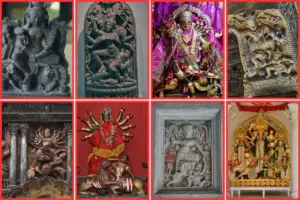
Facing enemies, she appeared as the weapon-wielding Chandi, the manifestation of divine Shakti that destroys evil.
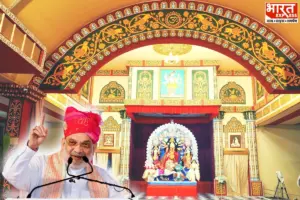
PM Modi also highlighted the hymn’s reference to Goddess Durga and the multiple forms the Mother took to inspire hope, courage, and well-being among her children.
The Prime Minister said the song encouraged courage, with the fight aimed not just at land but at freedom and Swadeshi, or self-reliance.
He added that Vande Mataram became a symbol of the ‘religion of patriotism’, inspiring countless freedom fighters during India’s struggle for independence.
PM Modi noted that the Constituent Assembly adopted the song as India’s national song in 1950.
He recalled Nobel laureate Rabindranath Tagore first singing it at the 1896 Congress session in Calcutta and highlighted Madam Bhikaji Cama raising the tricolour flag with the words Vande Mataram in 1907 in Stuttgart, Germany.
Prime Minister Narendra Modi concluded that the hymn remained a potent form of protest, uniting generations in devotion to the Motherland, inspiring courage, self-reliance, and love for an independent India.
Also Read: PM Modi Hails Vande Mataram’s Unbroken Spirit
To read more such news, download Bharat Express news apps