



The edited work of seasoned journalist, Tibetologist, and photographer Vijay Kranti, China’s Colonial Games in Tibet, attempts to analyse the Tibetan situation within the paradigm of modern colonialism.
The book goes beyond the typical portrayal of Tibet as merely a territorial dispute, a human rights issue, or a struggle for religious freedom. Instead, it describes the People’s Republic of China’s rule over Tibet as a modern colonial project, executed through political control, demographic transformation, cultural assimilation, environmental exploitation, and ideological control over education and religious institutions.
The strength of the book lies in its expansive conceptualisation of colonialism.
Military and administrative colonialism account for only a small part of the overall picture.
Several contributors discuss the forced separation of Tibetan children from their language, religion, and culture through the residential schooling system and the PRC’s state-controlled education system.
The book argues that these school systems are designed to suppress Tibetan identity and ensure political conformity. Other contributors contend that policies promoting ‘ethnic unity’ amount to colonialism disguised as integration.
Religion receives equal attention in the book.
Tibetan Buddhism, which His Holiness the Dalai Lama prefers to call the ‘Nalanda School of Buddhism’, establishes India’s cultural connection with Tibet and represents far more than a personal faith. It remains an essential element of Tibet’s identity and its social and historical fabric.
The controls imposed by Beijing over reincarnation, along with its claim to exercise supreme authority over recognising future high lamas, including the Dalai Lama and the Panchen Lama, are presented as serious intrusions into the spiritual life of the Tibetan people.
The issue extends beyond succession. It raises the question of whether an officially atheistic party-state can exercise political control over a religious process and create a state-controlled form of Buddhism that conforms to its ideological requirements.
Resistance and Human Cost
One of the book’s most significant sections examines the self-immolation of Tibetans.
Rather than focusing solely on statistics, the authors interpret self-immolation as a form of political expression in a society where other avenues of protest have become impossible.
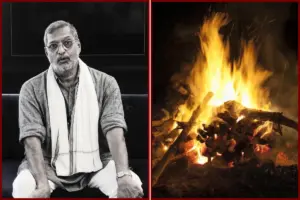
The book discusses the case of Tsewang Norbu, the young Tibetan singer who self-immolated in 2022.
Norbu’s death inspired the book and powerfully challenges the perception that Tibetan resistance belongs only to refugee monks, the elderly, or previous generations. His self-immolation emerges both as an act of resistance and as a damning indictment of the failure of decades of policies imposed on the Tibetan community.
The gravitas of Kranti’s project is further strengthened by his decades of experience reporting on, photographing, and documenting Himalayan Buddhism. This background enables him to bring together voices that articulate the intersection of scholarship, politics, and informed opinion.
Unlike many works published on the subject, this collection takes a clear position and argues in support of the Tibetan cause. It frames Tibetan advocacy in a positive light and emphasises the moral, ethical, and humanitarian imperative to act.
The collection seeks to do more than document the myriad human rights violations.
Kranti also attempts to expose and challenge the prevailing colonial system, sustained by the silence of much of the international community and the media.
Strengths and Limitations
Given that the collection originated from a series of webinars, the tone and emphasis vary across individual contributions. Because of its nature, stronger referencing, a comprehensive bibliography, and a clearer distinction between fact, opinion, and contested allegations would have strengthened the work.
These limitations, however, do not diminish the book’s significance. Its value lies in bringing together previously published and some unpublished essays into a single volume. This compilation helps general readers understand the interrelationship between Tibet’s historical and contemporary realities, as well as the connections among issues of sovereignty, education, religion, ecology, demography, surveillance, and resistance.
For Tibetan scholars and advocates, the book outlines the major themes of contemporary Tibetan scholarship and advocacy. For diplomats, policymakers, and security analysts, it demonstrates how Chinese state policies in Tibet may offer insights into Beijing’s approach in other peripheral regions and areas where it has politically subordinated local populations.
The book’s publication in Dharamshala shortly before Tibetan National Uprising Day further reinforces its connection to the ongoing Tibetan struggle.
Why the Book Matters
The book places Tibet within broader strategic discussions. It does not portray Tibet merely as an isolated humanitarian issue. Instead, it argues that the region’s political status has implications for India’s security, the stability of the Himalayan ecosystem, transboundary rivers, and Asia’s evolving geopolitical balance.
The book further contends that China’s consolidation of control over Tibet and the methods it employs may help explain its approach in other regions under its influence.
As a result, the book appeals not only to readers concerned with Tibet’s humanitarian crisis but also to scholars of colonialism, authoritarianism, Indo-Pacific security, and international relations. Ultimately, it calls on the international community to take Tibet and the challenges it faces more seriously and to resist remaining silent in the face of continued oppression.
– Dr Geetanjali Batra, Associate Professor, ABVSME, JNU/Dr Siddhartha Ghosh, ICSSR Postdoctoral Fellow, ABVSME, JNU
To read more such news, download Bharat Express news apps