




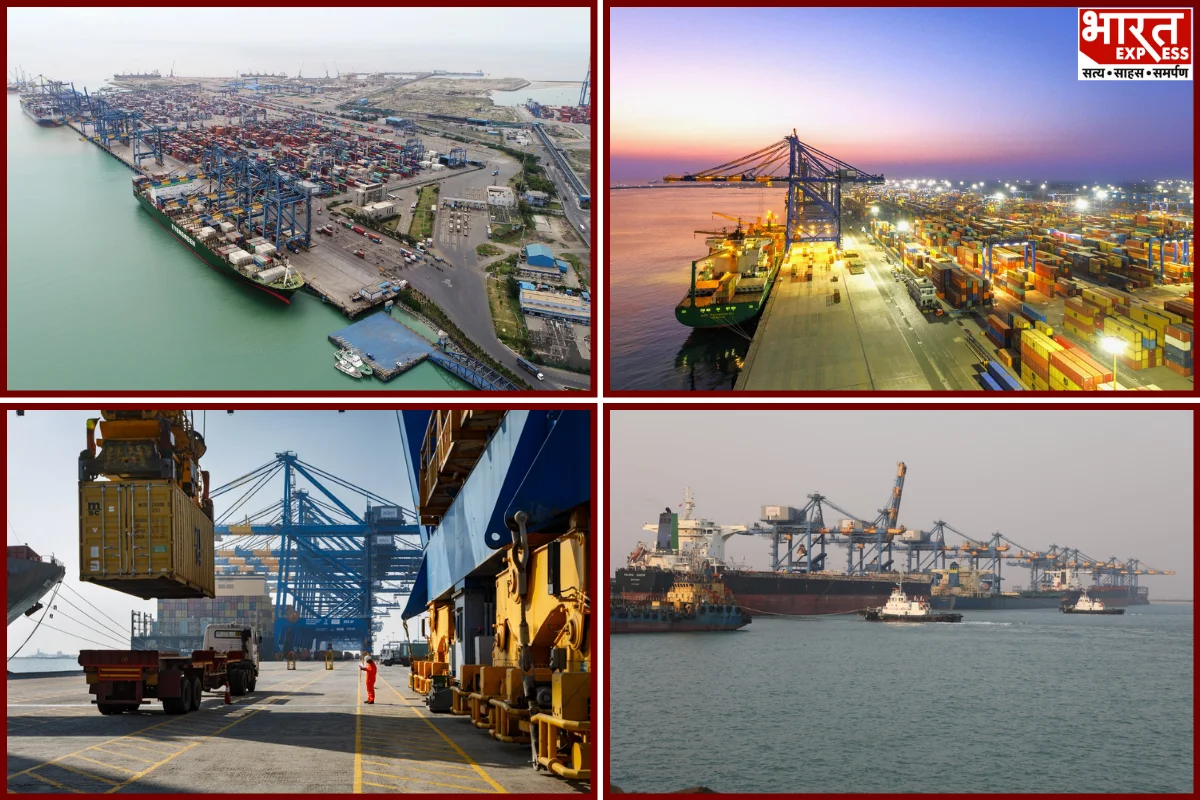
Mundra Port in Gujarat’s Kutch region plays a significant role in India’s maritime trade, container transport and logistics. Its expansion raises questions about whether private investment strengthens trade competitiveness while concentrating economic power.
In FY 2025–26, Adani Ports and Special Economic Zone Limited (APSEZ) handled 500.8 million tonnes of cargo, up 11 per cent annually.
The group reported revenue of ₹38,736 crore, an increase of 25 per cent, and EBITDA of ₹22,851 crore, up 20 per cent.
Mundra handled 192 million tonnes of cargo, compared with approximately 200.7 million tonnes in FY25. These figures show why analysts must distinguish the group’s overall growth from Mundra’s individual performance.
Mundra benefits from road, railway and maritime links connecting northern and western India with global markets. Its ability to handle containers, coal, crude oil, liquids and vehicles makes it a multi-purpose logistics hub.
The company reported an installed capacity of 274 million tonnes for Mundra in FY26. Actual cargo throughput of 192 million tonnes highlights the difference between available capacity and utilisation.
Comparisons of port charges, cargo-handling costs and vessel turnaround times would help establish whether these efficiencies translate into savings for exporters and importers.
APSEZ accounted for around 27.1 per cent of India’s total port cargo and 45.5 per cent of container cargo in FY26, according to the company. These figures cover its entire network, not Mundra alone.
While large investments can improve efficiency, policymakers must ensure traders have access to alternative ports and that charges remain competitive. They must ensure other facilities can handle cargo during disruptions.
Port expansion can affect marine biodiversity, mangroves, fishing communities and local livelihoods.
Independent studies and publicly available data are essential to assess these impacts.
A separate land dispute highlights the importance of due process.
In February 2026, a report said the Supreme Court overturned a Gujarat government order concerning approximately 108 hectares of grazing land in Navinal village. The decision was based on grounds of natural justice.
Mundra’s success should be measured not only by capacity and profits but by lower transport costs and employment. It should be assessed on the basis of local economic benefits and transparent environmental safeguards.
Ultimately, independent assessments must establish whether the port’s expansion delivers wider national benefits alongside corporate growth.
Also Read: Adani Green Energy Revenue Rises 36% To Rs 8,299 Crore In H1 FY27
To read more such news, download Bharat Express news apps