



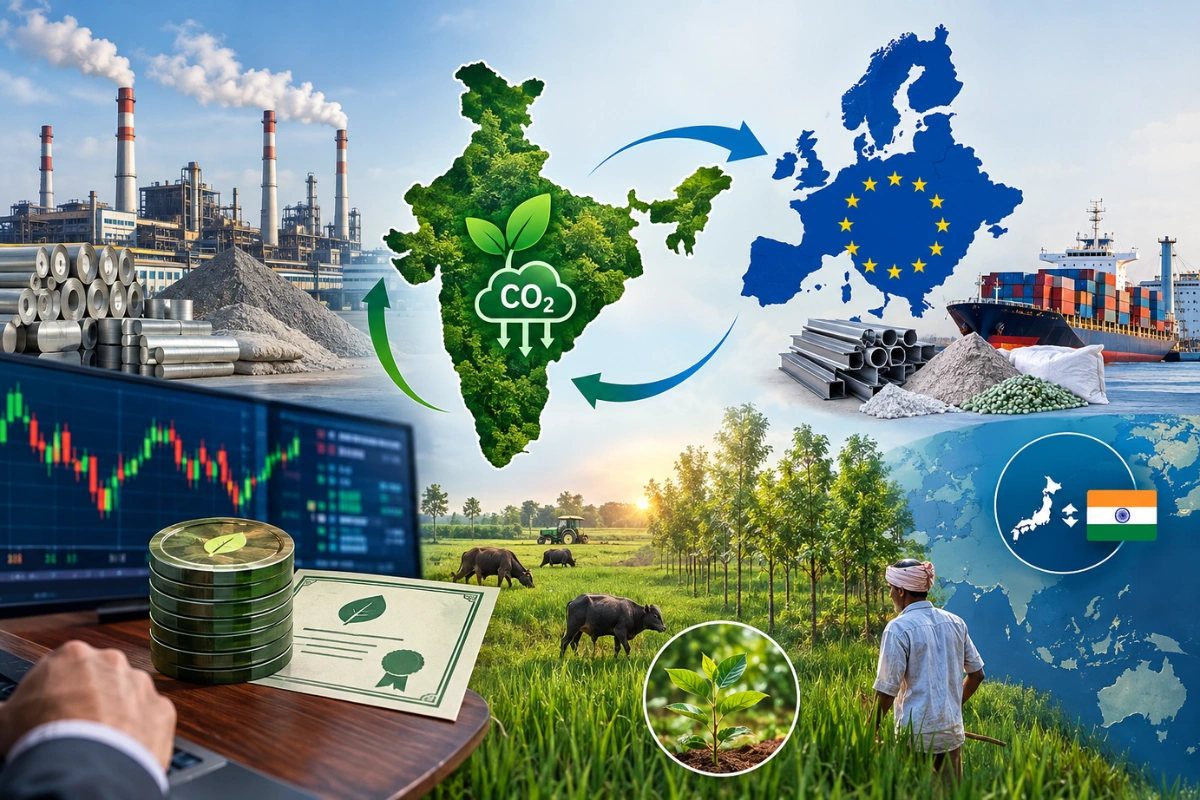
AI Generated Image
India’s Carbon Credit Trading Scheme is entering a new phase, with certificate trading expected to begin on power exchanges in October.
Around 490 large industrial facilities had submitted emissions-intensity reports by July 31, covering sectors such as aluminium and cement.
The mechanism replaces the earlier Perform, Achieve and Trade scheme, which focused on energy efficiency rather than direct carbon emissions.
Seven sectors currently fall under the framework: aluminium, cement, chlor-alkali, pulp and paper, petroleum refining, petrochemicals and textiles.
Industries that exceed their prescribed emissions targets will need to purchase certificates to cover the difference or face a penalty linked to twice the average certificate price.
Early estimates suggest compliance certificates could trade between Rs 600 and Rs 900 per tonne, although the actual price will emerge once trading begins.
The new system also carries implications for Indian exporters. The European Union’s Carbon Border Adjustment Mechanism has moved into its financial phase, covering products including steel, aluminium, cement and fertilisers.
Indian exporters may receive recognition for carbon costs already paid domestically if they can provide the required evidence.
This could help reduce the additional carbon-related burden on exports to Europe.
Farmers Enter Carbon Projects
Carbon markets are also expanding into agriculture through agroforestry and practices designed to reduce methane emissions from rice cultivation and livestock.
The Union Budget allocated Rs 20,000 crore towards carbon capture and farmer-linked carbon initiatives.
However, small farmers will depend on organisations such as Farmer Producer Organisations to aggregate projects, complete verification and access carbon markets.
Questions remain over verification costs, market pricing and the credibility of carbon reductions.
India’s strategy also limits international carbon-credit transfers under Article 6 of the Paris Agreement to 13 specified capital-intensive activities.
A bilateral arrangement with Japan provides an early example of this approach.
With trading scheduled to begin in October, the performance of India’s carbon market will depend on industrial participation, credible verification and international acceptance of domestic carbon pricing.
Also Read: Jeet Adani Says Assam Could Become India’s Energy Hub, Eyes 40,000 Jobs
To read more such news, download Bharat Express news apps