



AI Generated Image
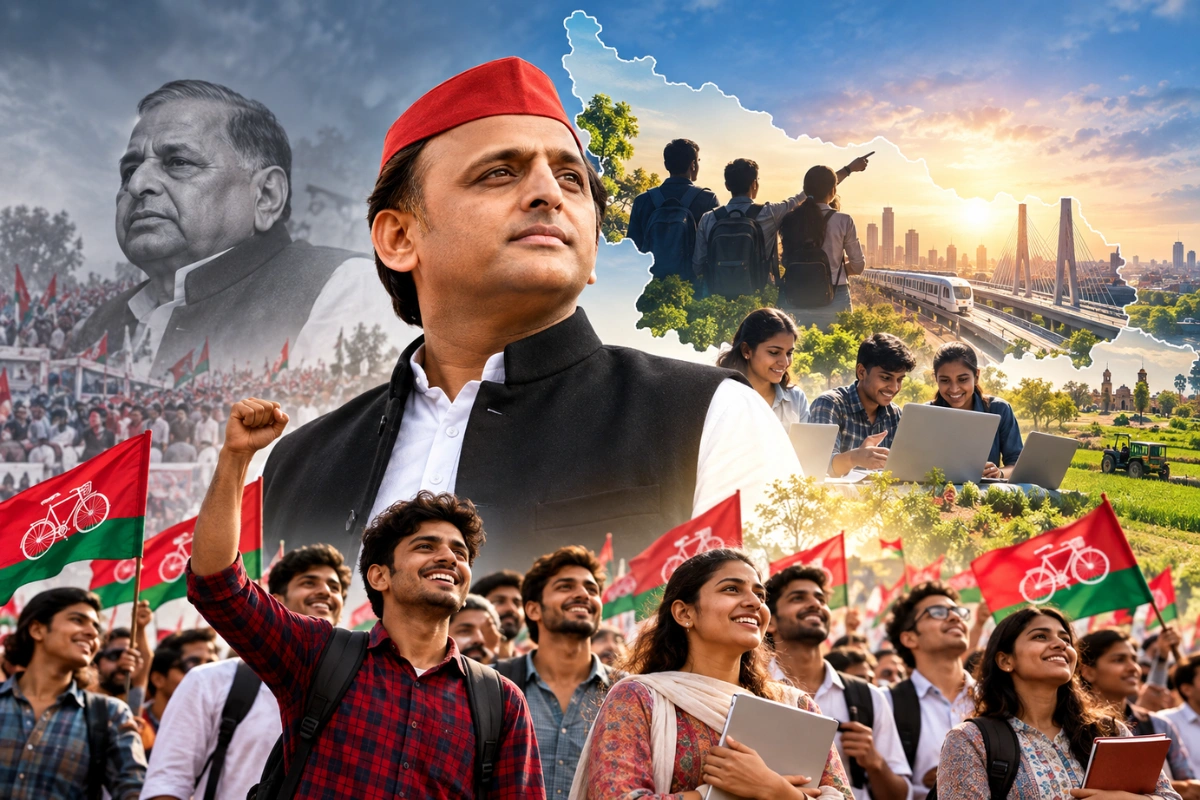
Akhilesh Yadav’s rise changed the way many people discuss youth in regional politics: not as a side note, but as a force that can shape messaging, organisation, technology, and voter imagination. His public journey from engineer and young parliamentarian to Chief Minister of Uttar Pradesh gave the Samajwadi Party a more contemporary language while keeping it rooted in local politics and social justice. The story is not just about one leader; it is about how regional parties try to stay relevant when voters are younger, more connected, and more demanding.
Why Did Akhilesh Yadav Become a Symbol of Youth in Regional Politics?
Akhilesh Yadav became a symbol of youth in regional politics because he entered a party known for older socialist leadership and gave it a fresher public style, especially among students, first-time voters, and young workers. Born in Saifai in 1973, trained in civil environmental engineering, and active in parliamentary politics from 2000, he represented a generational shift inside the Samajwadi Party before becoming Chief Minister of Uttar Pradesh in March 2012. His profile mattered because it suggested that regional leadership could be educated, technology-friendly, and still grounded in village networks and caste-conscious social realities.
That combination was important in Uttar Pradesh, where politics is never only about slogans. It is about booth workers, family networks, caste coalitions, local reputation, public welfare, and the ability to speak across towns, villages, universities, and digital platforms. Akhilesh’s appeal came from presenting himself as someone who understood both the old grammar of grassroots movements and the new grammar of aspiration. He did not replace traditional politics with modern branding; he tried to make the two speak to each other.
The Indian Express has noted that the Samajwadi Party had already built inroads into student politics and that Akhilesh used those channels, eventually leading multiple youth wings of the party. That early work helped him become more than a dynastic successor in public perception; it positioned him as a leader who could listen to campus concerns, youth employment anxieties, and the desire for development without abandoning the party’s social justice vocabulary.
The Generational Shift Inside a Regional Party
Regional parties often carry the personality of their founders. The Samajwadi Party was shaped by Mulayam Singh Yadav, Lohiaite socialism, backward-class assertion, and the politics of Uttar Pradesh’s deeply layered society. Akhilesh inherited that legacy, but inheritance alone could not guarantee youth engagement. A younger electorate needed a different tone: less feudal, more accessible, less closed-door, more conversational.
His political significance lies in how he represented a bridge. On one side stood the older networks of district leaders, caste mobilisers, and party loyalists. On the other side stood students with smartphones, job seekers, aspirational rural families, small-town entrepreneurs, and citizens comparing local governance with national promises. Akhilesh’s challenge was to keep the organisation recognisable while making it feel less trapped in the past.
This is why his rise is often discussed as a case study in modern regional politics. He did not come from outside the system; he came from its centre. Yet his image as an engineer, sports enthusiast, and younger campaigner allowed him to soften the perception of a party associated with rough-and-tumble power politics. That image did not solve every organisational or governance challenge, but it changed the conversation around who could lead a regional party and what kind of language such a leader could use.
From Cadre Politics to Conversational Politics
Traditional cadre politics depends on loyalty, hierarchy, and local mobilisation. Conversational politics adds another layer: a leader must be visible, quotable, relatable, and responsive to the moods of young voters. Akhilesh’s public style helped the Samajwadi Party enter that space more confidently.
He did this through student outreach, campaign travel, welfare messaging, and an emphasis on development symbols that younger voters could immediately understand. The point was not merely to appear young. The point was to make political participation feel closer to everyday ambitions: education, mobility, jobs, dignity, digital access, and a voice in public decisions.
Modernity as Access, Aspiration, and Technology
For many young people, modernity in politics is not an abstract ideology. It means whether they can study, connect, travel, find work, speak freely, and imagine a future without leaving their identity behind. Akhilesh’s politics leaned into that meaning by linking welfare to technology and development to dignity.
One of the most discussed examples was the free laptop scheme launched during his Chief Ministership for eligible students. The policy became a strong political symbol because it connected education, digital access, and youth aspiration in a simple, visible way. Reports from the period described the scheme as part of the government’s effort to provide laptops to students who had passed Class XII, with the promise rooted in the party’s 2012 election platform.
The importance of such a scheme was not only the device. In a state where the digital divide between urban and rural households could shape educational opportunity, a laptop represented entry into a wider world. For students in smaller towns or villages, it could symbolise access to online learning, application forms, competitive exam preparation, and a sense of belonging to the same future as metropolitan youth.
Why Symbolic Policies Matter
Political symbols work when voters can touch them, use them, and explain them to others. A road, a laptop, a scholarship, a metro line, a training camp, or a public meeting can become a shorthand for a larger promise. In Akhilesh’s case, the laptop became a symbol of youth engagement because it was easy to understand: a government was telling students that technology belonged in their hands too.
That symbolism also helped reframe the Samajwadi Party’s image. Instead of speaking only in the language of caste blocs and rural patronage, the party could speak about digital readiness, education, and future-facing governance. This did not erase the party’s traditional base. It expanded the conversation around what that base could demand.
What Made His Approach Feel Modern in Local Politics?
His approach felt modern in local politics because it combined old-school organisational work with newer themes: technology, youth identity, development messaging, social media awareness, and broader coalition-building. He did not rely only on rallies or only on online messaging; the more important shift was the attempt to connect booth-level mobilisation with a more aspirational public narrative. Recent reporting also shows the Samajwadi Party continuing to refine its outreach through worker training, student-wing visibility, and the PDA framework of Pichhda, Dalit, and Alpsankhyak communities.
This matters because local politics is where national narratives are tested. A young voter may hear speeches about development, but the decision to participate often depends on what happens nearby: college admissions, police behaviour, roads, exam schedules, recruitment delays, social respect, and whether a party worker listens. Akhilesh’s political style tried to bring those local concerns into a wider development story.
Modernity, in this sense, was not Westernisation or image management alone. It was the effort to make a regional party appear capable of governing a changing society. Uttar Pradesh’s youth are not a single voting bloc; they are divided by caste, region, class, gender, religion, language, and opportunity. Any serious model of youth in regional politics must recognise that diversity rather than reducing young voters to a slogan.
Key Elements of the Akhilesh-Style Modernisation Playbook
- Youth-Facing Welfare: Policies and promises that speak directly to students, job seekers, and first-time voters make political awareness more personal.
- Student Networks: Campus outreach and youth wings help parties identify future organisers, speakers, and local influencers before they become established leaders.
- Technology as Political Language: Digital access, social media communication, and tech-friendly symbolism allow regional parties to speak beyond traditional meeting grounds.
- Development With Identity: In a state like Uttar Pradesh, aspiration does not erase caste or community identity; effective messaging acknowledges both.
- Coalition Expansion: The PDA frame shows an attempt to move beyond a narrow base and build a wider social coalition around representation and dignity.
- Worker Training: Training party workers is a practical way to translate big political messages into local action, especially when voters expect quick responses.
These elements are not unique to one leader, but Akhilesh’s career shows how they can come together inside a regional party. The lesson is clear: youth engagement becomes durable only when it is organisational, not merely cosmetic.
Grassroots Movements Still Do the Heavy Lifting
The modern face of politics often appears on screens, but elections are still built on human contact. Grassroots movements remain the foundation of regional parties because they create trust where advertising cannot. A leader’s social media post may start a conversation, but a local worker, student organiser, farmer representative, or ward-level volunteer often decides whether that conversation becomes political participation.
Akhilesh’s rise was linked to precisely this blend. His early work with youth wings and university visits mattered because they created a networked style of politics before social media became central to campaigning. When young leaders sit with students, attend training camps, and travel across districts, they learn the uneven texture of public life. They hear different complaints in Bundelkhand, Purvanchal, Rohilkhand, Awadh, and western Uttar Pradesh.
The most effective grassroots movements do not simply repeat the leader’s message. They translate it. A student organiser may explain a policy in campus language. A village worker may connect it to local employment or education. A young woman volunteer may raise safety, mobility, and representation in ways that male-dominated committees often miss. That translation is where youth engagement becomes politically meaningful.
A Practical Model for Local Youth Engagement
- Start With Listening Meetings. Before asking young voters to support a party, create spaces where they can speak about exams, fees, jobs, transport, safety, and discrimination.
- Build Issue-Based Teams. Separate teams can focus on education, employment, digital literacy, women’s participation, environment, and local governance.
- Train Volunteers in Facts and Conduct. Young political workers need discipline, data, and respectful communication, especially in polarised environments.
- Connect Online and Offline Work. A video, poster, or post should lead to a meeting, help desk, registration drive, or public discussion.
- Promote New Speakers. Youth in regional politics grows stronger when parties allow young people from different castes, communities, and districts to speak for themselves.
- Measure Participation, Not Noise. A loud online trend is less valuable than new voters registering, students attending meetings, or citizens raising local issues.
This model reflects the deeper lesson of Akhilesh’s political evolution. Modern politics is not about choosing between digital media and grassroots politics. It is about making each strengthen the other.
Political Awareness Among Young Voters
Political awareness is rising because young citizens are surrounded by information, but information alone does not create understanding. In fact, too much noise can make politics feel cynical or performative. Leaders who want youth engagement must help young people connect policy to lived experience.
Akhilesh’s appeal to young voters has often rested on making politics feel linked to opportunity. A laptop is not just a welfare item; it points to education. A road is not just infrastructure; it points to mobility and markets. Student-wing activity is not just party work; it can become a training ground for future leadership. When politics is explained this way, young citizens can see why local decisions matter.
However, political awareness also requires criticism. No leader’s record is beyond scrutiny, and Akhilesh’s tenure faced serious challenges, including criticism over law and order and the handling of communal violence. Reporting on the period noted that the Muzaffarnagar riots in 2013 and other incidents damaged perceptions of his government and contributed to pressure for the party to change its political strategy.
That part of the story is essential. Youthful leadership does not automatically mean better governance. Modern branding cannot substitute for public safety, administrative accountability, and justice. For young voters, the real test is whether a leader can turn energy into institutions, promises into delivery, and identity into inclusive governance.
The Tension Between Dynasty and Democratic Participation
Any discussion of Akhilesh Yadav must address dynasty. He is the son of Mulayam Singh Yadav, and his entry into electoral politics came through a powerful political family. Ignoring that fact would make the story incomplete. At the same time, reducing his entire career to dynasty would miss how he built a distinct political persona through youth outreach, party organisation, and governance messaging.
This tension is common in Indian regional politics. Many parties are family-led, yet they operate in intensely competitive electoral environments. A dynastic leader still has to win credibility among workers, negotiate factions, respond to opponents, and convince voters that he or she offers more than a surname. Akhilesh’s internal conflicts with older party figures also showed that generational change can be contested even inside the same family and organisation. The Indian Express described the party’s conflict as a struggle between the ‘then’ and the ‘now’, with Akhilesh positioned as the figure pushing change against older power centres.
For young leaders, this tension offers a useful lesson. Entry into politics may depend on access, but legitimacy depends on performance, communication, and organisation. Youth engagement becomes hollow when young people only cheer for established families. It becomes meaningful when parties create pathways for new leaders without inherited privilege.
Young Leaders and the New Language of Regional Politics
Akhilesh’s larger contribution is the normalisation of a more contemporary regional leader: someone who can speak about caste justice and expressways, farmers and laptops, village networks and social media, local pride and national relevance. This blended language is increasingly important because voters do not live in separate ideological boxes. A young voter may care about reservation, a government job, English education, religious identity, smartphone access, family farming, and migration all at once.
Regional politics has to hold these concerns together. That is why young leaders cannot rely only on anger or charisma. They need policy literacy, emotional intelligence, coalition skills, and the patience to work through local structures. Akhilesh’s career shows both the opportunity and the difficulty of that task.
The current phase of his politics also shows an effort to broaden the Samajwadi Party’s social coalition. Reporting in 2026 described the party’s focus on expanding Dalit outreach, worker training, and the PDA formula, while also noting that the party won 37 of Uttar Pradesh’s 80 Lok Sabha seats in 2024. Whether such efforts succeed in future elections will depend on organisation, alliances, credibility, and the ability to convert social arithmetic into trust.
What Young Leaders Can Learn From This Shift
- Be Rooted Before Being Visible. Visibility helps, but local politics rewards leaders who know district-level realities.
- Use Technology as a Bridge, Not a Costume. Digital tools should help citizens access information, services, and participation.
- Respect Older Networks Without Being Trapped by Them. Generational change works best when it reforms institutions rather than simply replacing faces.
- Turn Identity Into Inclusion. Caste and community realities cannot be wished away; they must be addressed through representation and fairness.
- Accept Scrutiny. Young leaders gain credibility when they acknowledge failures and explain how they will govern better.
- Create More Leaders. The strongest youth movements are not built around one personality; they produce many capable organisers.
These lessons apply beyond Uttar Pradesh. Across India, regional parties face the same question: how do they remain authentic to their social base while speaking to a generation shaped by migration, education, digital media, and economic uncertainty?
What Can Youth Participation Change in Regional Democracy?
Youth participation can change regional democracy by making parties more responsive, widening the leadership pipeline, and pushing local issues into the centre of political debate. When young people participate seriously, they ask different questions: Where are the jobs? Why are exams delayed? Is public transport safe? Can village students compete with city students? Why should politics be left only to families, strongmen, or moneyed networks?
This is where Akhilesh Yadav’s story becomes bigger than one party. It shows that young voters are not merely a demographic to court during campaigns. They are organisers, communicators, critics, and future representatives. If parties treat them only as crowd-fillers or social media amplifiers, they waste their energy. If parties train them, listen to them, and give them responsibility, they can renew democratic life from below.
The best version of youth in regional politics is not anti-tradition. It learns from older movements while challenging their exclusions. It values grassroots movements but updates their methods. Similarly, it respects local politics but refuses to let local power remain closed to women, marginalised communities, students, and first-generation activists.
A Balanced Legacy of Modernisation
Akhilesh Yadav continues to modernise regional politics, but the process remains a work in progress rather than a finished achievement. He helped make youth, technology, development, and fresh communication central to the Samajwadi Party’s public identity. He also faced the limits that confront every regional leader: governance failures, factional conflict, caste complexity, public scepticism, and the challenge of turning symbolic politics into durable institutional change.
That balance is what makes the story useful. It is neither a simple success story nor a dismissal. It is a case study of how young leaders reshape inherited parties, expand political participation through student networks and digital aspiration, and bring modernity in Indian politics into the lanes, campuses, farms, and district offices where democracy takes shape.
For readers watching the future of local politics, the takeaway is clear: youth engagement matters most when young people connect it with responsibility. Akhilesh Yadav brought a younger style to regional politics, but the deeper lesson is that modern politics needs more than young faces. Young citizens need to stay informed, organise themselves, think critically, and turn political awareness into public action.
Also Read: From Gorakhnath To Governance: How Yogi Adityanath Built UP’s Law, Order And Prosperity Blueprint
To read more such news, download Bharat Express news apps