



AI Generated Image
Utpanna Ekadashi: The Demon, the Divine Warrior and the Birth of Ekadashi – An Extraordinary Story of Good and Evil
Utpanna Ekadashi commemorates the appearance of Goddess Ekadashi, the divine power who, according to Hindu tradition, emerged from Lord Vishnu and defeated the demon Mura. Its story connects the victory of good over evil with the devotional practice of Ekadashi fasting. Understanding the legend, its spiritual meaning and its calendar traditions brings this observance into clearer focus.
What Is Utpanna Ekadashi, and Why Is It Observed?
Utpanna Ekadashi is a Hindu observance honouring the manifestation of Ekadashi Devi and the sacred origins of the Ekadashi fast. It falls on the eleventh lunar day of the waning fortnight, known as Krishna Paksha. The month is named Margashirsha in the Purnimanta calendar and Kartika in the Amanta calendar; these are different calendar labels for the same observance.
The word utpanna conveys the sense of arising or coming into being. Here, it refers to the goddess’s appearance rather than the beginning of a calendar year. Within the wider world of Hindu festivals and sacred observances, this day offers a direct connection between a devotional story and a recurring religious practice.
Devotees who wish to begin regular Ekadashi fasting traditionally regard this occasion as an auspicious starting point. Its significance is therefore both commemorative and practical: it remembers a divine manifestation while inviting renewed commitment to worship.
The Demon, the Divine Warrior and the Birth of Ekadashi
The following account retells a widely shared devotional narrative, or vrat katha. Versions differ in their details, including the duration of the battle and the framing conversation through which the story is told. Their central sequence remains recognisable: Mura threatens the gods, Vishnu confronts him, and a radiant goddess brings the conflict to an end.
Mura’s Rise and the Gods’ Appeal
The story begins with Mura, a powerful demon whose conquests leave the gods displaced and afraid. Having defeated Indra and other celestial beings, he establishes his own authority. His strength serves domination rather than protection, turning power into a source of suffering.
Seeking release from his tyranny, the gods approach Lord Shiva, who directs them towards Lord Vishnu. They appeal to Vishnu for protection, and he agrees to confront their enemy. The narrative moves from helplessness to hope as the gods find someone willing to stand against Mura.
The Battle and the Mountain Cave
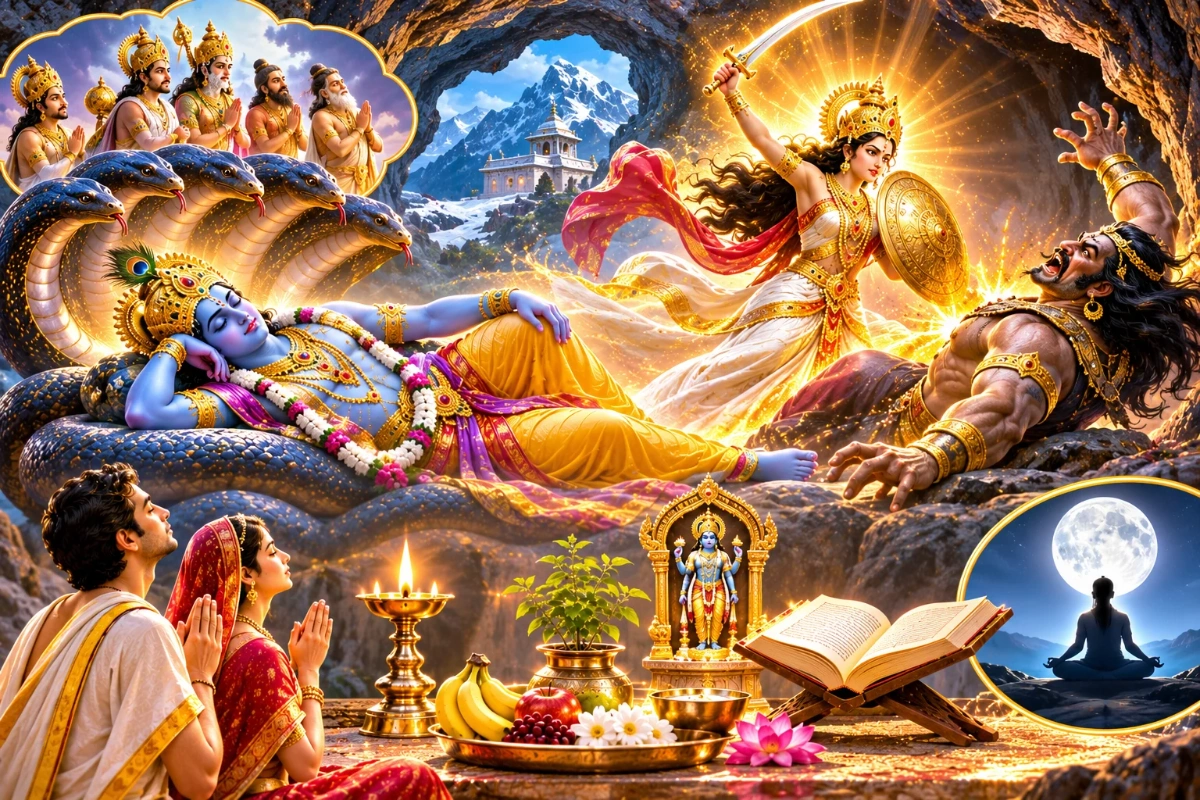
Vishnu confronts Mura and his forces in a fierce battle. Although the demon’s army is overcome, Mura himself continues to resist. The struggle becomes prolonged, and Vishnu eventually withdraws to a cave at Badarikashrama to rest.
Mura follows him into this refuge. Finding Vishnu apparently asleep, the demon prepares to attack rather than allowing the conflict to end. It is at this moment of threatened violence that the story introduces its unexpected defender.
The Appearance of the Divine Warrior
A radiant female power emerges from Vishnu’s own being and challenges Mura. She defeats the demon, ending the danger that had driven the gods to seek protection. When Vishnu awakens, she explains that she manifested from his energy to destroy the attacker.
Pleased with her deed, Vishnu offers her a boon. She asks that those who observe her sacred day with devotion receive freedom from sin and spiritual liberation. Because she appeared on the eleventh lunar day, she becomes known as Ekadashi. These blessings belong to the story’s religious teaching rather than representing promises of measurable worldly results.
The Meaning Behind the Victory Over Mura
The legend can be read as more than an account of a defeated demon. One devotional interpretation sees Mura as representing destructive tendencies that disturb spiritual life, while Ekadashi Devi embodies the divine strength that overcomes them. This symbolic reading complements the traditional story without replacing its religious meaning.
Notice, too, what the goddess requests after her victory. Her boon concerns the welfare of future devotees, not merely recognition for herself. Read reflectively, that choice shifts the emphasis from conquest to compassion: the triumph becomes meaningful because others may benefit from it.
For personal reflection, consider three ways to engage with that theme:
- Identify a habit rather than an enemy. Choose one tendency, such as impatience or harsh speech, to observe honestly during the day.
- Give restraint a positive purpose. Use time usually spent on distractions for prayer, reading or a thoughtful conversation.
- Connect devotion with generosity. Pair an inward intention with a practical act of kindness, without expecting recognition.
These are suggested reflections, not compulsory ritual rules. They offer a way to carry the story’s moral questions into everyday life without reducing the observance to a checklist.
When Is Utpanna Ekadashi Observed?
Utpanna Ekadashi occurs during Krishna Paksha in the lunar month identified as Margashirsha or Kartika, depending on the calendar system. Its Gregorian date changes from year to year. Anyone asking ‘utpanna ekadashi kab hai’ — ‘when is Utpanna Ekadashi?’ — should check a location-specific panchang for the relevant year and religious tradition.
For readers looking up the historical dates requested here:
| Observance | Historical date in the cited Indian calendars |
|---|---|
| Utpanna Ekadashi 2023 | Friday, December 8, 2023; Vaishnava observance was listed on Saturday, December 9 |
| Utpanna Ekadashi 2024 | Tuesday, November 26, 2024, in the New Delhi calendar |
The 2023 distinction is important: two listed dates did not mean everyone needed to fast for two consecutive days. Different observance rules can produce separate Smarta and Vaishnava dates. These are past dates, not a schedule for an upcoming observance.
When checking Ekadashi dates, confirm the following before planning:
- Year and city: Do not reuse an old article’s date or another location’s timings.
- Tradition: Follow the calendar used by your family, temple or spiritual community.
- Fasting day: The beginning of the lunar tithi is not necessarily the beginning of the prescribed fast.
- Parana window: Note the designated period for breaking the fast on the following day.
Observing the Day with Devotion and Care
Traditional observance brings together worship, hearing the sacred story, restraint and fasting. Accounts describe offerings to Vishnu, remembrance of his names and devotional singing. The emphasis is on consciously observing a sacred day, not simply abstaining from a meal.
Worship and a Manageable Devotional Routine
Begin by setting aside a clean, quiet place for worship and deciding what you can realistically sustain. You might read the katha slowly, offer flowers according to your custom or spend a short period remembering Vishnu’s names. Traditional descriptions also include lamps, incense and devotional offerings.
For a household with limited time, consider choosing one shared activity rather than planning an elaborate programme. Reading the story together and discussing the goddess’s compassionate boon can provide a focused starting point. Keep the arrangement simple enough that attention remains on the observance rather than the preparations.
Fasting Customs and Breaking the Fast
Ekadashi fasting is not practised in only one form. Traditional descriptions include fruit-based observance, milk-based observance and a single permitted meal, alongside stricter forms. Grains and pulses are commonly excluded, but detailed food rules should be checked against the tradition being followed.
Do not assume that a stricter fast is automatically the right choice for you. If you take medication or have concerns about fasting, discuss your plans with your clinician beforehand rather than changing your treatment to fit the observance.
The fast concludes with parana, the prescribed breaking of the fast on the following day. Its timing depends on the relevant lunar conditions and local calendar; it should not simply be copied from another city’s schedule. Record the designated window when you first check the fasting date.
A Story to Carry Beyond the Sacred Day
Utpanna Ekadashi joins a dramatic victory with an invitation to devotion: remember the divine warrior, understand the vow and observe it thoughtfully. Its lasting value need not end when the fast does. Choose one act of restraint or kindness worth continuing, and let that intention give the story a place in everyday life.
Also Read: Ekadashi Stories: Sacred Narratives & Rituals Explained
To read more such news, download Bharat Express news apps