



AI Generated Image
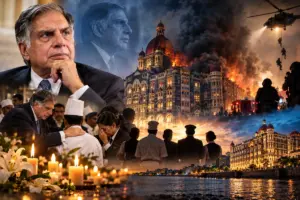
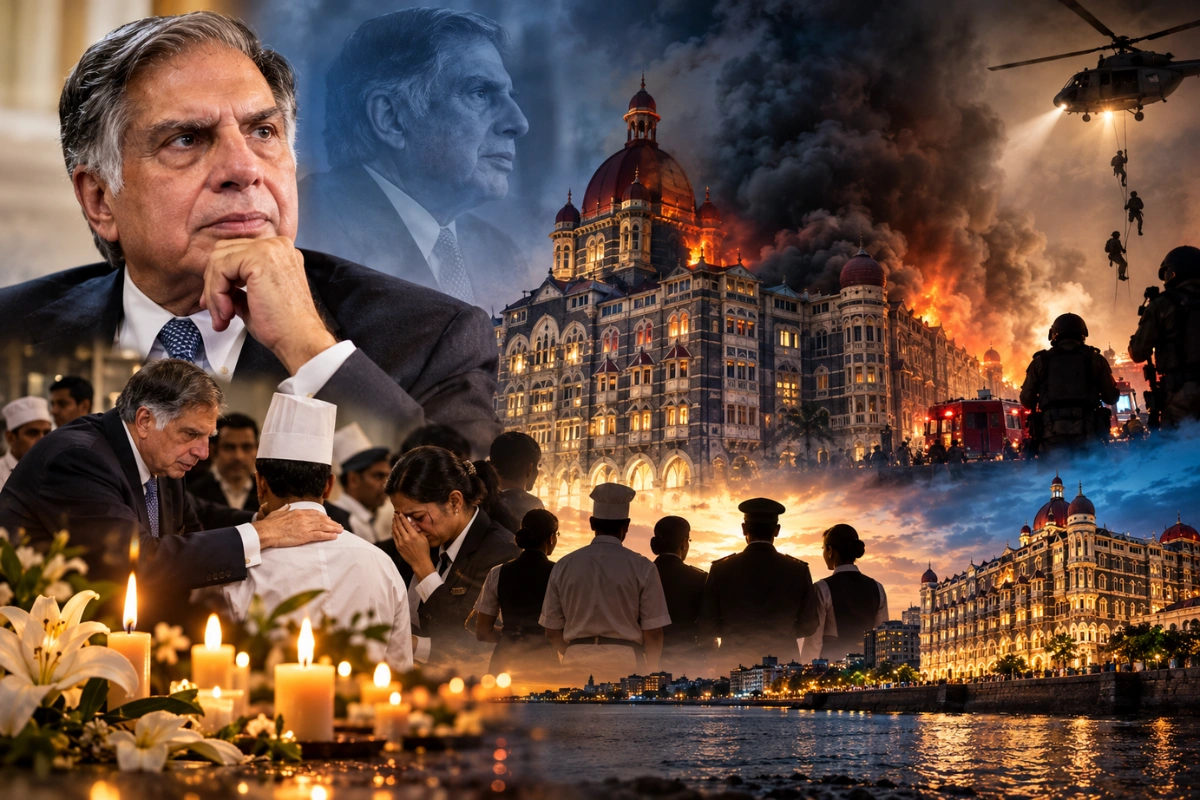
Ratan Tata’s leadership during and after the 26/11 attacks on Mumbai remains one of the clearest modern examples of duty under pressure. The Taj Mahal Palace was not only a business asset; it was a symbol of Indian hospitality, civic pride and human courage. What followed showed why Ratan Tata’s leadership lessons still matter to executives, public officials and anyone responsible for people in a crisis.
What Did Ratan Tata Teach Leaders When the Taj Was Attacked?
He taught that leadership is not proven by speeches after the danger has passed, but by visible responsibility when the cost is personal. The 2008 Mumbai attacks unfolded between November 26 and 29, and the Taj Mahal Palace was among the sites struck. Later Tata accounts describe the hotel as suffering heavy losses while still being remembered for the bravery and care shown by its people.
Ratan Tata did not reduce the tragedy to damage control. The response associated with him and the Tata Group placed victims, families, employees and the wider city at the centre. That distinction matters. Many leaders protect their reputation first and people second. Tata’s example reversed the order: protect people, restore dignity and let reputation follow.
Duty Begins with Presence, Not Performance
In a crisis, absence communicates as loudly as action. Leaders may be tempted to rely on formal statements, legal caution or operational layers. But people look for a human signal: Is the person at the top paying attention? Do they understand the pain? Are they willing to be seen without pretending to have easy answers?
That is one reason Ratan Tata’s conduct after 26/11 continues to be discussed in leadership circles. The story is not about theatrical heroism. It is about a quiet, steady form of accountability that says: if this happened under our roof, our duty does not end with insurance, repairs or public relations.
This is where Ratan Tata’s success takes on a broader meaning. He is remembered not only for industrial expansion, global acquisitions or institution-building, but also for a philosophy of responsibility. The Tata Group’s official tribute after his death on October 9, 2024, described his contributions as shaping both the group and the nation, reflecting how his public legacy reached beyond corporate results.
The Taj Response Turned Values into Systems
Values are easy to admire and hard to operationalise. A company can say it cares about people, but a crisis reveals whether that care has structure. After the attacks, the Taj Public Service Welfare Trust was created to provide assistance to victims and their families and to support longer-term livelihood needs connected to the 26/11 tragedy.
That matters because compassion without organisation fades quickly. Immediate sympathy may comfort people for a day; systems can support them for years. The lesson for leaders is practical: if your values matter, build mechanisms that make them durable.
A duty-centred response usually includes:
- Visible ownership: Leaders acknowledge the human impact without hiding behind technical language.
- Immediate care: Injured people, families, frontline workers and affected communities receive attention before image repair begins.
- Long-term support: The organisation asks what recovery will require after the cameras leave.
- Cultural memory: The event becomes part of institutional learning, not a painful chapter quietly buried.
- Renewed standards: Security, training, communication and support systems are strengthened without turning grief into blame.
The best Ratan Tata leadership lessons are not abstract slogans. They are reminders that duty must become process, budget, behaviour and memory.
Courage at the Front Line Reflected Culture
The Taj story is also the story of employees who protected guests and colleagues in terrifying circumstances. Tata’s own leadership is often discussed alongside the courage of hotel staff because the two are connected: organisational culture is built long before an emergency, then revealed all at once.
A hotel is trained to serve, but service during danger becomes something deeper. It becomes a moral instinct. Reports and reflections on the Taj after 26/11 often focus on how employees acted with composure and care, reinforcing the idea that recruitment, training and culture can shape extraordinary conduct when procedures alone are not enough.
This is an uncomfortable lesson for leaders. You cannot demand sacrifice from people in a crisis if you have treated them as replaceable in ordinary times. Loyalty, initiative and courage are not switched on by memo. They grow in workplaces where people feel trusted, respected and part of something larger than a transaction.
Why Do Ratan Tata Quotes Still Resonate?
Ratan Tata quotes resonate because they often sound less like branding and more like personal principles. One line associated with the reopening spirit after the attack is especially fitting: “We can be hurt, but we cannot be knocked down.” It captures resilience without denying pain, which is why it continues to feel relevant to leaders facing disruption, loss or public scrutiny.
The strongest leadership language does not inflate the leader. It steadies the listener. That is why people continue to search for Ratan Tata quotes years after his passing: they are often looking for words that combine ambition with restraint, confidence with humility, and success with service.
Still, leaders should be careful with quotes in the age of viral posts. Not every line shared online is reliably sourced, and admiration can sometimes turn real people into motivational posters. The more useful approach is to study the pattern of Tata’s decisions: calm presence, humane priorities and a refusal to treat business as separate from society.
Lessons World Leaders Can Take from the Night the Taj Stood Still
The Taj attack was a security tragedy, but the leadership lessons extend far beyond hospitality. Heads of government, mayors, CEOs, university presidents, hospital administrators and non-profit leaders all face moments when people need more than competence. They need moral clarity.
Here are the most transferable lessons:
- Lead with the Affected, Not the Audience. In a crisis, the people harmed are not props in a communications strategy. They are the first responsibility.
- Do Not Confuse Speed with Care. Fast statements can be necessary, but rushed certainty can deepen mistrust. Say what you know, act where you can and keep showing up.
- Make Empathy Operational. Relief funds, counselling, family assistance, job protection and transparent communication turn concern into action.
- Protect Institutional Dignity. Rebuilding is not just physical. It includes restoring confidence, honouring sacrifice and preserving the meaning of the place or mission.
- Accept Scrutiny Without Self-Pity. Responsible leaders do not make themselves the victims of the crisis. They absorb pressure so others can recover.
These are not soft lessons. They are demanding. Duty asks leaders to carry responsibility when excuses are available, to care when no immediate reward is guaranteed and to act with restraint when anger would be easier.
Reputation Follows Responsibility
One of the most misunderstood ideas in modern leadership is that reputation can be managed separately from conduct. It cannot, at least not for long. Communication teams can shape a message, but only behaviour gives it weight.
Ratan Tata’s example after 26/11 is powerful because it did not feel like reputation management. It felt like stewardship. The hotel could be repaired, but the deeper task was to stand with the people who had suffered and to show that terror had not destroyed the institution’s spirit.
That is why the story still travels across business schools, boardrooms and public conversations. People are not merely impressed by resilience; they are moved by responsibility. The Taj did reopen, but the larger lesson was that institutions endure when they remember what they are for.
A Practical Duty Checklist for Today’s Leaders
Not every leader will face a crisis on the scale of 26/11, but every leader will face a moment when values are tested. Use this checklist before the emergency arrives:
- Name Your Non-Negotiables. Decide in advance what people-first leadership means in your organisation.
- Map Who Could Be Harmed. Include employees, contractors, customers, families, neighbours and communities.
- Create Response Pathways. Know how financial help, medical support, counselling and communication will be activated.
- Train for Judgement, Not Only Rules. People need principles that guide action when instructions are incomplete.
- Review After Every Crisis. Ask what failed, what helped and what must change.
- Honour People Publicly and Materially. Recognition matters, but practical support matters more.
This is the everyday side of Ratan Tata’s leadership lessons. Duty is not a grand emotion saved for historic moments. It is preparation, habit and accountability built into the way an organisation works.
The Enduring Measure of Success
Ratan Tata’s life is often discussed through the language of achievement: companies, scale, innovation, philanthropy and national influence. Yet the night the Taj stood still points to a deeper measure. Success is not only what a leader builds; it is what a leader protects when everything is breaking.
For world leaders, the lesson is both simple and severe. Power is not the privilege of being distant from pain. It is the obligation to move closer to responsibility when others are afraid, grieving or uncertain.
That is why this story endures. The Taj became a site of loss, courage and renewal. Ratan Tata became, for many, an example of how dignity can lead without noise. And the most lasting takeaway is this: leadership is remembered not by how high it rises in calm weather, but by whom it serves when the night is at its darkest.
Also Read: Role Of AI In Elections: A Comparative Understanding Of India And The UK
To read more such news, download Bharat Express news apps