



AI Generated Image
The Awadh realignment is best understood as a shift in local power equations across Raebareli, Amethi, Ayodhya and nearby central Uttar Pradesh, where caste identity, party loyalty, and access to government now overlap more visibly. Manoj Pandey’s move away from the Samajwadi Party ecosystem did not merely change one MLA’s position; it exposed how fragile political alliances can become when regional leaders feel their community influence, ideological comfort, or future prospects are at stake.
Why Did Manoj Pandey’s Move Matter in Awadh?
Manoj Pandey mattered because he was not a marginal figure drifting between parties. He was a three-time MLA from Unchahar, a former SP chief whip, and widely described as a prominent Brahmin face within the party’s central UP network. His resignation as SP chief whip ahead of the February 2024 Rajya Sabha voting, followed by the wider cross-voting episode, turned a legislative contest into a signal about changing loyalties in Awadh.
That signal was especially important because Unchahar sits inside the Raebareli parliamentary belt, an area where Congress, SP and BJP calculations are often intertwined rather than isolated. When a leader with district-level roots shifts sides, booth-level workers, caste intermediaries, local contractors, and community influencers all reassess where power may flow next. This is why the Awadh realignment became larger than one resignation: it suggested that the SP-Congress understanding in central UP would need careful local management, not just top-level seat-sharing.
The Timeline That Turned a Rebellion Into a Realignment
Pandey’s political shift unfolded in stages, which is why its impact lasted beyond a single news cycle. The first moment came on 27 February 2024, when he resigned as SP’s chief whip before the Rajya Sabha election. Reports said seven SP MLAs cross-voted, hurting the party’s third candidate and helping the BJP secure an additional seat.
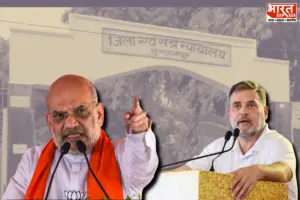
The next stage came during the 2024 Lok Sabha campaign, when Pandey formally joined the BJP in the presence of Union Home Minister Amit Shah in Raebareli, according to reports. He also shared the stage at a rally connected to the Raebareli and Amethi campaigns, giving the BJP a local face in a region long shaped by Congress influence and SP’s support structure.
A year later, the SP expelled Pandey, Abhay Singh and Rakesh Pratap Singh in June 2025, citing their rebellion and support for rival politics. Soon after, the three were declared unattached members of the Uttar Pradesh Assembly, leaving them free to support the BJP on the floor of the House and in public forums while retaining legislative rights.
Key Turning Points:
- February 2024: Pandey resigns as SP chief whip before Rajya Sabha voting.
- February 2024: Cross-voting weakens SP’s legislative arithmetic.
- May 2024: Pandey joins BJP during the Lok Sabha campaign in Raebareli.
- June 2025: SP expels Pandey and two other rebel MLAs.
- July 2025 Onwards: The expelled MLAs function as unattached legislators, reshaping Assembly-floor and regional expectations.
Caste Arithmetic Moved From Background to Foreground
Central UP politics has always contained caste arithmetic, but Pandey’s shift made it harder for parties to keep that arithmetic in the background. The SP’s PDA formulation — focused on backward communities, Dalits and minorities — was designed as a broad social coalition. Yet reports at the time noted concern among some upper-caste leaders that the message could feel exclusionary unless carefully expanded and explained.
Pandey’s departure sharpened that debate because he represented a section of Brahmin leadership inside the SP. For the BJP, his presence offered a way to reinforce its reach among upper-caste voters in Raebareli and adjoining districts. For the SP, the episode underlined a strategic challenge: how to deepen its PDA platform without making older upper-caste or locally influential leaders feel politically redundant.
This is where governance changes enter the story. In state politics, voters and local leaders often judge alignments not only by ideology but by who can get roads repaired, administrative files moved, police complaints heard, and welfare access negotiated. When a sitting MLA moves closer to the ruling party, supporters may interpret that as a route to faster administrative responsiveness, even when the formal powers of an MLA remain unchanged.
What Changed for Political Alliances in Central UP?
The main change was that alliances became more dependent on local credibility. A state-level SP-Congress arrangement may look neat on paper, but Raebareli, Amethi and nearby Awadh seats require leaders who can transfer trust across caste, party and family loyalties. Pandey’s move showed that political alliances can weaken if regional leaders believe they have more influence outside the old arrangement than within it.
For the BJP, the shift offered a chance to pressure opposition strongholds from inside their own social networks. Bringing in a former SP insider with Brahmin appeal helped the party frame itself not just as an outside challenger, but as a platform open to influential local defectors. That matters in constituencies where victory margins can depend on small shifts among non-core voters.
For the SP, the challenge is different. It must convince voters that departures by prominent figures do not weaken its broader social project. It also has to build second-line leadership in seats where former insiders may now campaign against it. In practical terms, that means more local outreach, sharper candidate selection, and messaging that includes both social justice and constituency-level development.
The Wider Meaning of the Awadh Shift
The Awadh realignment is not simply about one leader changing sides; it is about the new bargaining power of regional figures in Uttar Pradesh. Parties increasingly need leaders who can speak to caste identity, development expectations, religious sentiment, and everyday governance frustrations at the same time. Pandey’s move became consequential because it sat at the intersection of all four.
Recent reporting also showed that speculation over a possible return of Pandey and the other expelled MLAs to the SP was denied, with the leaders saying they remained unaffiliated and focused on their constituencies. That keeps the political field fluid rather than settled.
Takeaway
Manoj Pandey’s shift altered the axis of central UP politics because it converted a personal rebellion into a regional signal. It forced parties to rethink caste outreach, local leadership, governance access and opposition unity in Awadh. As Uttar Pradesh moves towards future electoral contests, the lesson is clear: durable alliances will depend not only on arithmetic, but on whether local power brokers, communities and voters feel genuinely represented.
Also Read: Born In The Flame Of Faith: How The Akali Dal Shaped 100 Years Of Punjab’s History
To read more such news, download Bharat Express news apps