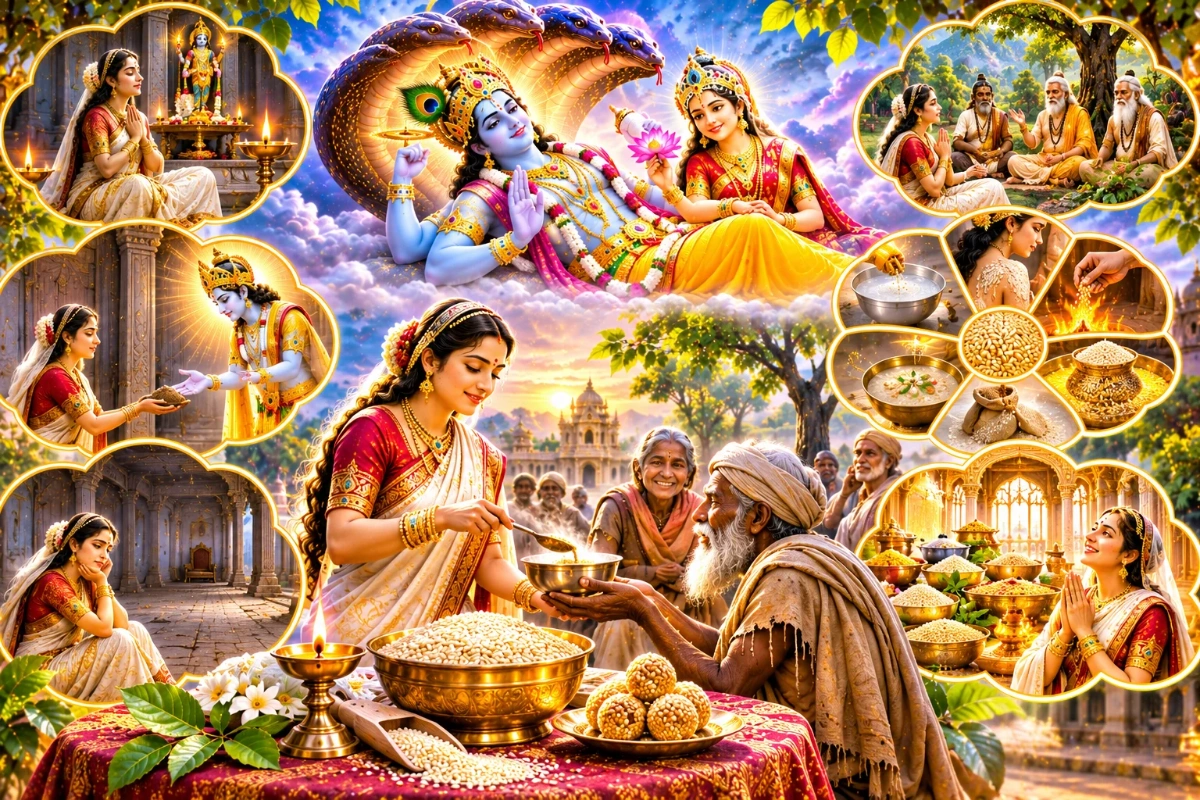
AI Generated Image
Shattila Ekadashi: She Gave Away Her Wealth but Forgot Something Essential – The Powerful Lesson of Shattila Ekadashi
Shattila Ekadashi is a Hindu observance dedicated to Lord Vishnu that brings fasting, sesame rituals and charity together. Its traditional story offers a lesson: devotion should make room for another person’s hunger. Understanding that lesson gives the day meaning beyond food restrictions and helps turn religious practice into thoughtful generosity.
The memorable image is an empty home – a place earned through spiritual effort, yet missing the nourishment that makes it livable. Read as a moral teaching, the story asks us to look beyond what we give up and consider what we actually give.
What Does the Story of Shattila Ekadashi Teach?
The central teaching of Shattila Ekadashi is that personal austerity should be accompanied by charity, especially the sharing of food. In its traditional vrat katha, a devoted woman observes rigorous fasts but neglects food donation. Her experience reveals the gap between practising devotion for oneself and responding compassionately to others.
The Devoted Woman and the Unexpected Visitor
In the version published by Sri Mandir, a Brahmin woman is deeply committed to worship and fasting. However, she does not donate grains to deities or Brahmins. Lord Vishnu notices this omission and visits her seeking alms; she gives him a lump of clay rather than food.
After her death, the woman receives a heavenly home with a mango tree, but its interior lacks essential provisions. Distressed, she asks Vishnu why her religious discipline has brought her to a place without nourishment. He directs her to learn about Shattila Ekadashi from visiting celestial women.
She follows their guidance and observes the vrata. The story ends with her home becoming filled with abundance, expressing the religious connection between devotion, giving and fulfilment. These are elements of a sacred narrative, not a promise that performing a ritual will produce material wealth.
A Necessary Distinction About Giving Away Wealth
The familiar framing of a woman who ‘gave away her wealth’ should not obscure the actual emphasis. The versions cited here describe a woman devoted to fasting who neglected charity, rather than someone documented as having donated an entire fortune. The essential omission is food donation.
The Empty Home Makes the Lesson Personal
One useful reading of the empty home is that achievement alone cannot make life complete. The woman has pursued spiritual discipline, yet the story confronts her with something elementary: nourishment. It invites us to consider whether our good intentions reach the people who need them.
That question need not diminish prayer, ritual or sacrifice. Instead, it can help connect them to everyday conduct. After worship, for example, you might ask whether someone nearby needs groceries, company or help preparing a meal.
The lesson also offers a practical test for generosity: Does this gift meet the recipient’s need, or merely satisfy my wish to give? A carefully chosen contribution can be more thoughtful than an impressive but unsuitable donation. Let usefulness, rather than visibility, guide the choice.
Sesame Connects the Ritual with Everyday Nourishment
The name Shattila combines shat, meaning six, and tila, meaning sesame. Sesame’s repeated appearance gives the observance its distinctive character among Hindu festivals and fasting days. Traditional descriptions connect it with bodily purification, offerings, nourishment and charity.
One traditional account describes these six uses:
- Bathing: Adding sesame seeds to bathing water.
- Body Application: Using ground sesame as a ritual paste or scrub.
- Water: Including sesame in water as prescribed by the tradition.
- Sacred Offering: Offering sesame in a ritual fire.
- Food: Consuming sesame within the applicable observance.
- Charity: Giving sesame to others.
Use this list to understand the symbolism, not as a requirement to perform unfamiliar rites independently. Ask your family priest or temple which practices belong to your tradition. For a simple personal reflection, let the seeds serve as a reminder that something small can still be shared thoughtfully.
Shattila Ekadashi Kab Hai? Dates for 2025 and 2026
For readers asking ‘shattila ekadashi kab hai’, meaning ‘When is Shattila Ekadashi?’, the Delhi calendar dates were January 25, 2025, and January 14, 2026. Both dates are now past. They should not be presented as upcoming observances.
| Observance | Date Listed for Delhi, India |
|---|---|
| Shattila Ekadashi 2025 | Saturday, January 25, 2025 |
| Shattila Ekadashi 2026 | Wednesday, January 14, 2026 |
These dates follow the cited Delhi calendars.
The observance falls on Krishna Paksha Ekadashi, identified as Magha in the Purnimanta calendar and Pausha in the Amanta calendar. Different month names can therefore refer to the same observance rather than conflicting festivals.
For practice in the United States or elsewhere, consult a location-specific panchang or your temple’s calendar. Panchang calculations are location-dependent, so a Delhi timetable should not automatically become your local schedule. Check the fasting day and fast-breaking window together.
Observing the Day with Intention
Ekadashi fasting is part of a wider devotional practice, not simply a menu restriction. ISKCON Gurugram describes observance through abstaining from grains, chanting, scriptural reading, sesame rituals and charity. Its account includes fruits, nuts and milk among the foods used for fasting prasadam.
A thoughtful preparation plan can keep the purpose in view:
- Confirm Your Tradition’s Guidance. Ask about permitted foods, sesame use and the appropriate local calendar before planning meals.
- Make Time for Worship. Set aside an achievable period for prayer, chanting or reading the katha rather than crowding the day with elaborate preparations.
- Arrange Charity Beforehand. Contact a recipient or food service so your contribution reaches someone instead of remaining an intention.
- Plan the Following Morning. Check the prescribed parana window before beginning the fast, rather than searching for it at the last minute.
Parana means breaking the fast. Drik Panchang places it after sunrise on the following day, with timing governed by Dwadashi and other calendrical conditions. It also notes that fasting recommendations can differ between Smarta and Vaishnava observances.
Avoid turning these differences into a competition over whose practice is stricter. Seek guidance from the tradition you follow and choose a manageable plan rather than copying someone else’s routine without understanding it.
What Fasting Benefits Should Devotees Focus On?
For this observance, the most relevant fasting benefits are spiritual aims: devotion, reflection, restraint and generosity. The religious tradition associates the vrata with purification and spiritual progress. Those beliefs should be distinguished from medical claims or guarantees about health, wealth and future outcomes.
You might use the day to notice habitual consumption, practise patience or redirect attention towards someone else’s needs. Treat these as intentions to cultivate, not automatic results of missing meals. Ask afterwards whether the observance changed how you behaved, not only whether you followed a food rule.
Health needs require separate consideration. People with diabetes should seek individualised medical advice before fasting because risks can include low or high blood glucose and dehydration. NIDDK advises planning with a healthcare professional, including discussing medicines; do not adjust prescribed treatment independently.
If food restriction is unsuitable for you, discuss an appropriate observance with your clinician and religious adviser. Keep care for yourself and others central to the decision.
Make Food Donation Useful and Respectful
To put the story’s lesson into practice, start with a conversation rather than a shopping list. Ask a local food pantry, community kitchen, temple service or household what would be useful. Then choose a contribution you can give without compromising your own essential needs.
Consider these practical approaches:
- Request a Current Needs List. Let the receiving organisation identify suitable staples and quantities instead of assuming sesame is its priority.
- Check Donation Requirements. Ask about packaging, expiry dates, storage and whether prepared meals are accepted before buying or cooking.
- Offer Manageable Support. Choose an amount or volunteering commitment you can realistically fulfil; generosity need not become a financial strain.
- Protect Dignity. Offer help discreetly, avoid requiring gratitude and ask permission before taking or sharing photographs.
If you are observing dietary restrictions yourself, ask your temple how to coordinate food donation with its guidance. Keep the recipient’s needs visible throughout the process. A useful question to carry beyond the day is: what support could I continue when there is no festival prompting me?
Carry the Lesson Beyond the Fast
The lasting invitation is to bring devotion and practical compassion closer together. Let prayer create space for attention, and let attention lead to useful action. Whether your contribution is food, time or quiet assistance, choose something that responds to a real need.
The measure worth carrying forward is simple: not only what you went without, but whom you helped
Also Read: Pausha Putrada Ekadashi: Significance & Observance
To read more such news, download Bharat Express news apps