



AI Generated Image
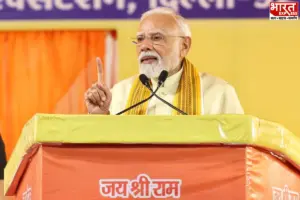
Prime Minister Narendra Modi made seven specific appeals related to economic self-reliance, asking citizens, businesses and farmers to make practical choices that can reduce pressure on foreign exchange and strengthen domestic resilience.
The message connected everyday behaviour—how people commute, travel, buy gold, consume oil, work and farm—to the broader goal of a self-reliant India.
At its core, the appeal was about treating national economic strength as a shared responsibility, not only a matter of government policy.
PM Modi’s seven appeals were framed as a response to global uncertainty, energy-market pressure and the need to conserve foreign exchange reserves.
The broader idea was simple: when a country depends heavily on imports for fuel, gold, edible oil, fertilisers or discretionary overseas spending, citizens’ choices can influence the nation’s external balance.
In that context, economic self-reliance in India becomes more than a policy slogan; it becomes a call for habits that reduce avoidable outflows and support domestic capacity.
The Prime Minister’s message fits into the continuing conversation around India’s economic growth and the policies needed to make growth more secure.
Large economies can expand rapidly and still remain vulnerable if essential consumption depends too much on volatile global supply chains.
PM Modi’s appeals, therefore, focused less on austerity for its own sake and more on reducing avoidable dependence in areas where small behavioural shifts can add up.
This is why the speech matters beyond the immediate news cycle. It placed households, offices, farmers and consumers inside the national economic story.
Instead of presenting India’s economic policies as distant decisions made in Ministries, the appeals suggested that commuting patterns, wedding choices, work culture, food habits and farming inputs can all affect economic resilience.
The Seven Appeals at a Glance
PM Modi’s seven appeals covered fuel, work, travel, gold, edible oil, farming inputs and local consumption.
Some reports grouped related examples—such as overseas destination weddings and foreign holidays—under the wider appeal to reduce discretionary foreign expenditure, while highlighting the call to avoid unnecessary gold purchases for one year.
Key appeals included:
- Reduce imported fuel consumption by using public transport, metros, carpooling, electric mobility where practical, and fewer unnecessary vehicle trips.
- Revive work-from-home and virtual meetings where possible to cut travel demand and reduce fuel use.
- Avoid foreign travel for one year, especially non-essential overseas holidays, as part of rethinking discretionary spending.
- Reconsider destination weddings abroad and reduce avoidable foreign expenditure connected with celebrations.
- Limit excessive gold purchases for one year to reduce pressure on foreign exchange outflows.
- Reduce edible oil consumption, linking household habits with both economic and personal-health considerations.
- Reduce dependence on imported chemical fertilisers, with farmers encouraged to move towards more balanced and natural farming practices where feasible.
The common thread is import reduction. Fuel, gold, edible oil and fertiliser are not identical sectors, but each can involve significant exposure to global prices, supply disruptions and foreign currency payments.
By placing them together, PM Modi’s message turned economic self-reliance in India into a practical framework: save where possible, substitute where sensible and build domestic strength over time.
Fuel Conservation Is the Most Immediate Appeal
The most direct appeal was to reduce consumption of petrol and diesel, much of which is linked to imported crude oil.
PM Modi asked citizens to use public transport and metros where available, consider carpooling, reduce unnecessary travel and use electric vehicles where practical.
The stated economic logic was to conserve foreign exchange reserves by cutting demand for imported fuel. This appeal is practical because fuel consumption is visible in daily life.
A person may not control global crude prices, shipping routes or currency movements, but they can decide whether a short solo car ride can become a metro trip, a shared commute or a virtual meeting.
At scale, these choices can reduce pressure on fuel imports and household fuel bills.
For cities, the appeal reinforces the importance of public transport systems. Metros, buses, suburban trains, shared mobility and walkable neighbourhoods all become economic infrastructure, not merely convenience services.
When citizens shift even some trips away from private fuel use, the benefit is not only environmental; it supports the national aim of conserving foreign exchange.
Practical ways households and offices can respond include:
- Planning weekly errands together instead of making several separate vehicle trips.
- Creating office carpool groups for employees who live along similar routes.
- Using public transport for predictable commutes and reserving private vehicles for essential trips.
- Encouraging virtual meetings for routine reviews that do not require physical presence.
- Choosing domestic travel routes and local services that reduce unnecessary fuel intensity.
The appeal does not assume that every citizen has equal access to reliable public transport.
In smaller towns or areas with weak connectivity, carpooling or better trip planning may be more realistic than full dependence on buses or metros.
The larger point is behavioural flexibility: wherever a lower-fuel choice is practical, it contributes to the bigger goal.
Work-from-Home Returns as an Economic Tool
PM Modi called for the revival of work-from-home practices and virtual meetings where possible. During the pandemic, many organisations discovered that some functions could operate remotely or in hybrid formats.
In this appeal, work-from-home was presented not as an emergency health measure, but as a way to reduce commuting, save fuel and support economic self-reliance in India.
For employers, this is a reminder to separate necessary physical presence from habit. Manufacturing, retail, healthcare, logistics and many field roles require people to be on site. But administrative reviews, internal coordination, customer support, documentation, finance processes, design work and some technology roles may not need daily commuting.
A sensible work-from-home revival does not have to mean a total return to lockdown-style work. It could mean two remote days a week, virtual-first internal meetings, staggered office schedules or remote participation for employees who would otherwise travel long distances. The best version is practical, not symbolic.
Businesses can make the appeal workable by:
- Identifying roles where productivity does not depend on daily office attendance.
- Setting clear expectations for availability, deliverables and response times.
- Keeping important team interactions intentional rather than replacing all collaboration with calls.
- Reducing unnecessary intercity business travel through video meetings.
- Measuring outcomes instead of simply measuring time spent at a desk.
This is where the appeal connects to modern workplace policy. A carefully designed hybrid system can reduce fuel consumption without weakening accountability. It can lower commuting stress for employees, reduce congestion and make office resources more efficient.
What Does Avoiding Foreign Travel for One Year Achieve?
PM Modi’s appeal to avoid foreign travel for one year was aimed at reducing discretionary foreign spending and conserving foreign exchange.
The advice focused on non-essential overseas trips, including holidays, and encouraged citizens to rethink whether some travel could be postponed or redirected within India.
Reports noted his appeal to reconsider destination weddings abroad as part of reducing foreign expenditure.
Foreign travel is not the same as essential business, education, medical or family travel.
The economic argument is mainly about discretionary spending—holidays, luxury experiences and celebrations that move large amounts of money outside the country.
When citizens choose domestic tourism or postpone avoidable foreign trips, more spending can remain within local hotels, transport networks, restaurants, event services and small businesses. This appeal has a cultural and economic angle.
India has a large domestic tourism market, with pilgrimage routes, heritage cities, beaches, forests, hill regions, food trails and emerging destinations.
Choosing domestic travel for a year can support local jobs while reducing foreign currency outflows.
The destination-wedding point fits the same logic. A wedding abroad can involve international travel, foreign venues, overseas vendors, luxury imports and foreign exchange spending by many guests.
PM Modi’s appeal was not against celebration; it was a request to reconsider whether such celebrations can happen within India, supporting domestic venues and service providers instead.
For families, the practical question is not whether every overseas trip is wrong. It is whether avoidable spending abroad can be delayed, reduced or replaced with a domestic alternative for a defined period. That makes the appeal more actionable and less abstract.
Gold Purchases and Foreign Exchange Pressure
Another major appeal was to limit excessive or non-essential gold purchases for one year.
Gold has deep cultural, financial and emotional value in Indian households, especially around weddings and festivals. That is exactly why the appeal stands out: it asks citizens to distinguish between tradition and avoidable excess during a period of economic pressure.
The economic concern is that gold demand can contribute to foreign exchange outflows when supply depends on imports.
Even when purchases are made in rupees at a local shop, the broader supply chain may involve international sourcing. So, reducing non-essential gold buying can be linked to conserving foreign exchange reserves.
The wording matters. The appeal was not a permanent rejection of gold ownership. It was a time-bound request to avoid excessive gold purchases for one year. That makes the message easier to interpret as a temporary economic discipline rather than a demand to abandon cultural practices.
Families planning weddings or major purchases could respond by:
- Reusing family jewellery instead of buying new items for every ceremony.
- Choosing lighter designs if purchases are unavoidable.
- Separating symbolic jewellery from investment buying.
- Delaying non-essential purchases until conditions are more stable.
- Spending more of the celebration budget on domestic services, artisans and local businesses.
This appeal connects strongly with the theme of a self-reliant India because it asks consumers to think about the national cost of imported luxury demand. It does not deny personal choice, but it invites people to weigh private consumption against collective resilience.
Edible Oil Consumption Enters the Self-Reliance Conversation
PM Modi’s appeal to reduce edible oil consumption added a household-health dimension to the economic message.
Reports noted that he linked lower cooking-oil use with both economic health and personal health. This made the appeal different from fuel or gold because it connects the import-reduction conversation directly to everyday food habits.
For households, this does not require extreme changes. It can begin with measuring oil instead of pouring freely, choosing cooking methods that use less oil, balancing fried foods with steamed or roasted options and reducing repeated deep-frying.
The point is not to make food joyless; it is to make consumption more conscious.
Restaurants, caterers and food businesses can participate without compromising taste.
Menu design, portion planning, oil management and customer education can reduce waste.
In a country where food habits vary widely, the most effective approach is likely to be gradual and local rather than one-size-fits-all. This appeal shows that economic self-reliance in India is not only about factories, ports and trade agreements. Kitchens matter too.
When millions of households reduce waste or moderate consumption of import-sensitive items, the result can support both household budgets and the national import bill.
Farmers and Fertiliser Dependence
PM Modi urged farmers to reduce dependence on imported chemical fertilisers and move towards more balanced practices, including natural farming where suitable.
Reports described this as part of the broader push to reduce import dependence, protect soil quality and build long-term agricultural resilience. This appeal is more complex than asking people to carpool or postpone a holiday.
Farming decisions depend on soil, crop type, rainfall, irrigation, market demand, local advice and risk tolerance.
A farmer cannot simply reduce inputs without understanding how yields may be affected.
The practical path must involve agronomic guidance, soil testing, extension support and access to alternatives.
Still, the direction is clear. Excessive dependence on imported fertiliser exposes farmers and the country to price spikes and supply disruptions.
More balanced nutrient management can include organic matter, composting, bio-inputs, crop rotation, precision application and locally suitable natural-farming practices.
The goal should be resilience, not sudden withdrawal from all inputs.
For this appeal to succeed, farmers need support systems:
- Reliable soil-health testing and localised fertiliser advice.
- Training on natural and integrated nutrient-management methods.
- Access to quality bio-inputs and composting resources.
- Demonstration farms that show realistic results in similar conditions.
- Market incentives for crops grown with sustainable practices.
This is where citizen behaviour and public policy meet. Farmers can make changes, but the transition becomes safer when backed by strong institutions, credible information and procurement or market systems that reward sustainable choices.
Swadeshi Choices and the Role of Consumers
Several reports connected PM Modi’s appeal to prioritising Made-in-India and local products, especially in daily-use categories. This is central to the language of self-reliant India because domestic consumption can support local manufacturing, small businesses, artisans and supply chains.
Choosing local products is not only a patriotic slogan. It can create demand signals for Indian producers, especially when consumers reward quality, durability, design and fair pricing.
A mature Swadeshi approach should not mean buying poor-quality goods simply because they are domestic. Instead, it should push domestic producers to compete better while encouraging consumers to give credible Indian alternatives a fair chance.
This is where India’s economic policies and consumer choices reinforce each other.
Policies can support manufacturing, infrastructure, digital payments, logistics, quality standards and ease of doing business.
Consumers can complete the loop by buying from domestic brands, local shops, cooperatives, farmers’ groups and small enterprises when the product meets their needs.
A practical Swadeshi checklist for consumers:
- Check whether a good-quality Indian alternative is available before buying an imported product.
- Support local service providers for events, travel, food, repairs and household needs.
- Buy from small businesses when quality and reliability are acceptable.
- Prefer repair, reuse and longer product life where possible.
- Avoid confusing self-reliance with isolation; the goal is resilience, not closing the economy.
The last point is important. Economic self-reliance does not mean India stops trading with the world. It means India reduces avoidable vulnerabilities and builds stronger domestic capacity in critical areas.
The Bigger Message for India’s Economic Growth
PM Modi’s seven appeals show one version of how national resilience can be built from everyday choices. Fuel conservation reduces import pressure. Work-from-home reduces commuting demand. Avoiding foreign travel and destination weddings keeps more discretionary spending at home. Limiting gold purchases can reduce foreign exchange outflows. Lower edible-oil use affects household consumption patterns. Reduced fertiliser dependence supports agricultural resilience. Swadeshi buying supports domestic production.
Together, these appeals form a citizen-facing layer of economic policy. They do not replace investments in energy security, manufacturing, agriculture, transport or trade strategy. But they can complement those efforts by reducing avoidable demand for imports and encouraging domestic alternatives.
For India’s economic growth, the key question is whether such appeals can become practical habits rather than temporary slogans.
Behavioural change is difficult when convenience, status, tradition or routine are involved. People may support the idea of national savings but still choose private comfort unless better options are available.
That is why infrastructure matters. Citizens can use public transport only when it is safe, affordable, reliable and convenient. Workers can work from home only when employers trust remote systems and digital connectivity is stable. Farmers can reduce fertiliser dependence only when they have credible alternatives. Consumers can buy Indian products only when quality and availability meet expectations.
The appeals, therefore, should be read as both a call to citizens and a challenge to systems.
A self-reliant India requires disciplined consumption, but it requires better public transport, stronger domestic manufacturing, resilient agriculture and policies that make the self-reliant choice the practical choice.
How Citizens Can Turn the Appeals Into Habits
The strongest part of PM Modi’s message is that it gives people concrete areas to act on. The challenge is to translate a national appeal into choices that feel realistic inside a household, farm or workplace. A useful approach is to start small, measure what changes and then repeat what works.
A household action plan could look like this:
- Commute audit: Identify two or three weekly trips that can shift to public transport, carpooling, walking, cycling or virtual meetings.
- Travel reset: Postpone one non-essential foreign trip and explore a domestic alternative.
- Wedding budget review: If planning a major event, compare the economic impact of a domestic venue with an overseas celebration.
- Gold discipline: Avoid impulse gold purchases for one year and use existing jewellery where culturally appropriate.
- Kitchen changes: Measure edible oil use and set a realistic reduction target without compromising nutrition.
- Local buying: Choose Indian-made daily-use goods when quality and price are reasonable.
- Farm input planning: For farming families, seek soil-based advice before reducing fertiliser and explore locally suitable natural or integrated methods.
For offices and businesses, the plan can be more operational:
- Keep hybrid work for roles where performance can be tracked clearly.
- Replace avoidable domestic and international meetings with video calls.
- Encourage employee carpool networks and public transport reimbursements where feasible.
- Source from domestic suppliers when quality, compliance and reliability align.
- Reduce energy waste in offices, warehouses and transport planning.
- Promote domestic destinations for company retreats, conferences and events.
The practical success of these steps depends on consistency. A one-week shift is symbolic; a one-year behavioural reset can produce deeper learning. It can reveal where India needs better infrastructure, better products or better local alternatives.
A Balanced Reading of the Appeals
The seven appeals are ambitious because they ask citizens to modify behaviour in sensitive areas: mobility, work culture, weddings, gold, food and farming. These are not merely economic categories; they are tied to identity, convenience, aspiration and livelihood. That makes the communication powerful, but also challenging.
A balanced reading should recognise both sides. On one hand, individual choices do matter when multiplied across a large population. On the other hand, citizens cannot carry the entire burden of economic self-reliance. Government policy, private investment, infrastructure, innovation and institutional support remain essential.
The most useful interpretation is not that every citizen must follow every appeal perfectly. It is that each person, business and farming community can identify where they have room to reduce avoidable import-linked spending.
Someone in a metro city may contribute through public transport and hybrid work. A family planning a wedding may choose a domestic destination. A farmer may begin with soil testing and partial input reduction. A household may reduce edible-oil waste and postpone gold buying.
That flexibility matters. Economic self-reliance in India will not be built by one uniform act, but by many practical decisions aligned in the same direction.
The Takeaway
Prime Minister Narendra Modi’s seven appeals for economic self-reliance placed everyday choices inside the larger story of national resilience.
By asking citizens to reduce imported fuel use through public transport and carpooling, revive work-from-home, avoid foreign travel for one year, rethink destination weddings abroad, limit excessive gold purchases, reduce edible oil consumption and help farmers cut dependence on imported chemical fertilisers, he connected personal habits with foreign exchange conservation and long-term economic strength.
The message is ultimately about discipline with purpose. A self-reliant India does not emerge only from slogans or policy documents; it grows when households, businesses, farmers and institutions make choices that reduce vulnerability and strengthen domestic capacity.
If the appeals are treated as practical habits rather than temporary headlines, they can become part of a broader culture of economic self-reliance in India.
Also Read: PM Narendra Modi: Leadership And Global Impact
To read more such news, download Bharat Express news apps