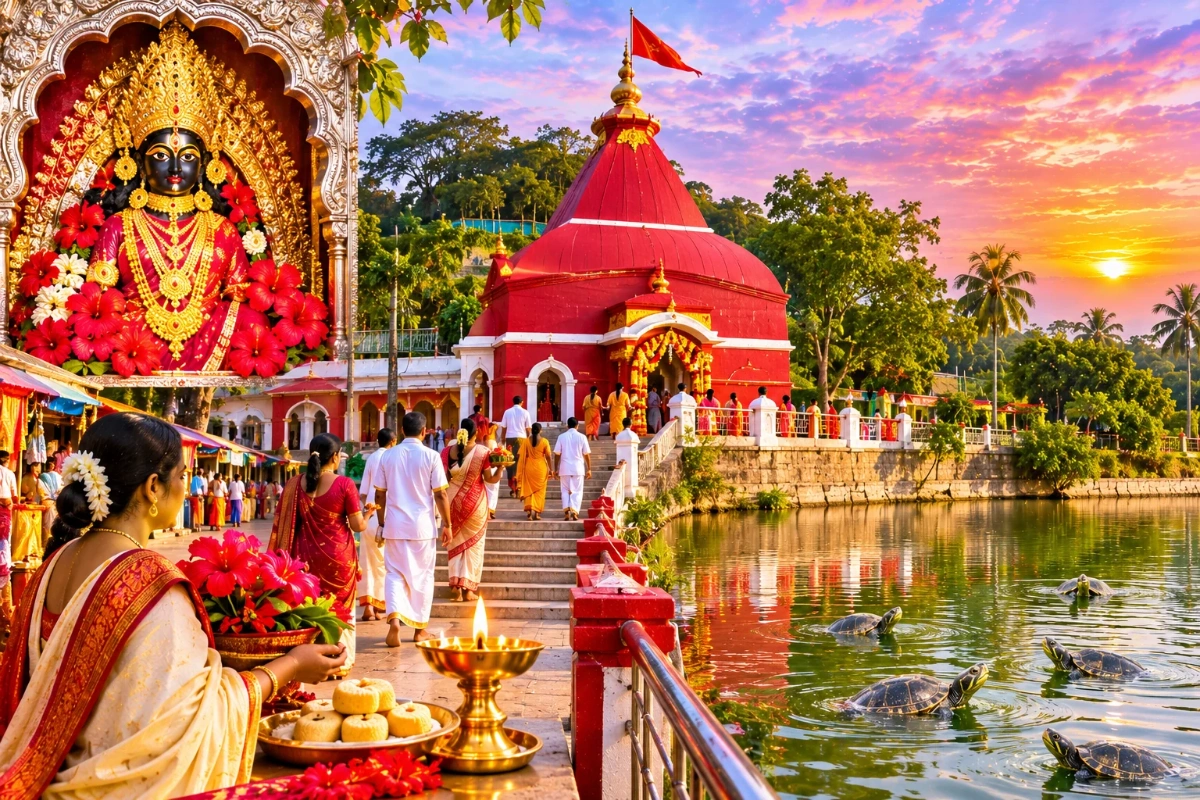
AI Generated Image
The Matabari of the East: Where Sati’s Right Foot Touched the Red Soil
Tripura Sundari Temple, affectionately known as Matabari, is a Shakti Peetha in Udaipur, Tripura, where devotees believe Goddess Sati’s right foot fell. Built by Maharaja Dhanya Manikya in 1501, the temple brings together royal history, goddess worship and the living traditions of North-East India. For visitors, the shrine offers an opportunity to explore Tripura’s culture through its sacred landscape, architecture and everyday devotional practices.
The evocative title, ‘The Matabari of the East: Where Sati’s Right Foot Touched the Red Soil’, captures the devotional story at the heart of this place. Yet understanding Matabari means looking beyond a memorable phrase. Its significance emerges through the relationship between the goddess, the hill, the lake and the people who continue to worship here.
Why Is the Matabari Sati Temple Sacred?
The Matabari Sati Temple is sacred because Hindu tradition identifies it as one of the 51 Shakti Peethas associated with Goddess Sati. According to the local sacred account, her right foot fell at this spot, making the land itself an object of reverence. The temple is therefore more than a building containing a deity: it marks a place where devotees believe the divine presence entered the earthly landscape.
This distinction helps explain the emotional importance of a Hindu pilgrimage here. Visitors approach both the image in the sanctum and a location understood to be sacred in its own right. Knowing this belief before arriving gives the ascent to the shrine a different meaning.
Matabari stands atop a tortoise-shaped hill, described as Kurma Pristha, or the tortoise’s back. The shrine is consequently associated with the name Kurma Pith. Its setting connects the contours of the land with the religious identity of the temple, rather than treating the hill as merely a convenient foundation.
For a first visit, keep three distinctions in mind:
- Matabari is the familiar name used for the shrine.
- Tripura Sundari Temple identifies its presiding goddess.
- Shakti Peetha explains its place within the wider sacred geography of goddess worship.
A Royal Foundation With a Living Devotional History
Maharaja Dhanya Manikya built the temple in 1501. Historical accounts connect its foundation date with inscriptions and traditions recorded in Tripura’s royal history. This grounding matters: the shrine belongs not only to mythology but also to the documented history of the Manikya rulers.
A separate devotional account explains the king’s decision through a dream. According to temple tradition, the goddess instructed him to bring her image from Chittagong, in present-day Bangladesh, and establish her worship here. The story also recalls an initial intention to dedicate the temple to Vishnu. These details should be understood as sacred tradition rather than independently verified historical episodes.
Holding history and belief together makes the visit richer. The construction date tells visitors when royal patronage gave the shrine its architectural form, while the dream narrative explains how devotees understand the goddess’s choice of home. Neither needs to erase the other.
Where Tantric and Vaishnava Traditions Meet
Matabari is an important centre of interaction between Tantric-Shakta and Vaishnava traditions in North-East India. Its goddess-centred worship exists alongside a foundation narrative connected with Vishnu. Official tourism accounts present this relationship as an expression of solidarity between the Shakta and Vaishnava traditions.
For visitors, this is a reason to avoid overly simplistic labels. A temple devoted to the Divine Mother can also preserve stories and associations that cross devotional boundaries. Matabari’s significance lies partly in this coexistence, rather than in any suggestion that every tradition practised here is identical.
Approach this aspect with curiosity rather than an expectation of spectacle. Do not assume that a connection with Tantra means visitors will encounter public demonstrations of esoteric practices. Ask a knowledgeable local guide or temple representative about the shrine’s traditions, and distinguish their explanations from generalised claims about Tantric worship.
Temple Architecture That Rewards a Closer Look
The temple architecture is relatively compact, with a square plan and a sloping roof associated with the hut-like forms of Bengal. Historical descriptions also identify brick, lime and mortar among its building materials. Rather than relying on immense scale, the shrine draws attention through its distinctive form and elevated setting.
When looking at the exterior, notice how the roof changes the outline of the building. Then consider the temple in relation to the hill beneath it. The sacred association with a tortoise belongs to the interpretation of the overall site, not simply to an isolated decorative detail.
Inside, the larger black-stone image, approximately five feet tall, is worshipped as Maa Tripura Sundari. Official tourism descriptions also connect her worship with Maa Kali in the form of Soroshi. A smaller image, affectionately known as Chhoto-Ma, accompanies the principal deity. These names express related devotional understandings, but the temple’s principal dedication remains to Tripura Sundari.
For a more attentive visit, set aside separate time to view the exterior and receive darshan. This allows architectural observation without becoming a distraction while others are praying. Follow any restrictions on access or photography, and never assume that permission outside the temple extends into the sanctum.
What Happens at Kalyan Sagar Before Prayers?
Devotees have traditionally fed the sacred turtles and fish at Kalyan Sagar as part of their visit to Matabari. The lake, also known as Kalyan Dighi, lies behind the temple towards its eastern side. A devotional visit may include this lakeside observance before proceeding to offer prayers to the approximately five-foot black-stone image of Maa Kali, worshipped here as Tripura Sundari. However, this should not be understood as a compulsory sequence for every visitor.
One detail deserves particular attention: the sacred turtles should not simply be identified as red-eared turtles. Conservation reporting identifies Kalyan Sagar especially with Bostami, or black softshell, turtles. Calling them red-eared sliders would confuse distinct species and obscure the lake’s conservation importance.
The longstanding feeding custom also needs to be approached responsibly. A devotional intention does not make every type of food suitable for wildlife. Conservation work at the lake has emphasised habitat protection and ecological awareness, so visitors should follow the instructions displayed or provided locally rather than imitate feeding practices without checking.
Use this simple lakeside checklist:
- Ask before feeding: Follow current guidance from temple or conservation staff, including any restrictions.
- Keep packaging out of the water: Carry wrappers and containers to an appropriate bin.
- Observe without handling: Do not catch, lift, chase or crowd the turtles.
- Never release animals: Do not introduce a purchased or rescued turtle into the sacred lake.
Let care for the living habitat become part of the spiritual journey, rather than an afterthought.
Tripura Culture Beyond the Sanctum
Matabari offers a glimpse of Tripura’s culture through the practices surrounding worship. The approach includes stalls selling flowers and offerings, while peda, a milk-based sweet, is closely associated with the temple visit. Devotees also value red hibiscus as an offering. These details connect formal worship with the everyday work of vendors and sweet makers.
Take time to understand what you are buying rather than selecting the largest basket available. Ask which offerings are appropriate, how they should be presented and what can be taken home afterwards. A modest, informed purchase is preferable to unnecessary items that may become waste.
The temple also hosts a major Diwali fair, bringing a more crowded and celebratory atmosphere to the precincts. If your interest is festival culture, this context matters. If you prefer unhurried observation, consider visiting outside the festival period. Confirm arrangements before travelling rather than assuming that the experience will be the same throughout the year.
Make Room for an Unhurried Visit
For religious tourism to feel meaningful, leave enough time between arrival, worship and departure. Avoid building a schedule that depends on an exact queue length or an immediate return journey. Check current opening arrangements, transport options, accessibility and photography rules through official channels before setting out.
Dress respectfully, follow the footwear arrangements and ask before photographing worshippers. If travelling with children, explain that the turtles are living animals, not attractions to summon or handle. These small choices help preserve the dignity of both the shrine and its surroundings.
You do not need to share every belief to visit attentively. Read the sacred story, notice the building, listen respectfully and allow others room to pray. Matabari is best approached not as a landmark to tick off, but as a place to understand.
Also Read: Modern Wonder Of Gold: Sripuram Temple’s Elegance
To read more such news, download Bharat Express news apps