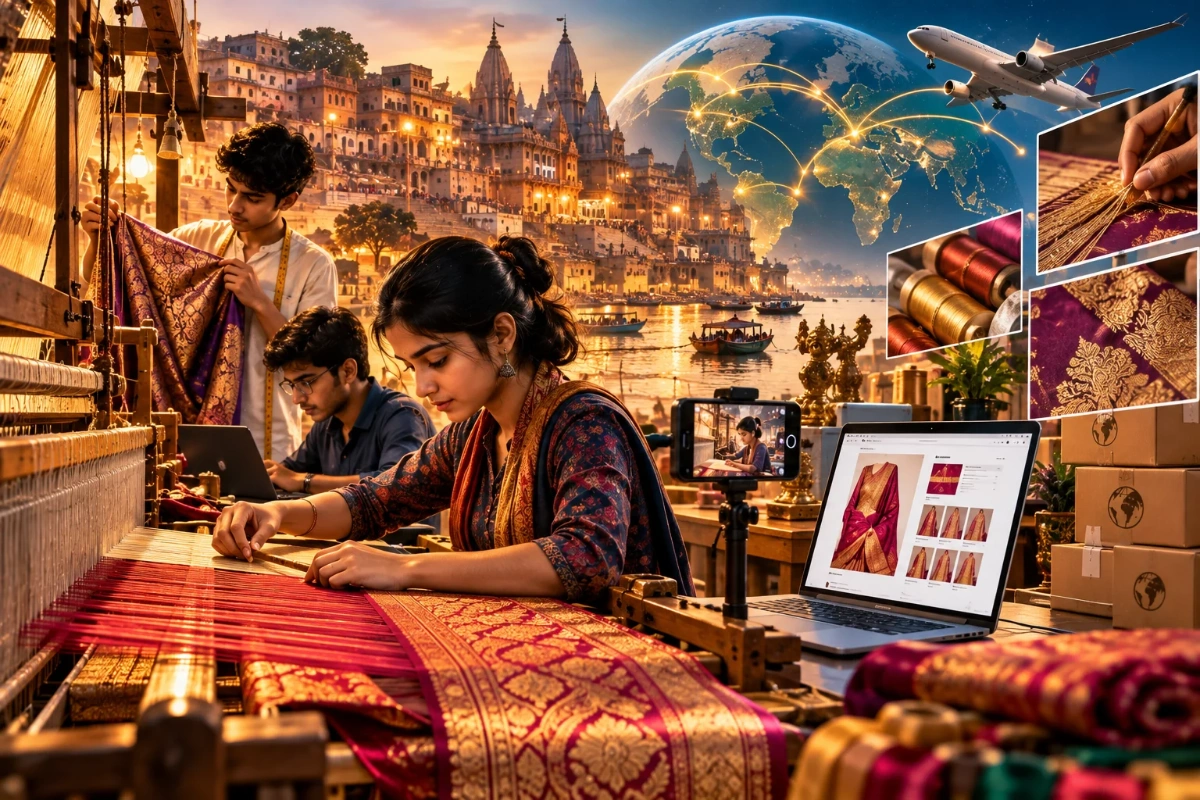
AI Generated Image
The Digital Bunkars of Banaras: How Gen-Z Artisans Preserved Handloom Through Global E-Commerce
Banaras has always been more than a weaving centre; it is a living archive of skill, patience, memory, and beauty. Today, a new generation of bunkars is carrying that archive into the digital marketplace, using e-commerce, storytelling, and smarter tools to protect handloom heritage without reducing it to a trend. This is not a story of replacing the loom with a screen, but of using the screen to help the loom survive.
How Are Gen-Z Artisans Changing Handloom Preservation?
Gen-Z artisans are changing handloom preservation by combining inherited craft knowledge with digital access, direct customer relationships, and global visibility. Many young weavers understand the grammar of traditional textiles because they grew up around looms, yarn, motifs, and family workshops; they also understand the language of online catalogues, short-form videos, digital payments, and international shipping. That combination makes digital handloom preservation practical rather than nostalgic.
For earlier generations, the path from loom to buyer often passed through layers of middlemen. The weaver made the fabric, but the final customer rarely knew who made it, how long it took, or why a particular motif carried cultural value. Digital platforms change that conversation. A sari, stole, dupatta, or length of fabric can now be presented with details of its making process, weave, care requirements, and artisan background.
This shift matters because preservation is not only about saving old designs. It is also about making craft economically meaningful for the people who practise it. When younger bunkars see that handloom can connect them with buyers in India and abroad, they have a stronger reason to stay engaged with the work instead of leaving it behind.
The New Role of the Digital Bunkar
The word ‘bunkar’ carries the dignity of the weaver, the maker who works thread into textiles with discipline and imagination. The digital bunkar adds another layer to that identity. They may still help select yarn, prepare designs, check weave quality, or assist at the loom, but they also manage product photographs, social media posts, customer messages, packaging, inventory, and online storefronts.
This does not make the craft less traditional. In many ways, it protects the tradition from becoming invisible. A young artisan can film the rhythm of a loom, explain the difference between handwoven and machine-made fabric, or show how a border develops row by row. What was once hidden inside a workshop becomes part of the buyer’s understanding.
Digital work also helps address a common problem: the undervaluing of handmade textiles. When customers see only a finished product, they may compare it with cheaper imitations. When they see the labour, time, and technique behind it, the value becomes easier to understand. That is where digital handloom preservation becomes both cultural and commercial.
E-Commerce Turns Local Skill Into Global Access
Global e-commerce gives Banaras artisans a way to reach customers who are actively searching for meaningful, durable, and culturally rooted products. A buyer in another city or country may not be able to walk through the lanes of Banaras, but they can discover a handwoven piece through a product page, marketplace listing, social media post, or artisan-led website.
The most effective online craft businesses do more than upload products. They build trust. Clear photographs, honest descriptions, fabric close-ups, return policies, shipping timelines, and care instructions all reduce the uncertainty of buying textiles online. For high-value handloom pieces, this confidence is essential.
E-commerce also encourages artisans to think like curators. Instead of selling only what a trader requests, younger weavers can test smaller collections, seasonal colours, contemporary formats, and limited batches. Traditional brocade designs can appear on a sari, but they may also inspire scarves, jackets, cushion covers, wall panels, or ceremonial gifts. The craft expands without losing its origin.
A useful digital storefront often includes:
- Material Clarity: Silk, cotton, blends, zari details, dyes, and care requirements explained plainly.
- Process Notes: What is handwoven, what is embroidered, what is finished by hand, and what the buyer should expect.
- Strong Visuals: Full-length images, close-ups, texture shots, and short videos of the loom.
- Artisan Context: Who made the piece, which workshop or family tradition it comes from, and why the design matters.
- Transparent Service Details: Delivery estimates, customisation limits, exchange terms, and care guidance.
These details may sound basic, but they are powerful. They help traditional textiles compete online without pretending to be mass-produced fashion.
Why Does Craft Revival Need More Than Nostalgia?
Craft revival needs more than nostalgia because sentiment alone cannot sustain a livelihood. People may admire handloom heritage, but admiration does not automatically create steady income, fair pricing, or younger participation. A revival becomes real only when artisans can earn, innovate, and pass on skills with confidence.
Nostalgia can even become a trap if it freezes craft in the past. Banaras weaving has always evolved through patronage, trade, taste, and technology. Today’s change is digital, but the deeper pattern is familiar: artisans respond to the world around them while holding on to their techniques.
Gen-Z bunkars often understand this balance instinctively. They respect motifs, weaving discipline, and family knowledge, yet they are willing to experiment with lighter fabrics, modern colour palettes, online styling, and global customer preferences. That does not weaken tradition. It keeps the tradition in motion.
Craft revival also depends on better storytelling. A handloom piece is not just ‘ethnic wear’ or ‘festive fabric’. It is a record of decisions: yarn choice, motif placement, loom setup, tension control, finishing, and design memory. When those decisions are explained, the buyer becomes part of preservation rather than just a consumer.
Loom Technology Supports, Not Replaces, the Hand
Conversations about loom technology can become emotional because people fear that tools will erase handmade skill. The better question is not whether technology should enter the craft, but where it belongs. Used carefully, technology can reduce drudgery, improve planning, support design documentation, and help artisans communicate value.
Digital weaving, in this context, does not have to mean fully automated production. It can include digital design mapping, online pattern archives, colour visualisation, catalogue management, quality tracking, and training resources. A family workshop might use a smartphone to record a rare motif, a spreadsheet to manage orders, or a design tool to preview colour combinations before yarn is purchased.
The loom remains central. The human eye still judges proportion, the hand still manages nuance, and the artisan still carries tacit knowledge that cannot be downloaded. But supportive tools can make the ecosystem around the loom stronger.
Practical uses of technology in a handloom setting include:
- Design Preservation: Photographing old samples, mapping motifs, and storing notes before patterns disappear.
- Order Management: Tracking custom requests, timelines, measurements, and customer preferences.
- Training Support: Recording techniques so younger family members can revisit steps while learning.
- Market Testing: Sharing prototypes online before committing to larger production.
- Quality Communication: Showing buyers why handwoven variations are a feature of the process, not a defect.
This is the quiet strength of loom technology: it can protect the human work around the loom rather than compete with it.
Sustainable Textiles Begin With Slower Choices
Handloom is often discussed within the larger movement towards sustainable textiles, and for good reason. Handmade production can encourage slower buying, longer use, repair-minded care, and deeper respect for materials. Yet sustainability should not be used as a vague label. It becomes meaningful when customers understand how to choose, wear, store, and value a textile over time.
For Banaras artisans, sustainability is also social. If a weaving community cannot survive economically, the textile tradition cannot survive culturally. A truly sustainable approach considers the artisan’s livelihood, the durability of the product, the transparency of the supply chain, and the buyer’s willingness to care for the piece.
Customers can support sustainable handloom habits by:
- Buying fewer pieces, but choosing better-made textiles with lasting value.
- Asking clear questions about materials, processes, and care.
- Avoiding suspiciously cheap ‘handloom-style’ products that provide no information about their makers.
- Storing delicate textiles properly instead of treating them as disposable occasion wear.
- Sharing the maker’s story when gifting or wearing the piece.
This kind of buying behaviour gives craft revival a stronger foundation. It rewards patience, quality, and authenticity instead of speed alone.
The Customer Becomes Part of the Preservation Chain
One of the most important effects of global e-commerce is that it brings the customer closer to the craft process. A buyer may begin with a search for a beautiful textile, but a well-told digital experience can turn that search into awareness. They learn what a motif means, why handwoven edges may differ slightly, and why time is part of the price.
This changes the emotional relationship with the textile. The piece is no longer just an outfit for a wedding, festival, or formal event. It becomes something to keep, pass down, restyle, and discuss. That is where traditional textiles regain their place in modern life.
For artisans, direct customer feedback can also guide design decisions. If international buyers respond to lighter drapes, subtler colours, or versatile formats, young bunkars can adapt without abandoning their roots. The online marketplace becomes a listening tool as much as a selling channel.
Challenges Still Remain in the Digital Shift
The digital path is promising, but it is not effortless. Many artisan families face gaps in photography, language, packaging, logistics, online advertising, and customer service. A beautiful textile can be overlooked online if the images are unclear or the description does not explain its value.
There is also the risk of imitation. Once designs become visible online, they can be copied quickly by faster production systems. This makes documentation, branding, and customer education even more important. Buyers need to know how to distinguish handloom from lookalike products, and artisans need stronger ways to present their identity.
Another challenge is time. Weaving itself demands focus, and digital selling demands consistency. The young person managing the online side may become the bridge between elders at the loom and buyers across the world. That role is valuable, but it needs recognition as real labour, not a casual side task.
A Future Woven Between Memory and Modernity
The story of Banaras handloom is not finished, and Gen-Z artisans are helping write its next chapter. They are not choosing between heritage and technology; they are finding ways to make both work together. In their hands, digital handloom preservation becomes a living practice: part archive, part enterprise, part cultural conversation.
The future of handloom heritage will depend on many factors, including fair access, design education, ethical buying, and stronger digital infrastructure. But the direction is clear. When the loom is supported by storytelling, e-commerce, carefully chosen technology, and thoughtful customers, craft does not have to fade into memory.
Banaras has always woven beauty out of complexity. Now its young bunkars are weaving across borders, screens, and generations, proving that preservation is not about standing still. It is about carrying the thread forward without letting it break.
Also Read: Bridging The Skill Gap: How Ashish Patel Is Preparing UP’s Youth For Industry 4.0
To read more such news, download Bharat Express news apps