AI Generated Image
The Eternal Vault: Where Ananthasayana Vishnu Guards the Wealth of Ages
Shree Padmanabhaswamy Temple (Thiruvananthapuram, Keralam) is a sacred centre of Vishnu worship where the reclining deity, royal history and historic treasures belong to one interconnected story. Understanding the Ananthasayana Vishnu image reveals why this shrine matters far beyond the wealth associated with its vaults. Its significance lies equally in devotion, artistic achievement and a tradition of kingship dedicated to divine service.
The Eternal Vault: Where Ananthasayana Vishnu Guards the Wealth of Ages offers a way to approach that story: not simply as an account of hidden riches, but as an encounter with what a civilisation chooses to preserve.
What Does Ananthasayana Vishnu Represent?
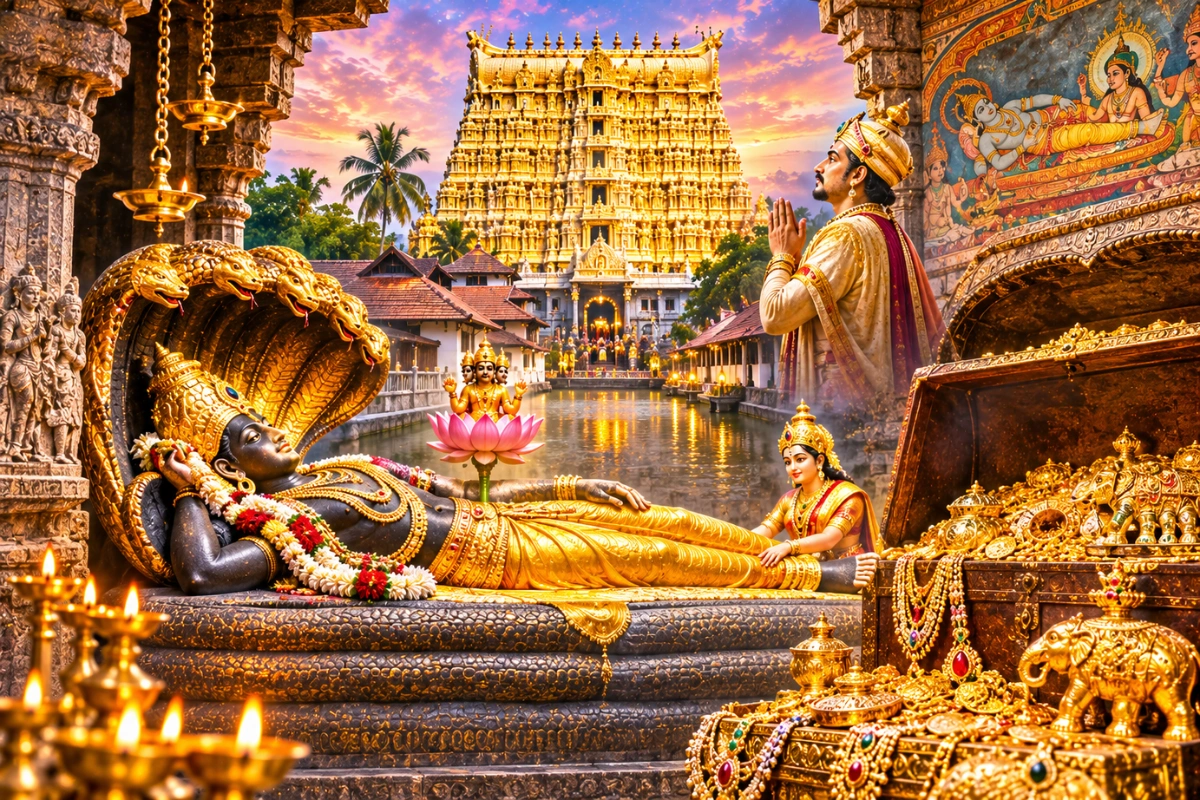
Ananthasayana Vishnu represents Lord Vishnu reclining in eternal yogic repose upon the serpent Ananta, also called Adishesha. At Padmanabhaswamy Temple, this posture is the defining form of the presiding deity. The image expresses sacred stillness rather than ordinary sleep, inviting devotees to contemplate divine presence through repose instead of movement.
In the temple’s iconography, Brahma appears on a lotus emerging from Vishnu’s navel. This feature helps explain the name Padmanabha, commonly understood as ‘lotus-navelled’. The reclining figure therefore brings rest and creation into the same visual composition: stillness does not suggest an absence of life, but its mysterious source.
For someone encountering Hindu deities for the first time, this is a useful starting point. Rather than treating each figure as an isolated decorative element, look at the relationships between Vishnu, the serpent, the lotus and the accompanying divine figures. Vishnu mythology becomes easier to understand when the image is read as a connected sacred narrative.
The Legend Behind the Reclining Lord
One temple-origin tradition centres on the sage Divakara Muni and Vishnu’s appearance as a young child. After the child disappears following the sage’s anger, the sage searches for him. The story culminates in a revelation associated with a tree and the immense reclining form of Vishnu upon the serpent. These events belong to sacred legend, not a securely dated historical account.
The legend gives the shrine an emotional dimension that treasure inventories cannot convey. A devotee seeks the divine, fails to recognise it fully and must learn to see again. Read this way, the story encourages humility: the sacred may first appear in an unexpected, vulnerable form rather than with unmistakable majesty.
It is also important not to force every version into a single definitive narrative. Local retellings and textual traditions can differ in their details. Appreciating the legend means recognising its devotional meaning while keeping it distinct from the evidence used to reconstruct the temple’s architectural and political history.
A Kingdom Held in Trust for Padmanabha
In 1750, Marthanda Varma dedicated the kingdom of Travancore to Lord Padmanabha. He pledged that the royal family would govern on the deity’s behalf, and he and his successors became known as Padmanabha Dasas, servants of Padmanabha. Under this sacred understanding of sovereignty, the kingdom was held in trust for the deity rather than regarded simply as the ruler’s personal possession.
That distinction is central to the temple’s civilisational significance. The Royal Family of Travancore historically ruled as servants of the deity, joining political authority to an obligation of service. This describes the former kingdom’s governing ideal, not a claim that the family rules Keralam today.
The dedication also changes how the temple’s wealth should be discussed. Sacred possessions sit within a history of offerings, royal patronage, ritual obligations and stewardship. Describing them only as a fortune awaiting discovery misses the religious framework through which they acquired meaning.
Architecture That Brings Two Traditions Together
The temple’s architecture blends Dravidian and Keralam structural styles. Its imposing entrance tower, sculptural detail, pillared spaces and regional architectural character make the complex more than a setting for the deity: the building itself is an important expression of cultural exchange and artistic patronage.
The seven-tiered gopuram establishes a commanding exterior presence. Within the complex, carved stone pillars and murals reward closer attention, while the Ottakkal Mandapam before the sanctum is distinguished by its construction from a single stone slab. These elements give visitors several scales of experience, from the monumental gateway to individual carved surfaces.
When studying photographs or observing permitted areas, focus on three details:
- The Entrance Tower: Notice how its stacked levels and sculptural ornament establish the temple’s public face.
- The Pillared Approach: Follow the repetition of carved supports, then look closely at the differences between individual carvings.
- The Murals: Identify the reclining Vishnu and other sacred figures rather than treating the paintings as background decoration.
What Lies Beneath the Temple’s Famous Vaults?
The temple’s subterranean vaults contain historic treasures, including gold coins, ornaments, precious stones and sacred objects. Public attention intensified when treasures were revealed during the 2011 examination of its vaults. Their significance, however, cannot be reduced to a single headline valuation: these objects also carry religious, artistic and historical meaning.
A coin can prompt questions about circulation and exchange; an ornament can reveal workmanship; a ceremonial object can help explain how worship was supported materially. These are ways of approaching the collection, not claims that every object’s origin or use has been conclusively established. The more responsible question is what careful documentation can tell us, rather than how spectacular a speculative total might sound.
Stories about sealed chambers and supernatural guardians require similar care. They may form part of the temple’s popular mythology, but they should not be presented as verified explanations of physical events. Distinguishing documented treasures from devotional belief preserves the fascination of the place without turning uncertainty into fact.
Worship Beyond the Treasury
Padmanabhaswamy is counted among the Divya Desams, the sacred Vishnu shrines celebrated in the Tamil Alvar devotional tradition. This places the temple within a wider geography of pilgrimage and sacred poetry. Its importance to Vishnu worship therefore does not depend on the modern publicity surrounding its vaults.
The broader tradition also helps explain interest in Sri Rangam, Lakshmi and Vishnu Ananthasayana. At Srirangam in Tamil Nadu, Vishnu is worshipped as the reclining Ranganatha, and Lakshmi is revered as Ranganayaki. These are distinct temples with their own histories, not interchangeable names for the shrine in Thiruvananthapuram.
For readers exploring an Ananthasayana temple, that distinction matters. A shared reclining form creates a connection across sacred sites, but each place gives the image a particular devotional setting. Learning the local deity’s name and the temple’s own traditions is more rewarding than assuming every reclining Vishnu shrine tells exactly the same story.
How Can Pilgrims Approach the Sanctum Respectfully?
Pilgrims should approach the sanctum for darshan in the prescribed traditional clothing: men wear dhotis or mundus without shirts, while women may wear sarees or other permitted traditional attire. Entry to the temple is restricted to Hindus. Devotees view the reclining deity through three doorways; this should not be confused with unrestricted access to the innermost shrine.
The quiet, oil-lamp-lit sanctum offers a contrast to the monumental exterior. The subdued light calls for patient attention rather than an expectation of a brightly illuminated museum display. Allow time for your eyes to adjust, and respect the devotional atmosphere without expecting the surrounding pilgrimage spaces to be empty or silent.
Before setting out:
- Confirm Current Arrangements: Check the temple’s official information for darshan periods and any festival-related changes rather than relying on an old itinerary.
- Prepare Clothing Beforehand: Treat the dress requirements as part of entering a living place of worship, not a detail to resolve at the last moment.
- Follow Staff Directions: Let the established queue and ritual arrangements guide your movement, especially near the sanctum doorways.
The Wealth That Gives the Vaults Meaning
Padmanabhaswamy Temple is compelling because its treasures belong to a larger story: Vishnu’s reclining presence, a royal pledge of service, architectural craftsmanship and continuing devotion. None of those strands needs a sensational claim to become meaningful. Together, they offer a richer understanding of the shrine than the treasury alone can provide.
The most useful takeaway is simple: begin with the deity, then understand the wealth in that context. The vaults may draw attention, but the traditions surrounding them explain why their contents matter.
Also Read: Micro-Cosmic Time Bhasma Aarti: A Sacred Ujjain Experience
To read more such news, download Bharat Express news apps