AI Generated Image
What a Village Road Changes Before the First Bus Arrives
A usable village road can improve journeys to schools, healthcare facilities and markets before a scheduled bus service begins. The earliest gains may come through walking, cycling, private vehicles or deliveries rather than public transport. Understanding these changes means separating what the road makes possible from what local records actually demonstrate.
What Changes Before Public Transport Begins?
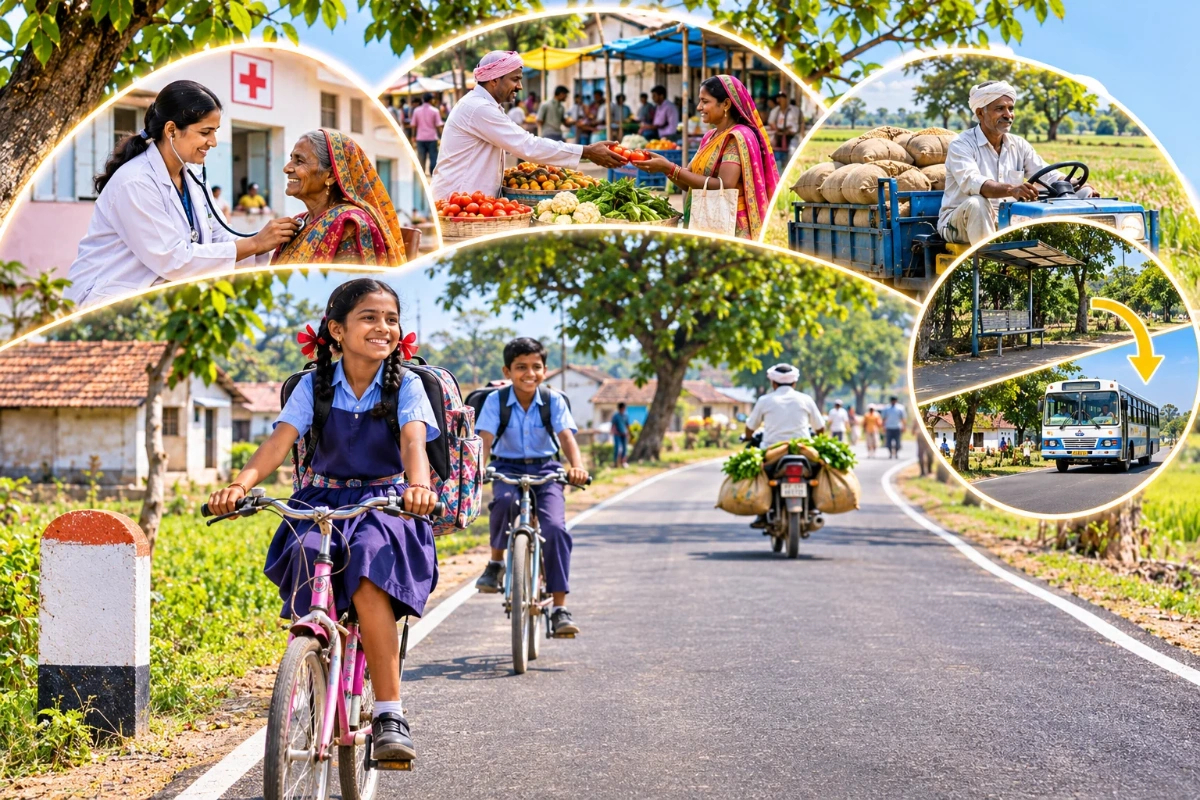
Before public transport starts operating, an improved road can make existing journeys easier or more dependable without changing how people travel. A child may cycle along a more usable route, a household may arrange a vehicle to reach a clinic, or a farmer may transport produce using an existing motorcycle or goods vehicle.
These are plausible early benefits, not verified outcomes for every village. Establishing them requires observations from the period between the road becoming usable and the introduction of public transport.
This distinction matters when discussing rural transport in India. A completed road and an operational bus route are two different milestones. An assessment should therefore examine not just whether construction has finished, but also which residents could use the improved connection immediately.
PMGSY’s monitoring system provides an official starting point for checking implementation. NRIDA’s inspection checklist directs officers to compare monitoring-system progress with district implementation unit reports and verify data accuracy. This establishes a project evidence trail; it does not, by itself, establish changes in household journey times.
Three Destinations, Three Different Measures of Progress
Journey times should be reported separately for schools, clinics and markets. Combining them into a single village average can conceal an unchanged school journey alongside a substantially quicker healthcare trip.
For a grounded reference, the World Bank’s 2019 PMGSY impact evaluation reports the following mean travel times for its treatment habitations.
| Destination | Mean Trip Time, 2009 | Mean Trip Time, 2017 |
|---|---|---|
| School | 24.5 minutes | 31.3 minutes |
| Hospital/medical centre, the study’s healthcare category | 64.0 minutes | 48.4 minutes |
| Local market | 60.7 minutes | 50.5 minutes |
These are averages for the study sample, not timings for a named village or a particular clinic. They also do not isolate the period before public transport began. The evaluation’s adjusted analysis found significant reductions in travel time for market and healthcare journeys, but not for school journeys. The simple before-and-after figures should therefore not be treated as causal estimates.
The practical lesson is to avoid claiming that every destination becomes quicker. A local assessment should record each destination, transport mode and observation date separately. It should also distinguish travel time from waiting for a vehicle and waiting for the service itself.
School Access Is More Than a Shorter Stopwatch Reading
To assess road access to schools, examine the journey children actually make, including the lane between their homes and the improved road. Check whether they still face difficult crossings, whether cycling is practical and whether the route remains usable during rain. Record these conditions alongside journey times rather than declaring success based solely on the surfaced section.
NRIDA’s published impact findings describe improved access to middle and high schools, reduced disruption during the monsoon and shorter school travel times in assessed areas. These findings provide context, but they cannot replace evidence about an individual school route before bus services begin.
Clinic Access Depends on the Whole Journey
For a clinic trip, examine two separate questions: whether a suitable vehicle can reach the household and how long the onward journey takes. Record the time required to arrange a vehicle separately, particularly where residents depend on a neighbour or a hired driver. Otherwise, a quicker road journey could conceal a lengthy delay before departure.
Road access should not be equated with guaranteed treatment. A local review should also check clinic opening hours, the destination used and whether the patient required a further referral. This keeps the transport assessment focused without presenting a road as a substitute for healthcare provision.
Market Access Includes the Load and the Return
For rural market access, time the journey with the usual load, not just an empty motorcycle. Include the trip from the farm or storage point to the road, loading arrangements and the return journey. Ask whether the improvement helps someone taking a small quantity of produce to market as well as someone able to hire a goods vehicle.
Treat better prices as a separate outcome that requires evidence. Compare actual sale receipts, transport charges and the market visited before claiming higher earnings. A faster journey is useful information, but it does not prove a better net return.
How Can a Village Prove Benefits Arrived Before the Bus?
A village can demonstrate pre-bus benefits by matching verified road-opening information with dated journey observations and the documented start of public transport services.
The essential comparison is between journeys made before the road became usable and those made after it opened but before scheduled services began. Without observations from this intervening period, an assessment cannot confidently distinguish road-related benefits from those resulting from later transport services.
Use PMGSY monitoring data and panchayat records as complementary sources, while being clear about what each contains. The official PMGSY process includes community participation in alignment walks and requires the resulting minutes to be placed before and approved by the Gram Sabha. These records can help establish local concerns and decisions, but should not be assumed to contain measured journey times.
A practical evidence file should include:
- Project Identity: Match the habitation, road name and package identifier across the monitoring entry and local documents. Avoid confusing a village approach road with another nearby project.
- A Dated Timeline: Obtain implementation records, evidence of when the route became usable and confirmation of when scheduled passenger services began. Flag disagreements rather than selecting a convenient date.
- Separate Journey Logs: Record school, clinic and market trips individually, including the destination, transport mode, departure and arrival times, weather conditions and waiting time.
- Panchayat Documentation: Request relevant Gram Sabha minutes, complaints, inspection notes and any locally maintained access surveys. Identify the document and date supporting each claim.
- Comparable Observations: Repeat journeys under similar conditions wherever possible. Label remembered estimates as recollections rather than stopwatch measurements.
No named panchayat or its journey-time records were supplied for this article, and the sources reviewed did not establish a documented pre-bus comparison. Consequently, the figures above are attributed to the published evaluation, not presented as invented local records.
For project information, start with the official PMGSY monitoring system, then request the matching records locally.
Road Safety Improvements Belong in the First Assessment
Assess safety alongside accessibility rather than treating a quicker journey as sufficient evidence of better village transportation. Walk the route with children, older residents and people who use mobility aids. Ask them to identify difficult locations before preparing a list of engineering requirements.
Use the following as an inspection checklist, not as a claim that every road needs identical treatment:
- School Approaches: Check visibility, crossing locations and whether children have a usable space to walk away from moving vehicles.
- Road Edges and Crossings: Note abrupt surface edges, open drains, narrow culverts and locations where pedestrians must enter the vehicle path.
- Water Movement: Photograph waterlogging, blocked drainage or erosion after rain, recording the location and date.
- Evening Journeys: Record locations where poor visibility makes walking or identifying hazards difficult.
Submit specific observations to the responsible road authority. ‘Water covers the school approach after rain’ is more actionable than ‘the road is unsafe’. Keep a record of the response and revisit the location after any corrective work.
Count Access, Not Just Construction
For village roads in India, a useful local scorecard should distinguish infrastructure completion from usable access and affordable transport. Record road condition, destination-specific travel times, waiting periods and out-of-pocket costs in separate columns. This makes it easier to assess whether an improvement benefits households without their own vehicles.
Repeat the review after rainfall and again when public transport begins. Retain the earlier observations rather than replacing them with the latest averages. This sequence allows the panchayat to describe what changed first and what still depends on a transport service, maintenance work or another connection.
The strongest account of rural road connectivity does not claim that everything improved immediately. It identifies which journeys improved, for whom and at what stage, while leaving unsupported claims out. Before celebrating the first bus, document the quieter changes already visible on foot, by bicycle and along the routes to essential services.
Also Read: Crop Insurance Payment Timeline In India
To read more such news, download Bharat Express news apps