AI Generated Image
Polycystic Ovary Syndrome (PCOS) is a common hormonal condition affecting women of reproductive age. Its early symptoms are often mistaken for routine hormonal changes, delaying diagnosis and treatment.
Recognising the warning signs and seeking timely medical advice can help manage the condition and reduce the risk of long-term complications.
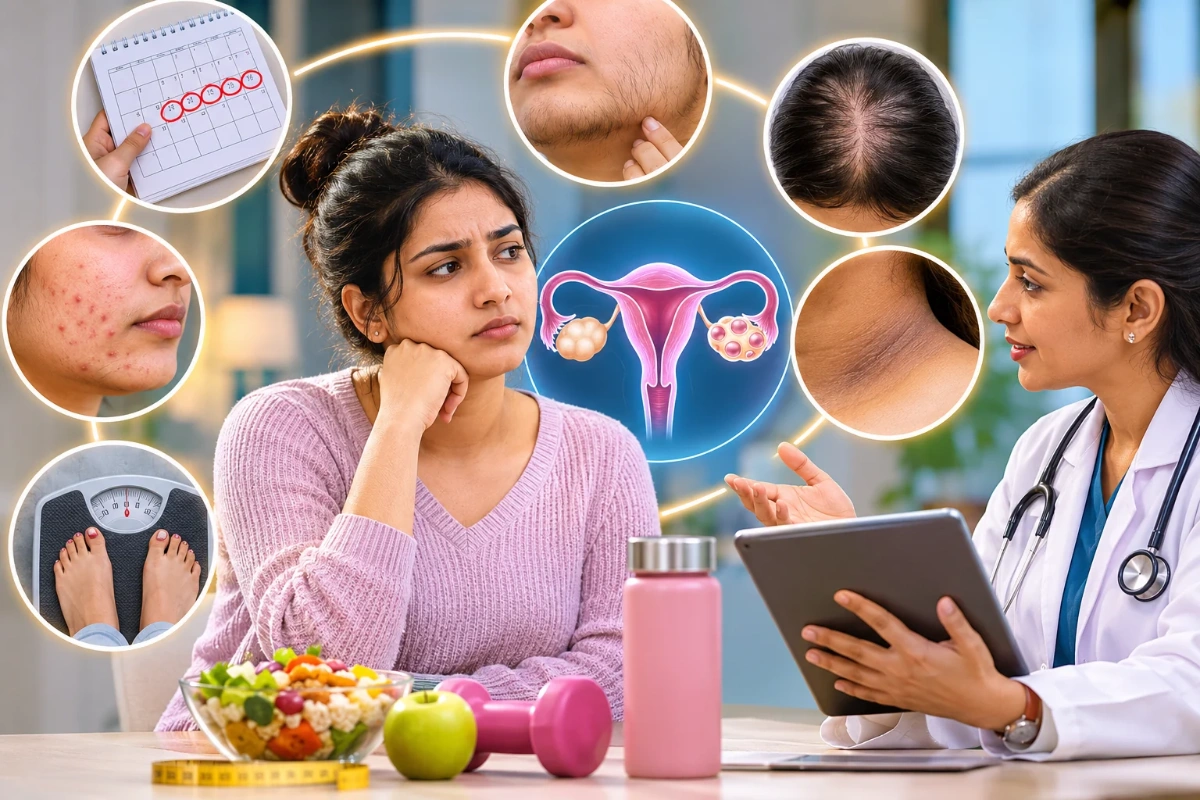
PCOS affects ovarian function, menstrual cycles and metabolism. Some of its common symptoms include:
- Irregular Periods: Missed periods, unusually long menstrual cycles or fewer periods throughout the year can indicate hormonal imbalance associated with PCOS.
- Excessive Hair Growth: Unwanted hair on the chin, upper lip, chest and other parts of the body may result from elevated androgen levels.
- Persistent Acne: Frequent breakouts and oily skin, particularly when acne continues beyond the teenage years, can be associated with PCOS.
- Hair Thinning: Some women experience thinning hair on the scalp due to hormonal changes.
- Unexplained Weight Gain: Weight gain and difficulty losing weight despite regular exercise and a balanced diet may accompany the condition.
- Dark Skin Patches: Insulin resistance can cause dark, velvety patches around the neck, armpits and groin.
- Difficulty Conceiving: Disrupted ovulation can make pregnancy difficult for some women with PCOS.
The condition may affect mental well-being, contributing to anxiety, depression and low self-esteem.
Doctors recommend consulting a healthcare professional if menstrual irregularities, unusual hair growth, persistent acne or unexplained weight changes continue.
Although PCOS has no permanent cure, regular exercise, balanced nutrition, adequate sleep and appropriate medical treatment can help control symptoms and reduce associated health risks.
Early diagnosis and consistent care remain important for long-term management.
Also Read: Can Smog Make Cancer Treatment More Difficult? What Patients Should Know
To read more such news, download Bharat Express news apps