



AI Generated Image
The Peacock Island and the Unshakable Tantric Throne of the East
Peacock Island, also known as Umananda Island, and Shree Kamakhya Temple reveal two connected sides of Guwahati’s sacred geography: a Shiva shrine surrounded by the Brahmaputra and a powerful centre of Goddess worship on Nilachal Hill. Both Umananda and Shree Kamakhya Temple are located in Guwahati, Assam. Exploring them together brings river scenery, religious history and living traditions into one thoughtful journey.
What Is Peacock Island in Guwahati?
Peacock Island in Guwahati is the small Brahmaputra island that houses Umananda Temple, a shrine dedicated to Lord Shiva. Umananda stands on what Indian tourism authorities describe as the world’s smallest inhabited river island, in the middle of the Brahmaputra River. Its appeal lies in this unusual combination: a compact sacred landscape reached across an immense stretch of water.
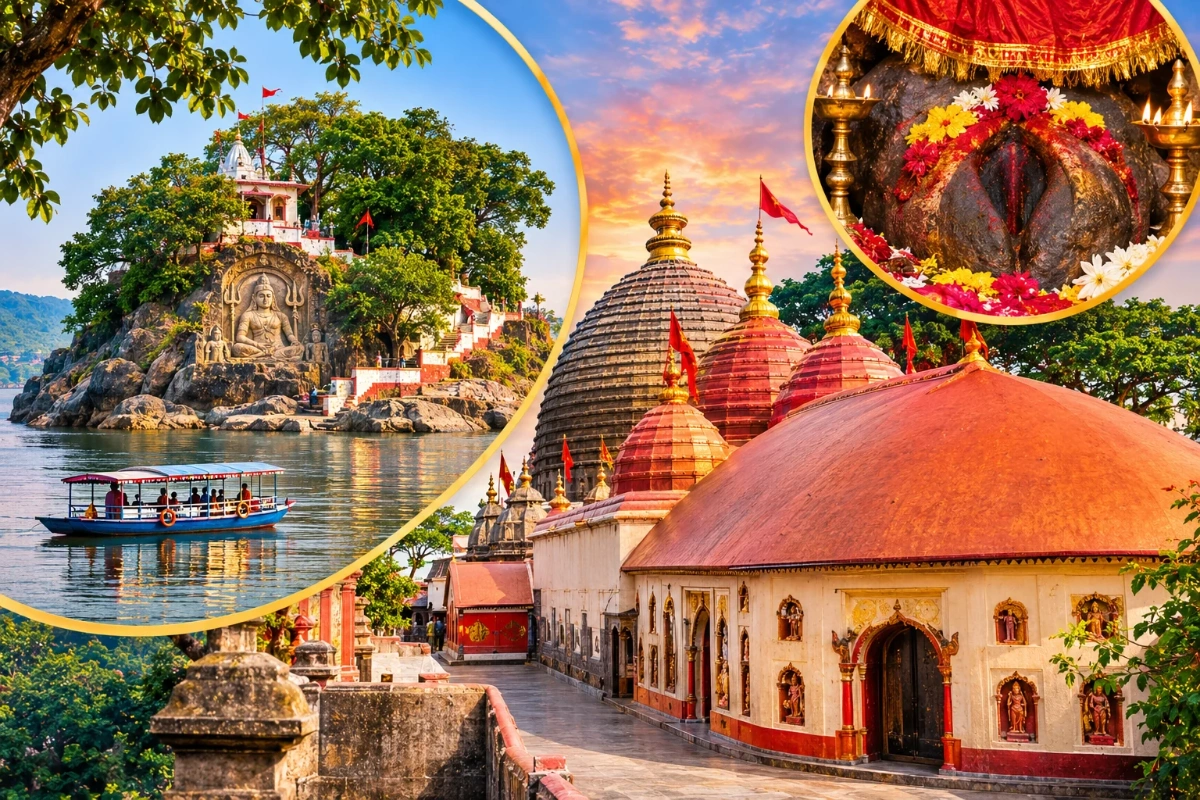
To picture Peacock Island, imagine a rocky, green river island with temple buildings, carved stone and steps leading uphill from the landing area. The boat journey and climb are part of the experience, not simply the means of reaching a monument. Visitors encounter a place of worship whose setting matters as much as its architecture.
The British name, Peacock Island, is associated with the island’s shape. Umananda is the name to remember when discussing the temple or asking about the crossing. Searching for ‘Peacock Island Assam’ helps distinguish this destination from other islands sharing its English name.
Kamakhya’s Commanding Place on Nilachal Hill
Shree Kamakhya Temple occupies Nilachal Hill in Guwahati, Assam, and remains a dominant presence in the region’s Tantric landscape. It is an important Shakti shrine and pilgrimage centre, with religious significance extending beyond the main temple to the surrounding sacred complex. Understanding this wider setting helps explain why a visit deserves more than a hurried stop.
The phrase ‘The Peacock Island and the Unshakable Tantric Throne of the East’ offers a poetic way to describe Umananda and Kamakhya together. Here, the ‘throne’ evokes Kamakhya’s enduring religious importance rather than an official title or a literal seat. ‘Unshakable’ is best understood as an expression of devotion, not a claim about the building’s physical history.
At Kamakhya, the Goddess is worshipped through a sacred yoni-shaped stone rather than a conventional anthropomorphic idol. The symbolism connects the shrine with creation and feminine generative power. This is central to understanding the temple on its own terms, rather than treating its Tantric associations as a mysterious spectacle.
The surrounding shrines deepen that context. Assam Tourism identifies temples associated with the Mahavidyas, alongside Shiva temples on Nilachal Hill. Allowing time to notice this broader sacred landscape gives the visit greater depth than focusing only on the main queue.
Umananda’s History, Carvings and Sacred Stories
Umananda Temple carries the legacy of Assam’s Ahom rulers. The Kamrup Metropolitan district administration dates its construction to 1694 under King Gadadhar Singha. Assam’s Department of Cultural Affairs also records earlier stone remains at the site, reminding visitors that the island’s religious history is not confined to a single building phase.
Look beyond the temple’s overall silhouette. Rock carvings and sculptures depict deities including Shiva, Ganesha, Surya and Vishnu. These details make the island rewarding for visitors interested in Assamese craftsmanship, as well as those arriving primarily for prayer. Pause where access permits, without obstructing worshippers or touching vulnerable carvings.
The island is also associated with Bhasmachala, a name explained through a sacred story. According to legend, Shiva was meditating here when Kamadeva interrupted him; Shiva’s anger reduced Kamadeva to ashes. Treating this account as religious tradition rather than documented history preserves its meaning without confusing different kinds of evidence.
The temple suffered damage in the 1897 earthquake and was subsequently repaired with the support of a local merchant. What visitors see today therefore reflects continuity through rebuilding, not an untouched survival from a single moment in the past. That distinction makes the site’s enduring worship all the more compelling.
How Does Visiting Both Sites Complete a Spiritual Journey?
Worshipping at Kamakhya and then travelling by boat across the Brahmaputra to Umananda can be understood as completing an eastern spiritual cycle: devotion to the Goddess followed by worship of Lord Shiva. This is a meaningful way to frame the journey, rather than a universal ritual requirement. The pairing brings two important Guwahati shrines into one devotional experience.
That distinction matters because pilgrimage traditions do not always prescribe the same order. Kamakhya Devalaya’s account of Guwahati describes an older sequence involving Umananda before the ascent to Nilachal. If your journey follows a particular family or religious tradition, ask your priest about its preferred observances instead of assuming that a sightseeing itinerary establishes ritual rules.
For a Kamakhya-first visit, consider this flexible sequence:
- Begin with worship on Nilachal Hill. Leave time for prayer and the surrounding shrines rather than planning an immediate departure.
- Return to the riverfront. Treat the road transfer and boat arrangements as separate stages; do not assume a direct temple-to-temple boat connection.
- Cross to Umananda when services permit. Let the river journey provide a pause between the two visits.
- Finish with Shiva worship and reflection. Allow enough time for the steps, the temple surroundings and an unhurried return.
Planning the Crossing Without Rushing the Experience
Umananda is reached by boat from Guwahati’s riverfront. Official district information identifies Umananda Ghat as an access point, but operational details should be checked locally before departure. Avoid building your day around an unverified fare, crossing frequency or final return time.
A useful plan for visiting Peacock Island in Guwahati, Assam, needs flexibility more than a minute-by-minute schedule. Ask about the outward crossing and return arrangements together. If you are combining the island with Kamakhya, leave a buffer rather than treating the boat departure as a deadline that prayer must fit around.
Use this checklist before setting out:
- Confirm the return: Ask which service you should take back and when you need to be at the landing.
- Discuss mobility needs: Umananda involves steep steps, so establish whether the climb is suitable for everyone in your group.
- Check both visits separately: Verify temple access and boat availability rather than assuming one confirms the other.
- Carry essentials lightly: Bring drinking water, sun protection and a manageable bag that leaves your hands free.
- Keep a fallback: If the crossing is unavailable, postpone the island visit rather than seeking an improvised alternative.
Is There a Castle on Peacock Island?
The ‘castle on Peacock Island’ associated with travel photographs belongs to a different destination: Pfaueninsel, or Peacock Island, in Berlin, Germany. Its palace and landscaped grounds are documented by the Prussian Palaces and Gardens Foundation. Guwahati’s Peacock Island is associated with Umananda Temple, not that European palace.
This distinction is useful when researching images or saving locations. Add ‘Guwahati’ or ‘Assam’ to your search, then check that the result shows the Brahmaputra setting and Umananda shrine. This prevents an attractive photograph from creating expectations for an entirely different journey.
Respectful Attention Makes the Visit Richer
Approach both stops as places of worship before treating them as photographic subjects. Ask before photographing rituals or individuals, follow posted directions and avoid blocking entrances while composing a picture. If you are unsure where shoes, bags or cameras belong, seek guidance rather than copying another visitor.
At Kamakhya, resist reducing Tantra to sensational stories or promises of supernatural results. At Umananda, give the shrine and its carvings the same attention as the river views. You do not need to share every belief to visit with curiosity and care.
The strongest takeaway is simple: allow these places to remain distinct while experiencing them together. Give Kamakhya time for devotion and understanding, and Umananda time for the crossing, climb and quiet observation. A flexible itinerary leaves room for what a checklist cannot provide—the opportunity to notice where you are.
Also Read: Eternal Blue Flame: Sacred Symbolism & Shakti
To read more such news, download Bharat Express news apps