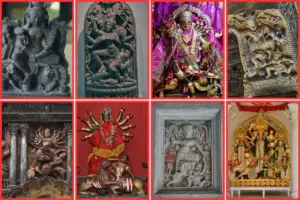




Indian sculptural traditions transform Goddess Durga’s clay idol into a symbol of divine consciousness through geometry, mythology and spiritual philosophy.
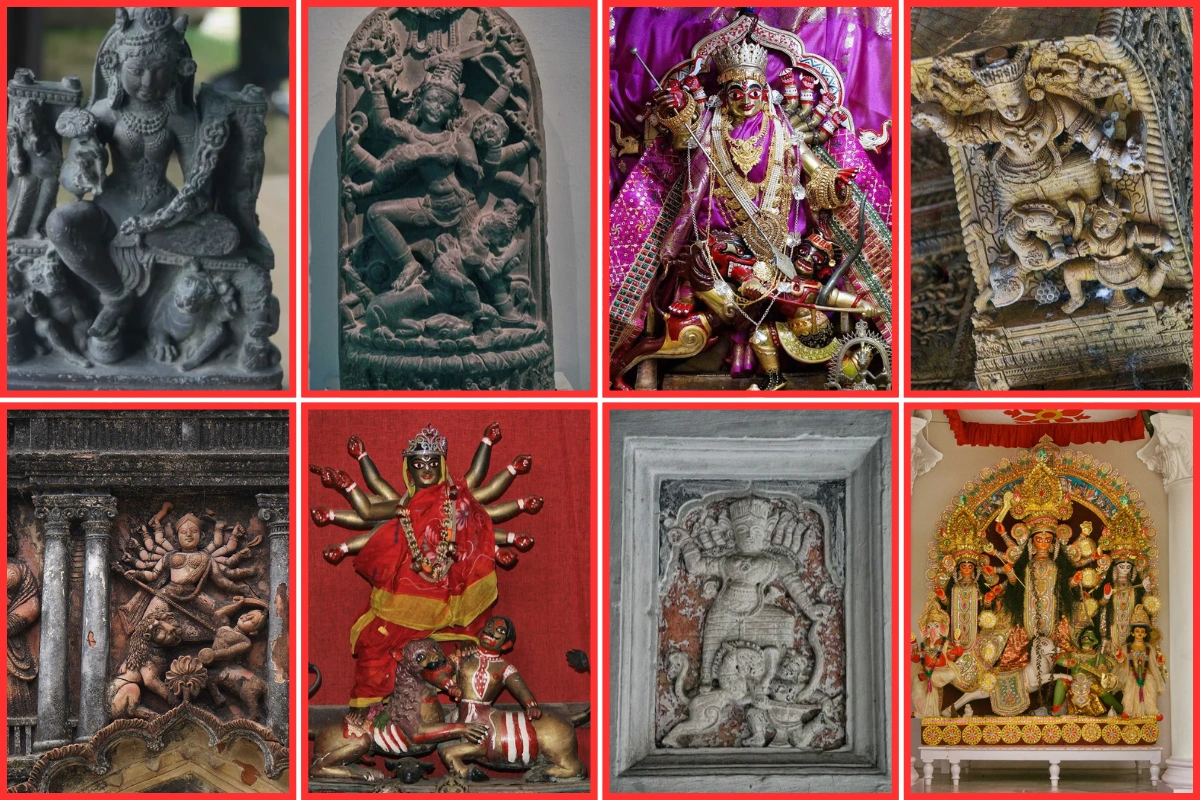
Ancient texts, including the Vishnudharmottara Purana, Brihat Samhita, Matsya Purana and Agni Purana, describe principles governing idol proportions, postures and ornaments.
The traditional measurement system, known as Talamana, guides sculptors in maintaining balanced proportions.
The system uses the face’s length as a basic unit, with one tala generally equalling 12 angulas. Nine-tala and ten-tala measurements represent 108 and 120 angulas, respectively.
According to the article’s interpretation, Durga’s ten arms symbolise her power across ten directions and her control over the five sensory and five action organs.
Her weapons carry distinct meanings: Shiva’s trident represents the destruction of suffering, Vishnu’s discus symbolises cosmic order, and Indra’s thunderbolt signifies strength.
The lion represents courage, while Mahishasura’s defeat symbolises the triumph over destructive tendencies.
Bengal’s traditional ekchala idols depict Lakshmi, Saraswati, Kartikeya and Ganesha alongside Durga. The chalchitra, or decorative backdrop, symbolises the cosmic framework surrounding the goddess.
During Maha Saptami, devotees install the Navapatrika, a bundle of nine plants that connects worship with agriculture and nature. Artisans traditionally paint the idol’s eyes during Mahalaya through the ritual of Chakshudan.
Bengal’s distinctive decorations include Daak-er Saaj, made with metallic foil, and Shola Saaj, crafted from plant pith.
Durga Puja also reflects regional diversity through Gujarat’s Garba, southern India’s Golu displays and Mysuru’s Dussehra celebrations.
The central message remains that the clay idol becomes a symbol of living consciousness when devotees recognise its deeper spiritual significance.
Also Read: What Is Happening On The Street? Why ‘Inquilab Zindabad’ Still Resonates: Harish Jain
To read more such news, download Bharat Express news apps