



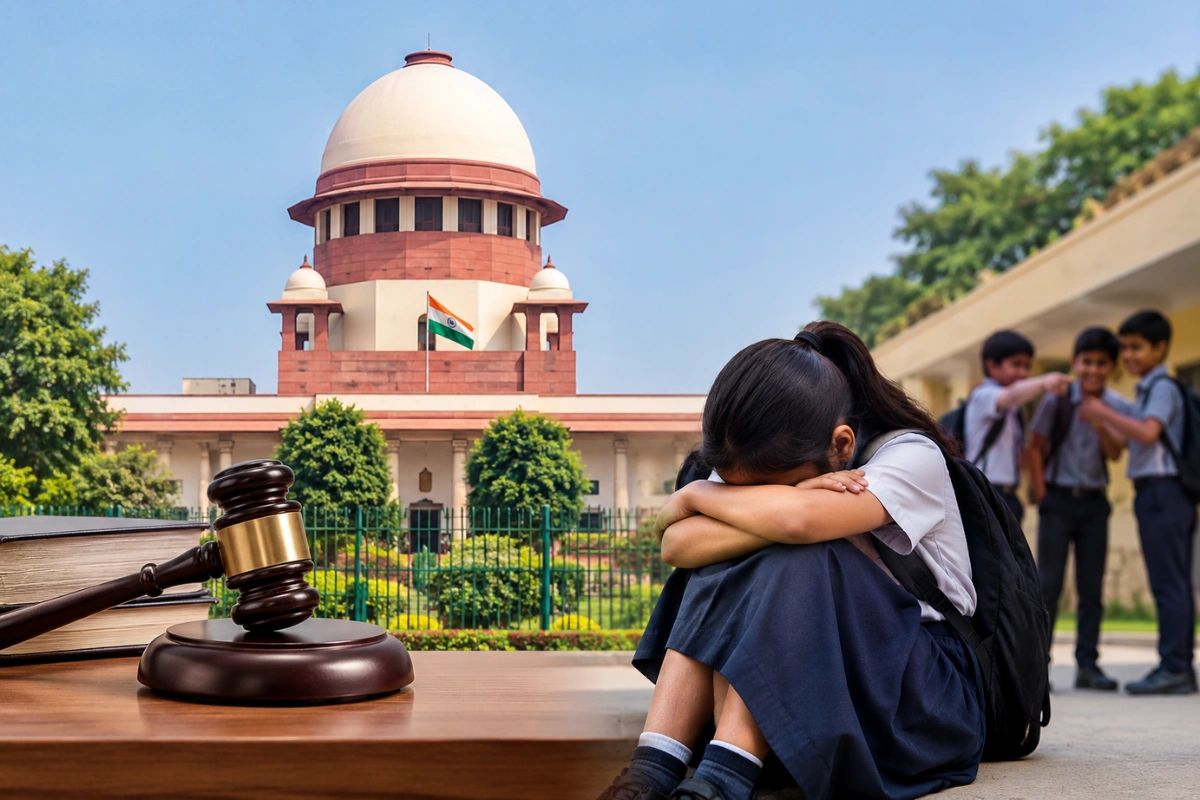
AI Generated Image
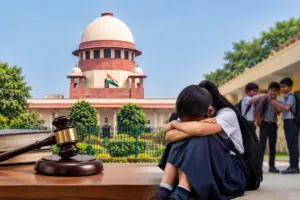
The Supreme Court on Tuesday declined to consider a public interest litigation seeking a comprehensive central law and consistent guidelines to tackle bullying and ragging in schools and pre-university institutions across India.
Chief Justice of India Surya Kant, heading a bench with Justices Joymala Bagchi and V Mohana, said the court had previously delivered a judgment covering the matters raised in the plea.
The bench said it would not take up another petition simply to enforce directions issued in that ruling.
The judges nevertheless gave petitioner Yadavi Aditya Rasiwasiya permission to send a representation to the appropriate authorities, through her counsel, for necessary steps.
Petition Calls for a National Legal Framework
Advocate Sujata Kurdukar filed the PIL, which asked the Centre, states and Union Territories to introduce comprehensive legislation to address bullying and ragging in schools.
It also requested enforceable nationwide guidelines similar to the University Grants Commission’s 2009 regulations for preventing ragging in higher education.
The plea cited the National Commission for Protection of Child Rights’ 2024 guidelines on preventing bullying and cyberbullying, which stated, “In India, there are no laws that could handle bullying in schools. In other words, bullying is not technically illegal”.
The petition argued that laws such as the Right to Education Act, the POCSO Act, the Juvenile Justice Act and the Information Technology Act did not create a complete, preventive response to bullying and ragging in schools.
It called for school anti-bullying committees, complaint-handling systems, compulsory reporting and safeguards for children experiencing harassment.
The petitioner also referred to school safety documents issued by NCPCR and the Ministry of Education, arguing that their advisory status restricted their legal force.
The plea invoked India’s commitments under the UN Convention on the Rights of the Child to protect children from violence and provide safe learning environments.
The Union government, states, Union Territories, CBSE and CISCE were listed as respondents.
Also Read: Kerala High Court Seeks Centre’s Review Of Powers Over High-Priced Cancer Drugs
To read more such news, download Bharat Express news apps