



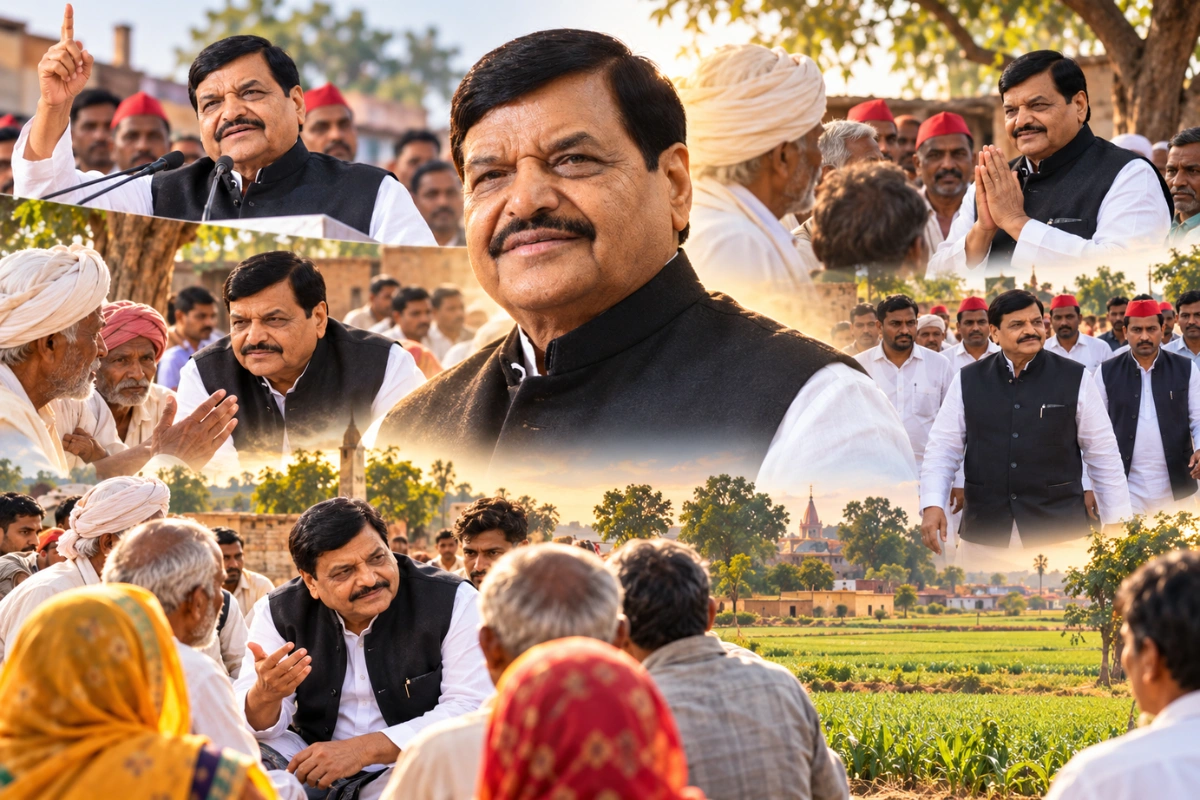
AI Generated Image
Grassroots politics is built less on spectacle and more on sustained presence: familiar faces, local trust, quick response, and disciplined follow-up. In discussions of Shivpal Yadav grassroots mobilisation, the central idea is not simply campaigning harder; it is building a cadre that can listen, organise, and remain visible between elections. This article looks at how that approach connects local politics, community engagement, political outreach, and long-term political strategy.
What Makes Grassroots Mobilisation Work in Local Politics?
Grassroots mobilisation works in local politics when people feel that political workers understand their everyday concerns before asking for support. The strongest local networks are not formed only through rallies or slogans; they grow through repeated contact in neighbourhoods, villages, markets, community events, and issue-based meetings. For a leader like Shivpal Yadav, whose public image has long been tied to organisational politics, the cadre-building model shows why political influence often depends on people who can translate broad messages into local relationships.
At the ground level, voters rarely experience politics as an abstract ideology. They experience it through roads, schools, employment concerns, welfare access, law-and-order anxieties, local leadership disputes, and whether someone answers the phone when help is needed. That is why grassroots mobilisation is as much about responsiveness as messaging. A political organisation that can identify concerns early, route them to the right person, and return with updates often earns more credibility than one that appears only during a formal campaign.
The Cadre-First Mindset
A cadre-first approach treats workers as the backbone of political outreach, not as temporary campaign volunteers. These workers carry information in both directions: they take the leader’s message to the public and bring local feedback back to the organisation. That two-way movement is what makes the structure valuable.
In the context of Shivpal Yadav grassroots mobilisation, the emphasis is often understood through disciplined local networks. A cadre is effective when it knows the social map of an area: which issues matter, which local voices influence opinion, where dissatisfaction is building, and which communities feel ignored. This does not require dramatic tactics. It requires consistency, memory, and the ability to maintain relationships across changing political moods.
A strong cadre also helps prevent political strategy from becoming too centralised. Leaders may set direction, but local workers explain how that direction will be received in specific places. A message that works in one district may need a different tone in another. Cadre members help make that adjustment without losing the broader purpose.
Core Elements of a Ground-Level Political Strategy
A practical grassroots model usually depends on several connected habits. Each one may look simple, but together they create organisational depth.
- Local issue mapping: Workers identify recurring public concerns, from civic services to community grievances, instead of relying only on top-level assumptions.
- Relationship continuity: Contact is maintained before, during, and after election cycles so people do not feel treated as seasonal voters.
- Visible problem-solving: Even when every issue cannot be solved immediately, follow-up matters. People notice whether someone returns with an update.
- Message localisation: Broad political themes are explained in the language of local experience, making them easier to understand and discuss.
- Booth and ward-level organisation: Smaller units help campaigns track sentiment, coordinate meetings, and avoid depending only on large public events.
- Feedback loops: Information from the ground is collected, filtered, and used to adjust outreach priorities.
This is where political strategy becomes practical rather than theoretical. The work is not only about persuading people; it is about creating a system that keeps listening.
How Does Community Engagement Become Political Outreach?
Community engagement becomes political outreach when listening, service, and relationship-building are connected to a larger public message. It starts with presence: attending local gatherings, acknowledging concerns, helping people navigate institutions, and staying accessible. Over time, that presence gives political communication more credibility because the messenger is already known.
This matters because people are more likely to trust information from someone who has stood with them during routine problems. A cadre worker who attends a local meeting, follows up on a complaint, or helps organise a discussion is doing more than social work in a political environment. They are building the conditions in which a political message can be heard without feeling distant or imposed.
For Shivpal Yadav, the broader lesson is that grassroots mobilisation cannot be separated from community engagement. Political outreach that lacks community grounding can feel transactional. Community work that lacks organisation may remain scattered. The cadre-building approach attempts to connect the two so that local presence supports a wider political purpose.
The Importance of Trust, Timing, and Local Language
Trust is the currency of local politics. It is built slowly and can be damaged quickly if people feel ignored, misled, or used. That is why a serious grassroots operation pays attention not only to what is said, but when and how it is said.
Timing matters because local concerns are often immediate. A delayed response can make even a sincere promise sound empty. Local language matters because political vocabulary must fit the way people actually describe their problems. A polished speech may inspire a crowd, but a clear conversation in a familiar setting often creates deeper connection.
This is one reason cadre-based politics remains relevant even in the digital era. Social media can spread a message quickly, but it cannot fully replace personal credibility. The strongest political outreach often blends both: online visibility for reach and ground-level workers for trust.
Lessons From the Shivpal Yadav Grassroots Mobilisation Model
The Shivpal Yadav grassroots mobilisation discussion offers several useful lessons for anyone studying local politics and organisation-building. These lessons are not limited to one party or region; they reflect broader truths about how political networks survive.
- Organisation must outlast the campaign. A serious network cannot be switched on only when elections approach. It needs routine activity, regular communication, and recognisable local workers.
- People respond to familiarity. Voters often judge politics through known local representatives, not only through distant leadership.
- Local feedback should shape strategy. Grassroots workers can detect dissatisfaction, enthusiasm, confusion, or shifting priorities before they appear in public commentary.
- Cadre discipline creates message consistency. When workers understand the core message, they can adapt it locally without contradicting it.
- Service strengthens outreach. Practical help, even in small matters, can make political communication feel grounded rather than performative.
These lessons show why cadre building is both organisational and emotional. It creates structure, but it also creates belonging.
Challenges in Maintaining a Grassroots Network
No grassroots model is automatic. Cadres can become inactive if they feel neglected, local factions can weaken coordination, and public expectations can rise faster than an organisation’s ability to respond. A network that once felt energetic can also become rigid if it stops listening.
Another challenge is balancing loyalty with openness. Strong political organisations need committed workers, but they also need space for new voices, younger participants, and communities that may not already be inside the network. If grassroots mobilisation becomes only an internal exercise, it loses its public purpose.
There is also the challenge of credibility. People can distinguish between genuine engagement and symbolic visits. For political outreach to remain effective, it must be backed by continuity, humility, and a willingness to hear uncomfortable feedback.
A Practical Blueprint for Durable Political Outreach
A grounded political strategy can be understood as a cycle rather than a one-time campaign plan:
- Listen first: Identify what people are actually discussing in homes, workplaces, and community spaces.
- Organise locally: Build small teams that understand specific neighbourhoods or village clusters.
- Communicate clearly: Turn broader political positions into simple, relevant explanations.
- Respond visibly: Follow up on concerns and show that feedback has entered the system.
- Review honestly: Use ground reports to correct weak messaging, inactive areas, or unmet expectations.
This cycle keeps community engagement connected to action. It also helps political organisations avoid the common mistake of treating voters as audiences rather than participants.
The Takeaway
The cadre builder’s approach is a reminder that durable politics begins close to the ground. Shivpal Yadav’s association with grassroots organisation highlights a broader principle: influence in local politics is earned through networks that listen, respond, and remain present. In an age of fast media and short attention spans, the fundamentals of grassroots mobilisation still depend on trust, disciplined workers, and political outreach that feels rooted in real community life.
Also Read: Grace Under Fire: Dimple Yadav And The Evolution Of Women’s Power In UP Politics
To read more such news, download Bharat Express news apps