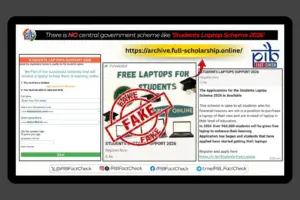




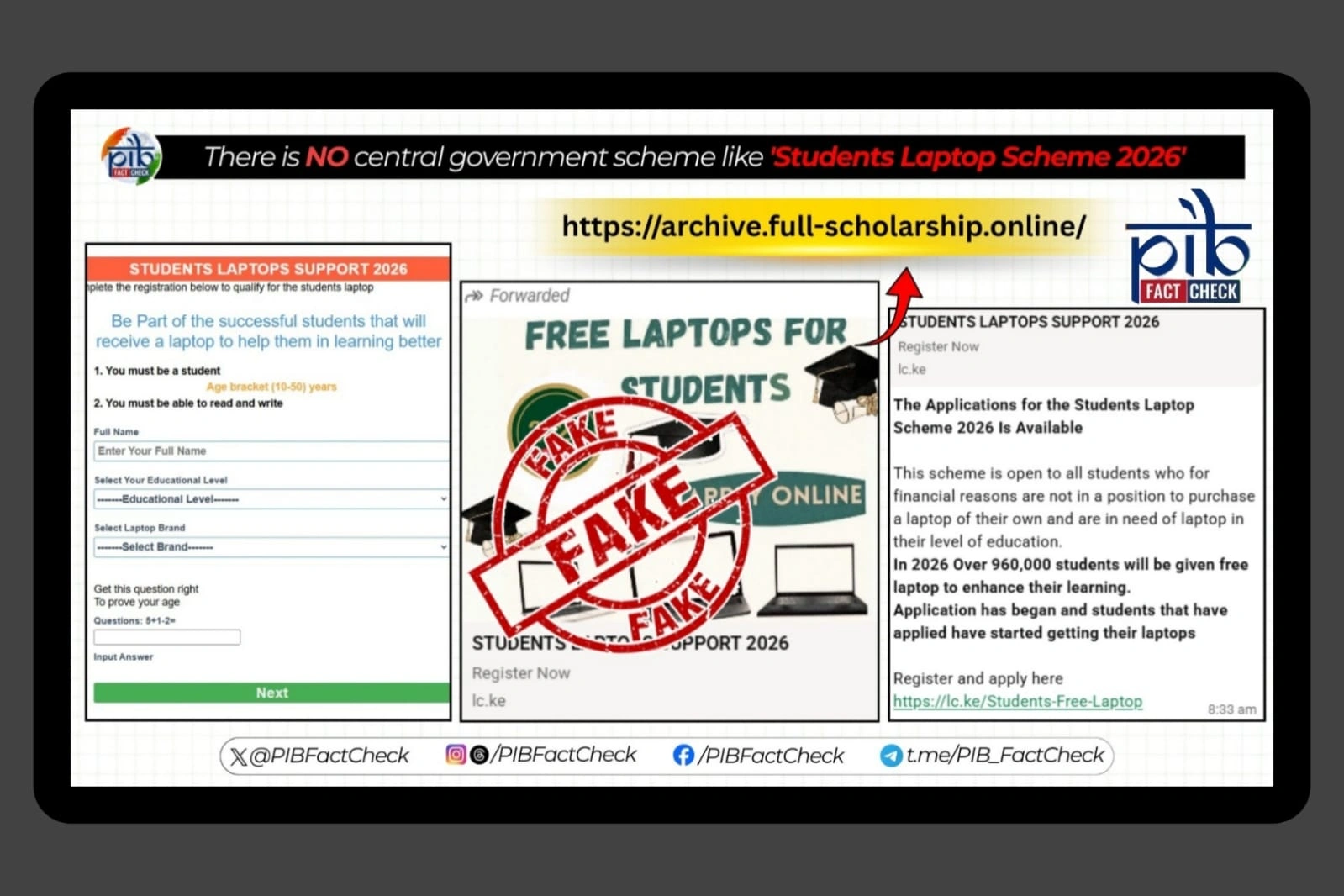
The Press Information Bureau (PIB) Fact Check has debunked a viral WhatsApp message that falsely claims the Indian government has launched a ‘National Student Laptop Scheme 2026’ and is accepting applications for free laptops.
The misleading message asks students to complete an online form to supposedly register for the scheme.
The form may request personal information, including the applicant’s name, education level and answers to verification questions. It can also direct users to suspicious or unverified websites.
Authorities have warned users to remain cautious when they receive messages offering free government benefits through unfamiliar links.
💻 Did you come across the Free Laptop Scheme message?
⚠️ A #WhatsApp message is being circulated claiming that the Government has invited applications from students for free laptops under the ‘National Student Laptop Scheme 2026.’#PIBFactCheck
❌This claim is #FAKE .
✅ The… pic.twitter.com/tToU3fxmzq
— PIB Fact Check (@PIBFactCheck) September 21, 2026
Scammers often use the names and logos of government departments to make fraudulent offers appear genuine. By collecting personal information, such forms can potentially expose users to identity theft, phishing attempts and other online scams.
PIB Fact Check clarified that no central government scheme called the ‘National Student Laptop Scheme 2026’ exists. Therefore, students should not submit their personal information through links shared in such WhatsApp messages.
Some Indian states do provide laptops, financial assistance or cash incentives to eligible students, particularly those who achieve strong academic results.
However, these initiatives operate under specific state government programmes and eligibility rules. They should not be confused with the fake nationwide scheme mentioned in the viral message.
Students and parents should verify government welfare announcements through official government websites and trusted sources before sharing information or completing online forms.
Users should also avoid clicking suspicious links and should report misleading messages when appropriate.
The fake laptop claim demonstrates how scammers can exploit popular government-benefit announcements to collect personal information. Staying alert and verifying claims can help citizens avoid online fraud.
Also Read: Fake Facebook Video Falsely Links EAM Jaishankar To ₹80,000 Daily Investment Scheme
To read more such news, download Bharat Express news apps