


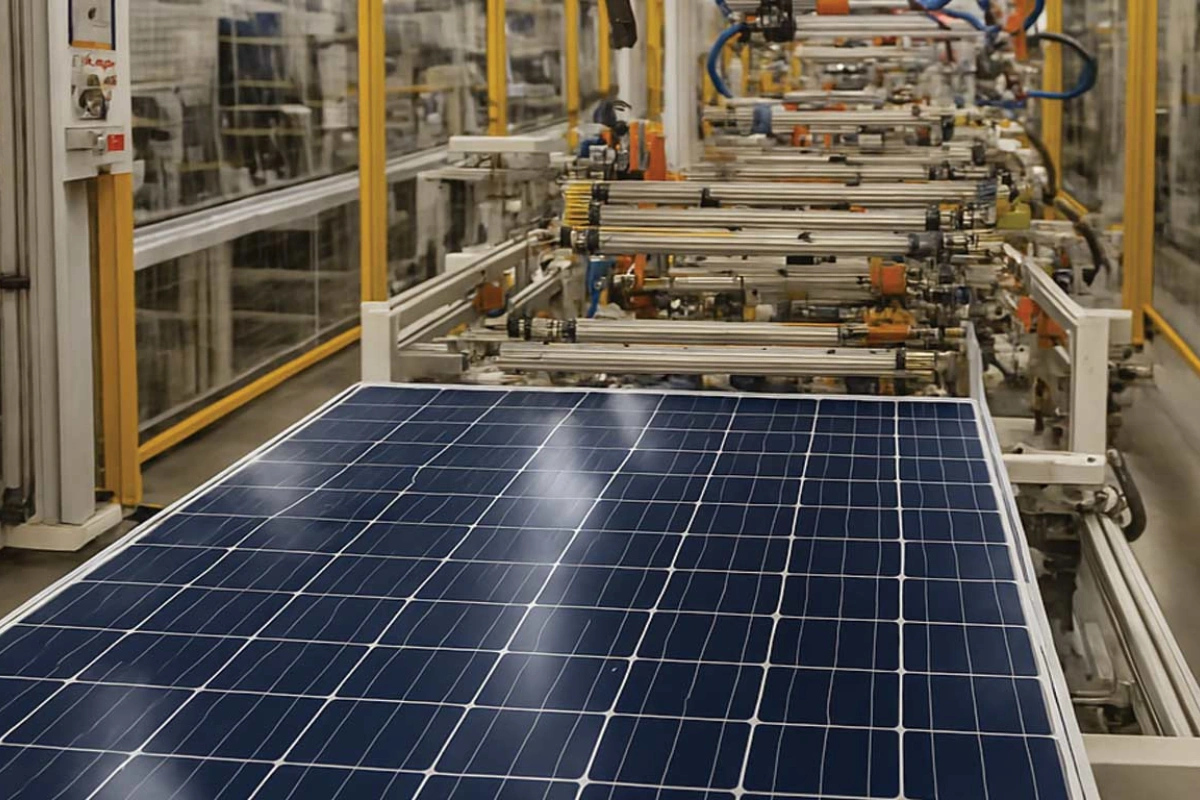
India’s Production-Linked Incentive scheme for high-efficiency solar PV modules has delivered significant employment growth across the country.
Data submitted in the Lok Sabha shows that the scheme has created about 43,000 jobs as of October 2025, including 11,220 direct jobs.
These opportunities span nine states where new manufacturing facilities are being established under the PLI programme.
Gujarat has emerged as the leading beneficiary, generating more than 22,400 jobs through major solar projects led by Reliance Industries, Adani New Industries and other manufacturers.
Tamil Nadu follows with around 6,800 jobs created by FS India Solar Ventures, VSL Green Power and TP Solar.
Andhra Pradesh has reported 1,620 jobs through two manufacturing units, while Odisha has contributed 200 jobs through AMPIN Solar.
Additional employment has come from multi-state projects implemented by ReNew Photovoltaics, Grew Energy, Avaada Electro and other companies.
Government Push to Build Domestic Solar Capacity
The Government of India is implementing the PLI Scheme for High Efficiency Solar PV Modules with an outlay of ₹24,000 crore to create gigawatt-scale domestic manufacturing capacity.
As part of this drive, the government has issued Letters of Award for 48.3 GW of fully or partially integrated solar module manufacturing units across the country.
These units will strengthen India’s renewable energy ecosystem and reduce dependence on imports.
According to the latest Approved List of Models and Manufacturers (ALMM) released on 25 November 2025, India’s installed solar PV module manufacturing capacity has reached 121.68 GW.
Despite this rapid expansion, India continues to import solar modules.
During the first half of FY 2025–26, the country imported 180.58 lakh solar PV modules worth $386.33 million, indicating rising demand alongside growing domestic production.
Global Solar Supply Chain Still Dominated by China
The global solar PV supply chain remains heavily concentrated in China, which holds more than 90% of polysilicon and wafer production capacity, over 85% of cell manufacturing capacity and around 80% of module manufacturing.
India’s PLI scheme aims to reduce this dependency by fostering robust domestic capabilities, particularly in advanced technologies and integrated manufacturing lines.
ICRA projects that India’s solar PV module manufacturing capacity will exceed 165 GW by March 2027.
Supportive government policies — including the ALMM framework that restricts direct imports, basic customs duty on imported cells and modules, and continued PLI incentives — will drive this growth.
Collectively, these measures promise to enhance India’s energy security and strengthen the country’s position in the global solar market.
India’s PLI initiative continues to reshape the country’s solar manufacturing landscape, creating jobs and building long-term capacity for a clean-energy future.
Also Read: IndiGo Shares Slide As Widespread Flight Cancellations Persist
To read more such news, download Bharat Express news apps