



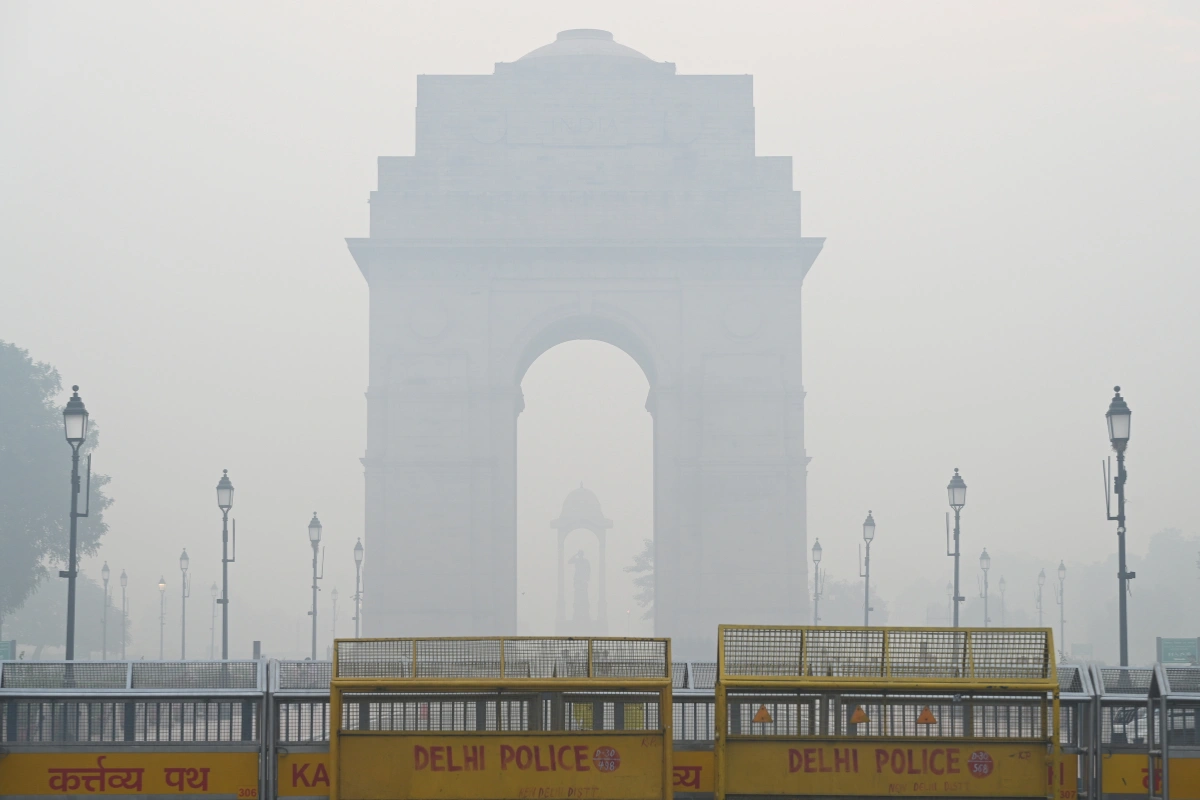
Delhi saw a modest improvement in air quality on Thursday morning, even though temperatures continued their downward slide.
At 7 AM, readings from the Central Pollution Control Board (CPCB) placed the city’s Air Quality Index (AQI) at 300.
Despite the marginal betterment, overall air quality stayed within the ‘poor’ range, and many monitoring stations still reported ‘very poor’ conditions.
Out of 39 monitoring sites across Delhi, 19 recorded ‘very poor’ ratings, 14 were in the ‘poor’ bracket, and two fell under ‘moderate’.
Areas with very poor air included Chandni Chowk (331), RK Puram (344), Rohini (343), Vivek Vihar (319), Bawana (343), Siri Fort (327), Wazirpur (323), Anand Vihar (318), Ashok Vihar (307) and Sonia Vihar (301).
Meanwhile, poorer, but somewhat better, air quality was noted at locations such as IGI Airport (257), Alipur (284), Aya Nagar (275), Mathura Road (296), and IIT Delhi (287).
Just two areas, Dilshad Garden (196) and Mandir Marg (179), recorded AQI in the ‘moderate’ category.
In the neighbouring city of Noida, conditions were even worse: nearly all stations showed AQI levels in the ‘very poor’ bracket.
Severe Smog Spike a Day Earlier
Just a day earlier, on Wednesday, several parts of Delhi had plunged into ‘severe’ pollution, with 14 out of 40 monitored locations showing AQI above 401 in the early morning, a sobering reminder of how quickly air quality can deteriorate.
Adding to the concerns, the India Meteorological Department (IMD) issued a ‘yellow alert’ for a coming cold wave expected on Friday, with minimum temperatures forecast to fall to between 4 °C and 6 °C in the capital.
In response to the worsening environmental and health risks, both the central government and the Delhi administration accelerated pollution-control measures on Wednesday.
Officials have directed more than 2,000 industrial units to install real-time emissions tracking systems by year-end.
At the national level, the Ministry of Environment, Forest and Climate Change ordered 2,254 industries classified as ‘red-category’ (high pollution potential) to fit calibrated Online Continuous Emission Monitoring Systems (OCEMS) and Air Pollution Control Devices (APCD), warning that non-compliance could lead to closures.
At the state level, Delhi Chief Minister Rekha Gupta announced the formation of a high-powered expert committee.
Comprising senior officials, environmental scientists and academic experts, the committee will regularly monitor pollution levels and propose actionable steps to curb air pollution in the city.
To read more such news, download Bharat Express news apps