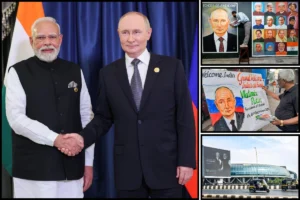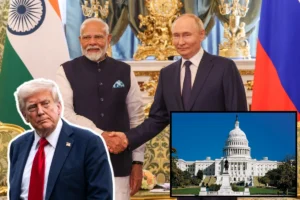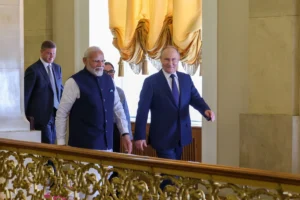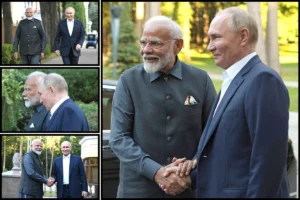


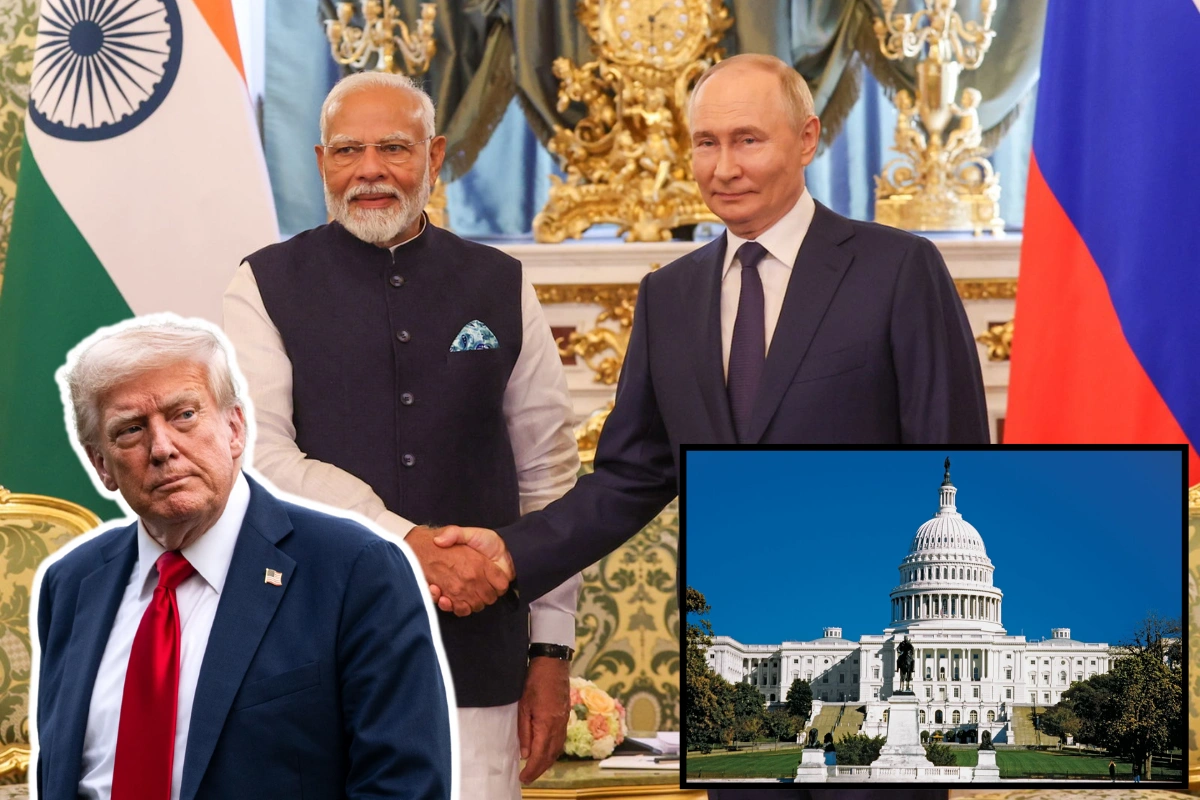
Prime Minister Narendra Modi’s meeting with Russian President Vladimir Putin in New Delhi has triggered heightened attention in Washington, where foreign-policy experts are examining both the ceremonial signals and the concrete agreements emerging from the engagement.
Taking place at a time of intensified Russian military activity in Ukraine, the summit is being closely watched for its geopolitical implications.
Lisa Curtis, Senior Fellow and Director of the Indo-Pacific Security Programme at the Centre for a New American Security, described the summit as ‘not helpful to the United States’, given that it coincides with President Putin’s increased aggression towards Ukraine, including drone incursions and cyber-attacks targeting Europe.
Curtis argued that India’s decision to host Putin conveys a clear message of strategic autonomy, particularly amid recent US pressure, including steep tariffs on Indian goods and renewed engagement with Pakistan’s military leadership.
Curtis highlighted that Prime Minister Modi’s move demonstrates New Delhi’s unwillingness to be constrained by external pressure.
She also warned that President Trump’s reaction remains uncertain, especially as Washington and Moscow engage in sensitive backchannel discussions.
She cautioned that the US should avoid an overreaction, noting India’s longstanding relationship with Russia.
Focus on Defence, Energy, and Ceremonial Signalling
At the Brookings Institution, Senior Fellow Tanvi Madan emphasised that Washington will be paying close attention to two major aspects: the level of ceremonial hospitality extended to Putin, and any tangible outcomes in defence and energy cooperation.
She noted that US analysts will scrutinise potential defence agreements and monitor Indian imports of Russian oil, which remain a point of controversy in Washington.
Madan added that the Trump Administration’s response could vary, pointing to recent US diplomatic activity in Moscow, including visits by senior envoys.
Richard Fontaine, CEO of the Centre for a New American Security, said the US government will be watching the summit closely, amid hopes that India might distance itself from Moscow.
However, he noted the complexity of predicting Washington’s reaction, given the administration’s own outreach to Russia.
Lindsey Ford, Senior Fellow at ORF America and a former NSC official, stressed that the US concern is strongest in sectors such as defence and advanced technology.
She acknowledged reductions in India’s Russian energy trade but noted continued American vigilance regarding cooperation with Moscow.
Balancing Pressures and Partnerships
The Modi–Putin summit comes at a time when Washington’s Russia strategy is in flux.
As President Trump positions himself as a potential mediator in the Ukraine conflict, the US must balance pressure on Moscow with its strategic need to maintain strong ties with India, a central partner in the Indo-Pacific.
For now, analysts believe Washington’s ultimate reaction will hinge on two factors: the warmth of New Delhi’s public reception of Putin, and the scale of defence, energy, or technology agreements concluded during the visit.
Also Read: President Putin To Arrive In India Today For High-Level Talks With PM Modi
To read more such news, download Bharat Express news apps